Department of Biological Sciences, University of Delaware, Newark, Delaware, United States.
School of Optometry and Vision Science Program, Indiana University, Bloomington, Indiana, United States.
Invest Ophthalmol Vis Sci. 2023 Apr 3;64(4):20. doi: 10.1167/iovs.64.4.20.
Epithelial cells in the equatorial region of the ocular lens undergo a remarkable transition from randomly packed cells into precisely aligned and hexagon-shaped cells organized into meridional rows. We investigated the function of nonmuscle myosin IIA (encoded by Myh9) in regulating equatorial epithelial cell alignment to form meridional rows during secondary fiber cell morphogenesis.
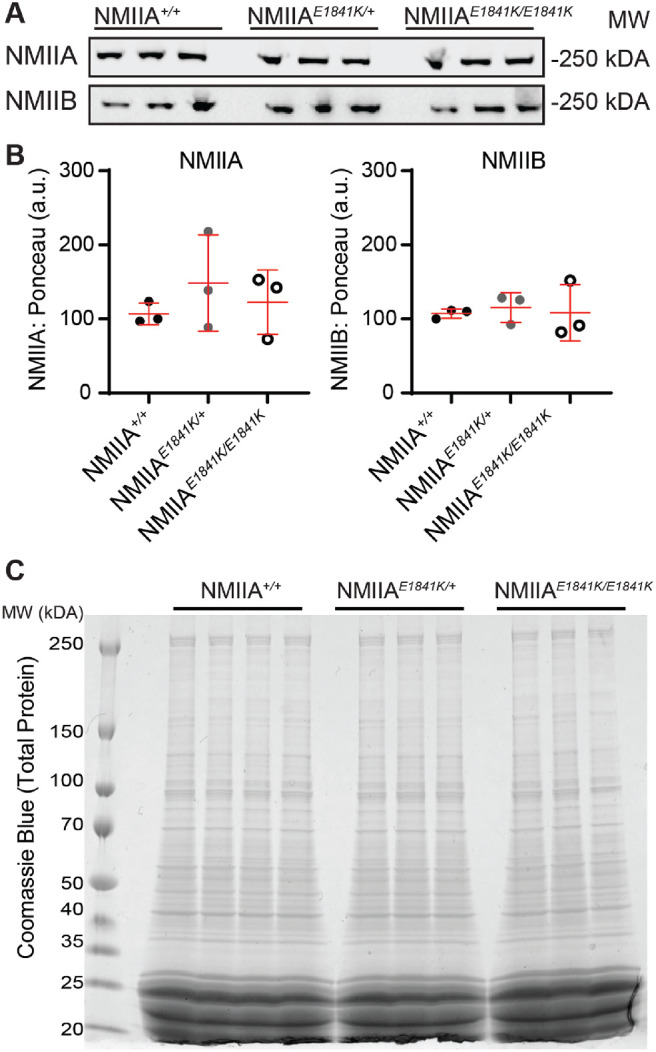
We used genetic knock-in mice to study a common human Myh9 mutation, E1841K, in the rod domain. The E1841K mutation disrupts bipolar filament assembly. Lens shape, clarity, and stiffness were evaluated, and Western blots were used to determine the level of normal and mutant myosins. Cryosections and lens whole mounts were stained and imaged by confocal microscopy to investigate cell shape and organization.
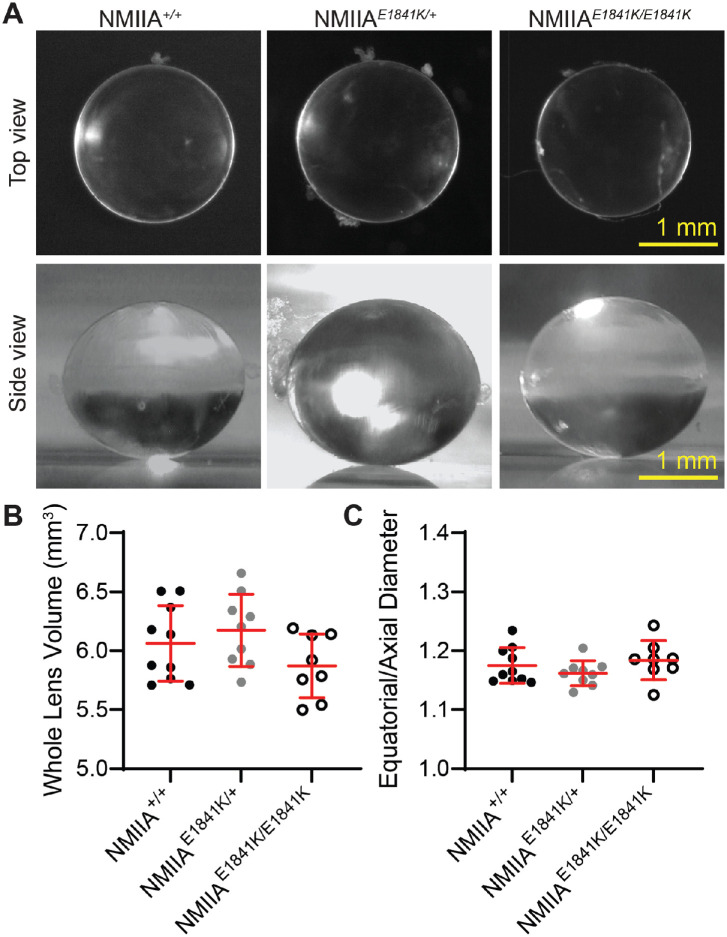
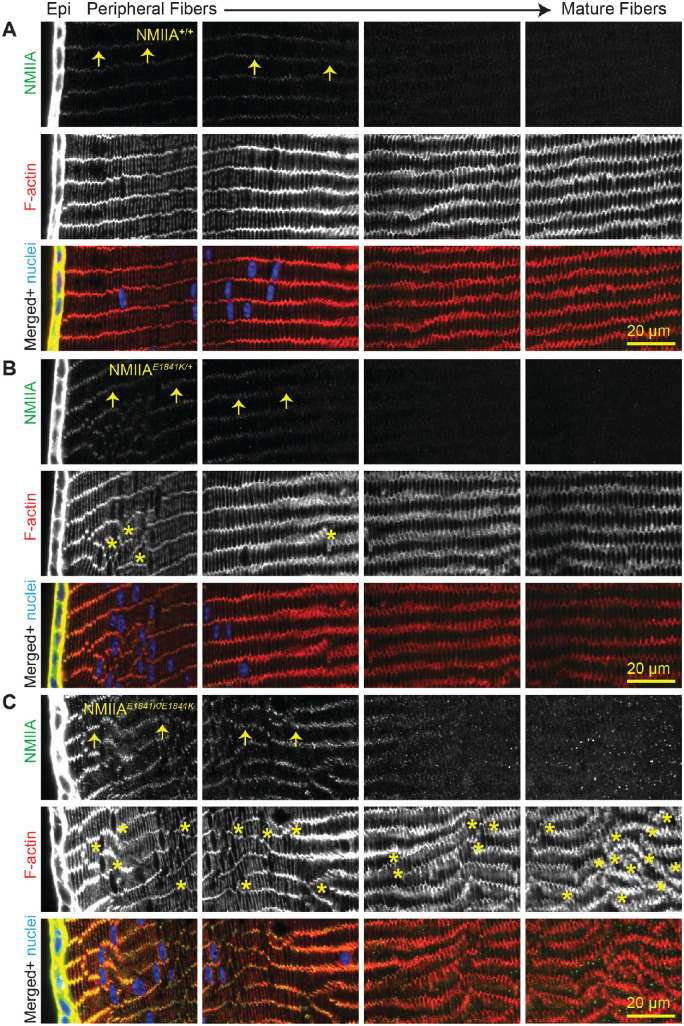
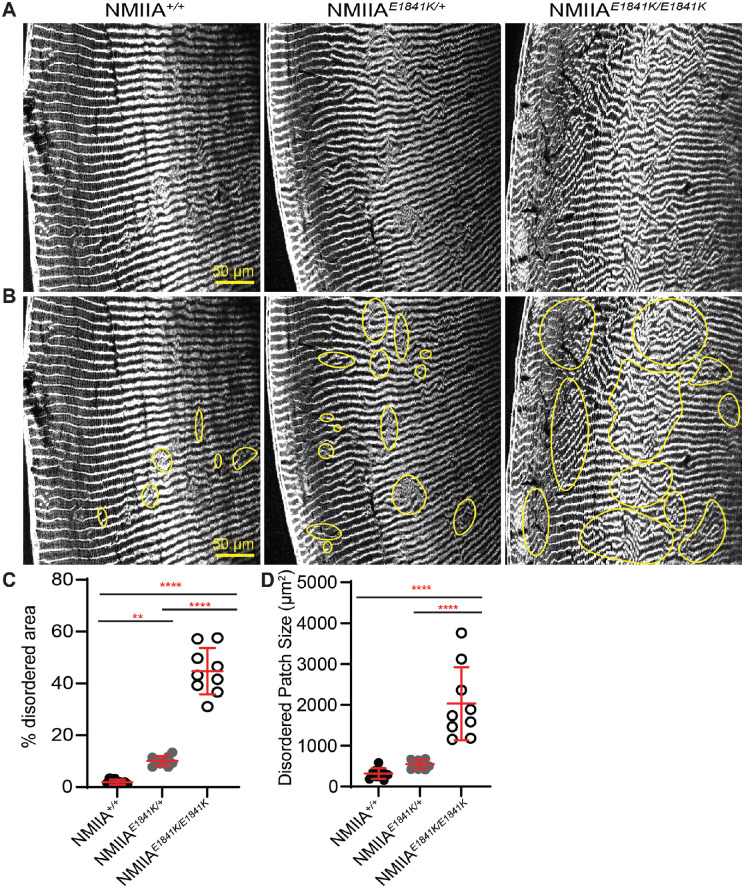
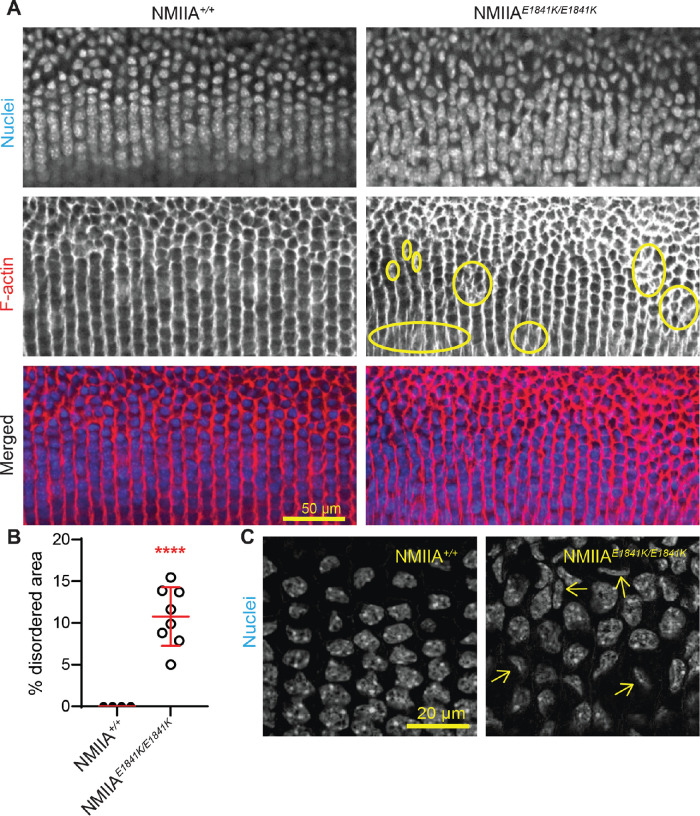
We observed no obvious changes in lens size, shape, and biomechanical properties (stiffness and resilience) between the control and nonmuscle myosin IIA-E1841K mutant mice at 2 months of age. Surprisingly, we found misalignment and disorder of fiber cells in heterozygous and homozygous mutant lenses. Further analysis revealed misshapen equatorial epithelial cells that cause disorientation of the meridional rows before fiber cell differentiation in homozygous mutant lenses.
Our data indicate that nonmuscle myosin IIA bipolar filament assembly is required for the precise alignment of the meridional rows at the lens equator and that the organization of lens fiber cells depends on the proper patterning of meridional row epithelial cells. These data also suggest that lens fiber cell organization and a hexagonal shape are not required for normal lens size, shape transparency, or biomechanical properties.
眼部晶状体赤道区的上皮细胞经历了从随机排列的细胞到精确排列和呈六边形排列并组织成子午线行列的显著转变。我们研究了非肌肉肌球蛋白 IIA(由 Myh9 编码)在调节赤道上皮细胞对齐以在次级纤维细胞形态发生过程中形成子午线行列中的功能。
我们使用基因敲入小鼠研究 rod 结构域中常见的人类 Myh9 突变 E1841K。E1841K 突变破坏了双极丝的组装。评估了晶状体的形状、清晰度和刚性,并使用 Western blot 确定正常和突变肌球蛋白的水平。通过共聚焦显微镜对冷冻切片和整个晶状体进行染色和成像,以研究细胞形状和组织。
我们在 2 个月大的对照和非肌肉肌球蛋白 IIA-E1841K 突变小鼠之间未观察到晶状体大小、形状和生物力学特性(刚性和弹性)的明显变化。令人惊讶的是,我们发现杂合子和纯合子突变体晶状体中的纤维细胞排列不齐和紊乱。进一步的分析显示,在纤维细胞分化之前,赤道上皮细胞排列不齐,导致同源突变体晶状体中的子午线行列方向发生偏差。
我们的数据表明,非肌肉肌球蛋白 IIA 双极丝组装对于晶状体赤道区子午线行列的精确对齐是必需的,并且晶状体纤维细胞的组织取决于子午线行列上皮细胞的正确模式。这些数据还表明,纤维细胞组织和六边形形状对于正常的晶状体大小、形状透明度或生物力学特性不是必需的。