Center for Human Genome Research, Key Laboratory of Molecular Biophysics of the Ministry of Education, College of Life Science and Technology, Huazhong University of Science and Technology, Wuhan, P. R. China.
Department of Cardiovascular Surgery, Union Hospital, Tongji Medical College, Huazhong University of Science and Technology, Wuhan, P. R. China.
Nat Commun. 2023 Apr 20;14(1):2265. doi: 10.1038/s41467-023-37809-x.
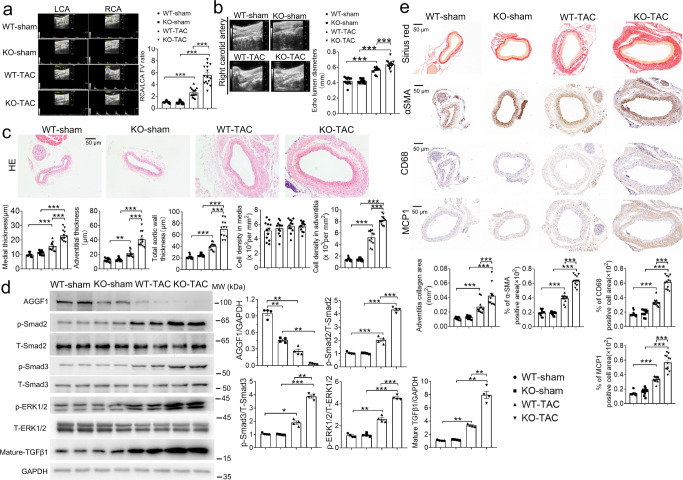
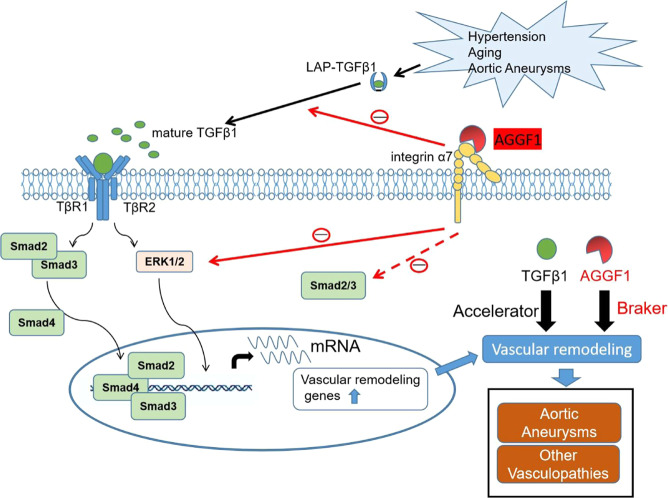
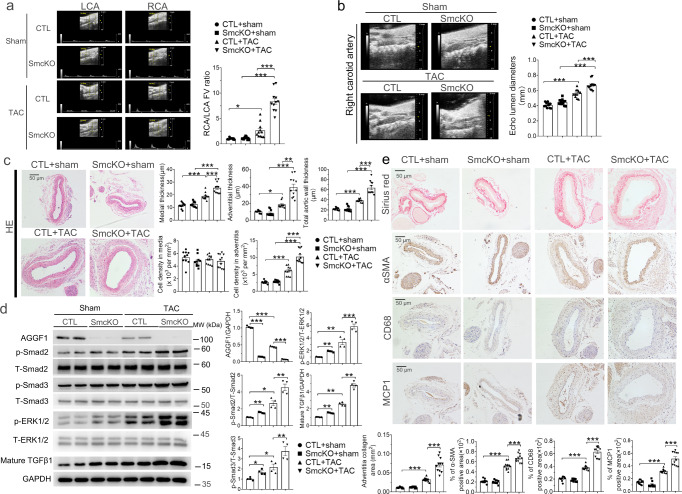
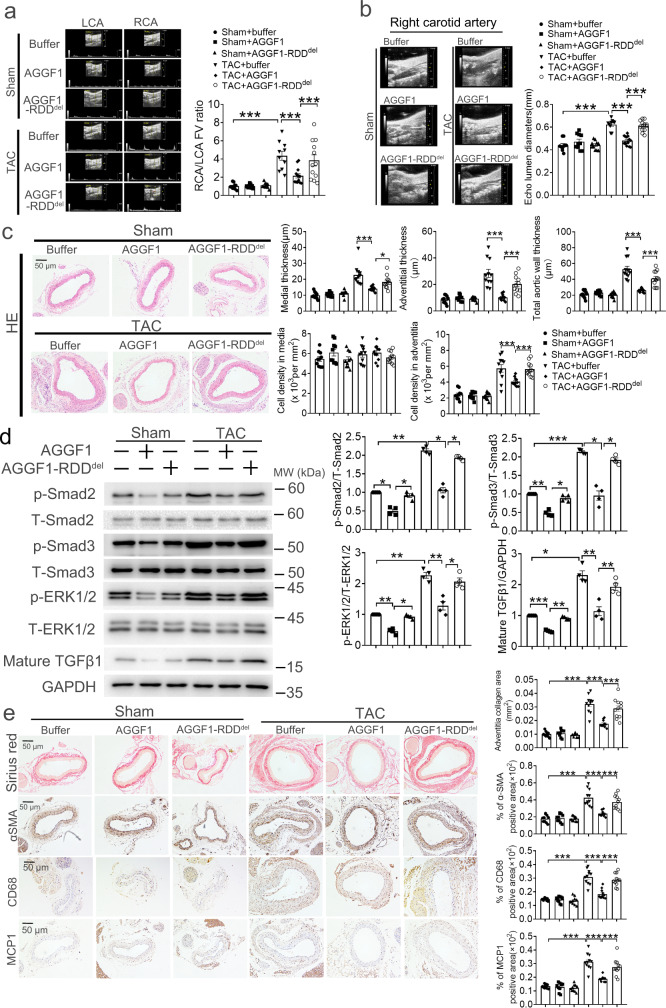
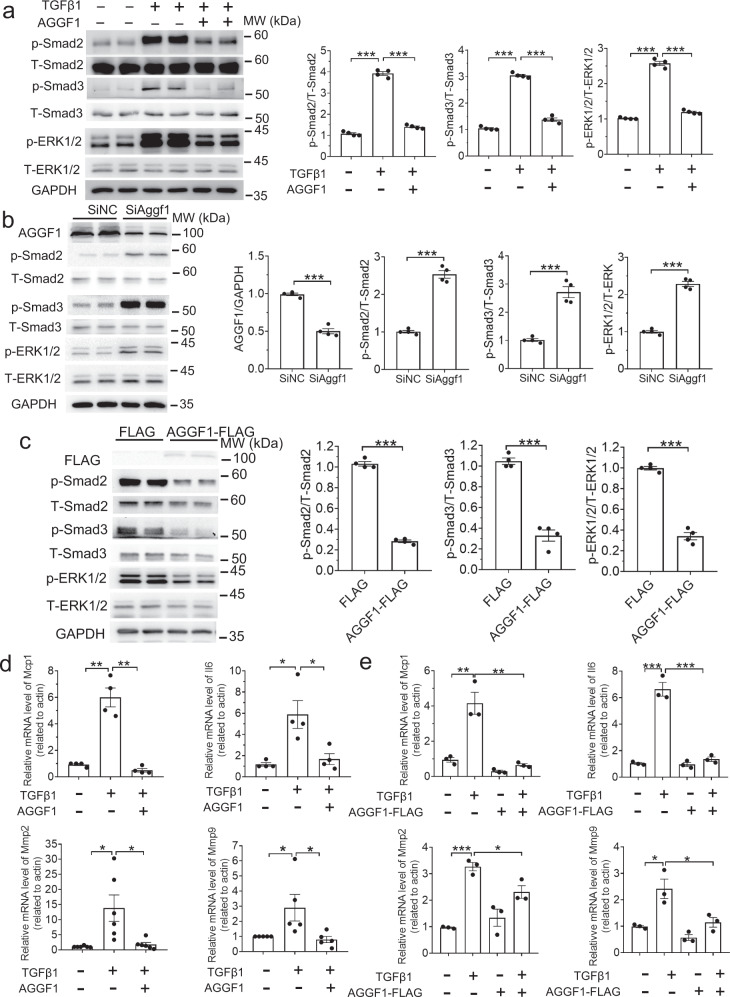
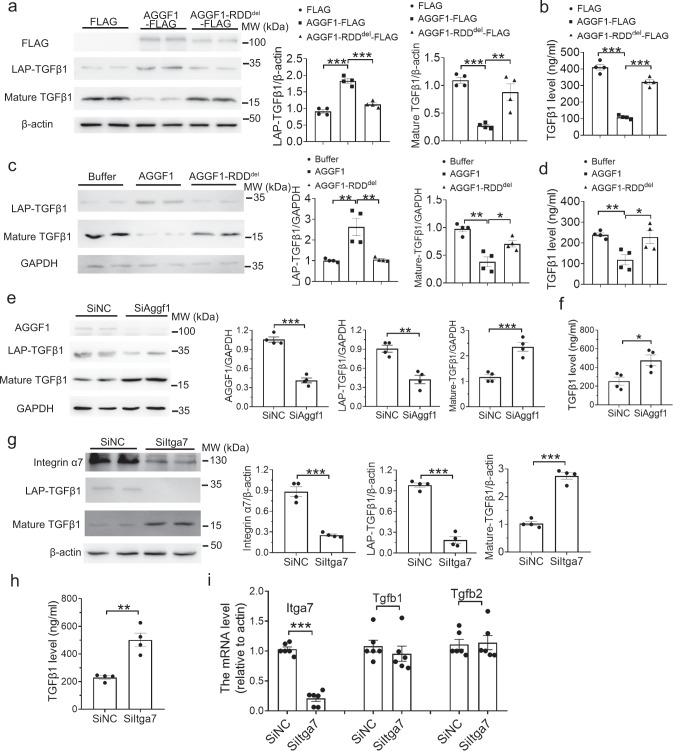
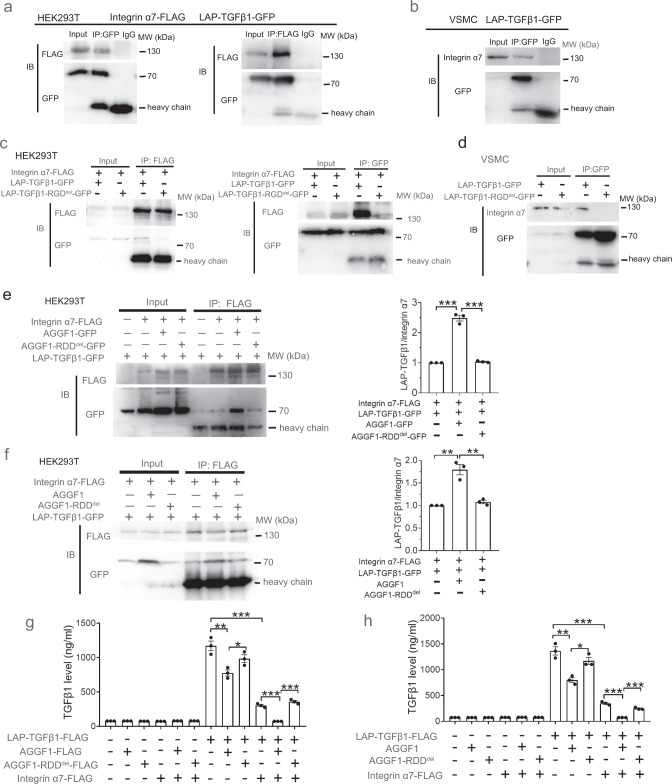
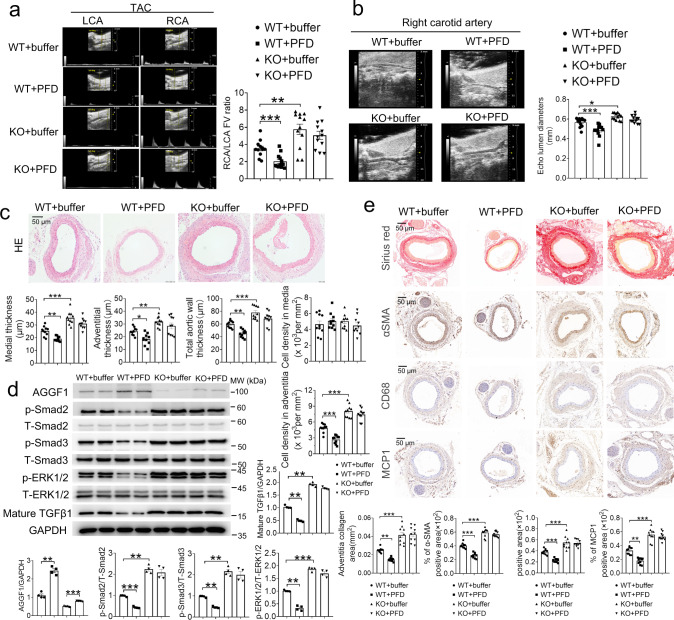
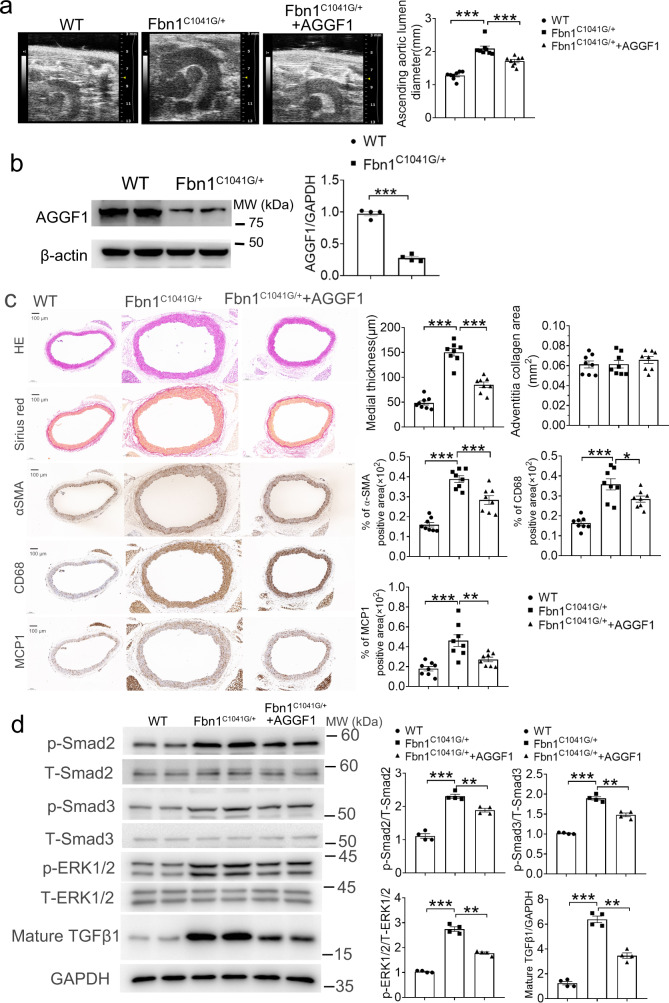
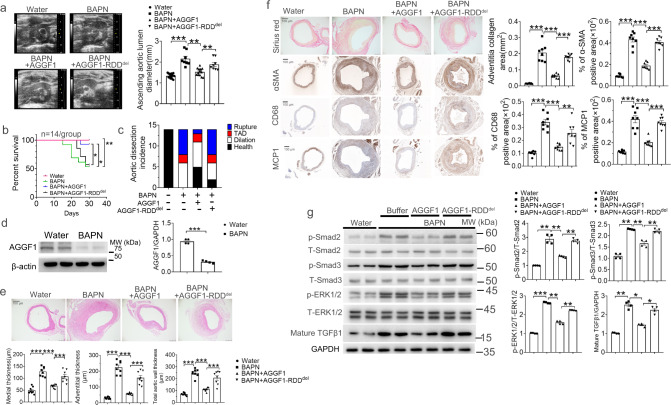
Thoracic aortic aneurysm (TAA) is a localized or diffuse dilatation of the thoracic aortas, and causes many sudden deaths each year worldwide. However, there is no effective pharmacologic therapy. Here, we show that AGGF1 effectively blocks TAA-associated arterial inflammation and remodeling in three different mouse models (mice with transverse aortic constriction, Fbn1 mice, and β-aminopropionitrile-treated mice). AGGF1 expression is reduced in the ascending aortas from the three models and human TAA patients. Aggf1 mice and vascular smooth muscle cell (VSMC)-specific Aggf1 knockout mice show aggravated TAA phenotypes. Mechanistically, AGGF1 enhances the interaction between its receptor integrin α7 and latency-associated peptide (LAP)-TGF-β1, blocks the cleavage of LAP-TGF-β1 to form mature TGF-β1, and inhibits Smad2/3 and ERK1/2 phosphorylation in VSMCs. Pirfenidone, a treatment agent for idiopathic pulmonary fibrosis, inhibits TAA-associated vascular inflammation and remodeling in wild type mice, but not in Aggf1 mice. In conclusion, we identify an innovative AGGF1 protein therapeutic strategy to block TAA-associated vascular inflammation and remodeling, and show that efficacy of TGF-β inhibition therapies require AGGF1.
胸主动脉瘤(TAA)是胸主动脉的局部或弥漫性扩张,每年在全球范围内导致许多突发性死亡。然而,目前尚无有效的药物治疗方法。在这里,我们展示了 AGGF1 可有效阻断三种不同小鼠模型(主动脉缩窄小鼠、Fbn1 小鼠和β-氨基丙腈处理的小鼠)和人类 TAA 患者的与 TAA 相关的动脉炎症和重塑。三种模型的升主动脉和人类 TAA 患者的 AGGF1 表达均降低。Aggf1 小鼠和血管平滑肌细胞(VSMC)特异性 Aggf1 敲除小鼠表现出更严重的 TAA 表型。从机制上讲,AGGF1 增强了其受体整合素 α7 与潜伏相关肽(LAP)-TGF-β1 之间的相互作用,阻止 LAP-TGF-β1 的裂解形成成熟的 TGF-β1,并抑制 VSMCs 中的 Smad2/3 和 ERK1/2 磷酸化。特发性肺纤维化的治疗药物吡非尼酮可抑制野生型小鼠的与 TAA 相关的血管炎症和重塑,但不能抑制 Aggf1 小鼠的血管炎症和重塑。总之,我们确定了一种创新的 AGGF1 蛋白治疗策略,可阻断与 TAA 相关的血管炎症和重塑,并表明 TGF-β 抑制疗法的疗效需要 AGGF1。