The College of Basic Medical Science, China Medical University, Shenyang, Liaoning Province, China.
Key Laboratory of Cell Biology of Ministry of Public Health, Key Laboratory of Medical Cell Biology of Ministry of Education, Key Laboratory of Precision Diagnosis and Treatment of Gastrointestinal Tumors (China Medical University), Ministry of Education, Liaoning Province Collaborative Innovation Center of Aging Related Disease Diagnosis and Treatment and Prevention, China Medical University, Shenyang, Liaoning Province, China.
Oncogene. 2023 Jun;42(22):1843-1856. doi: 10.1038/s41388-023-02667-w. Epub 2023 Apr 20.
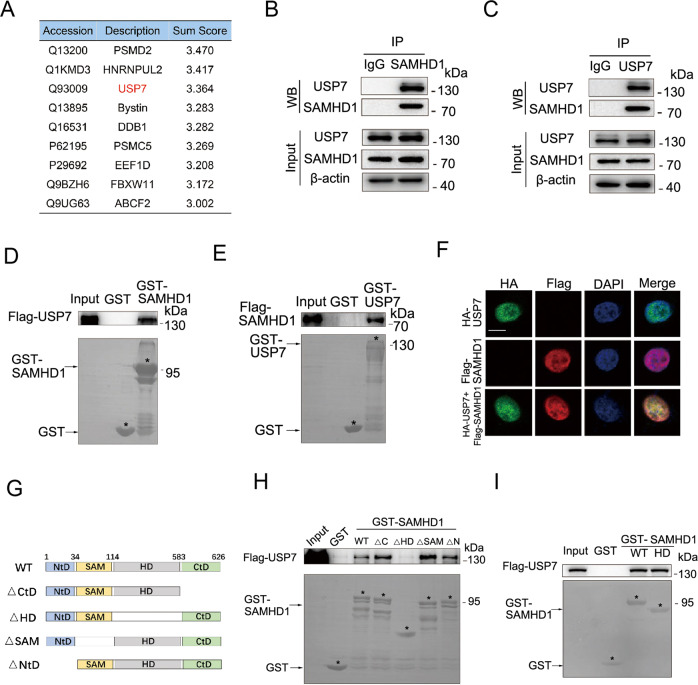
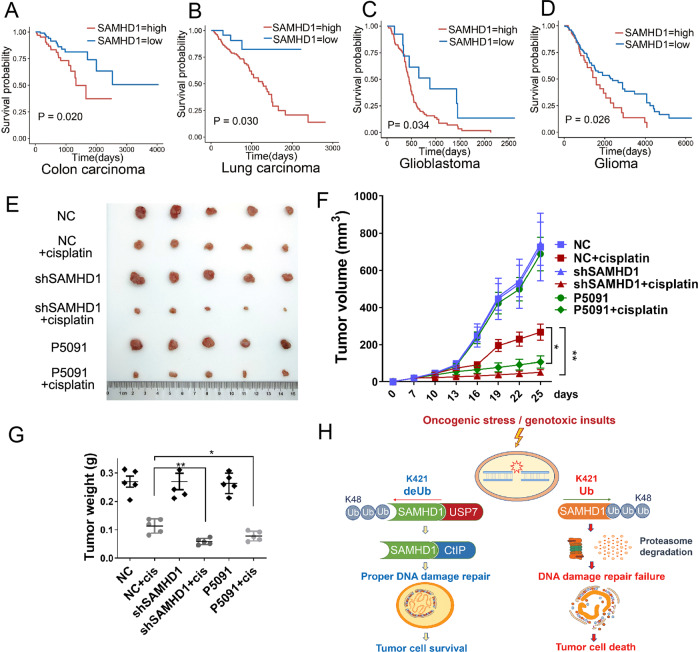
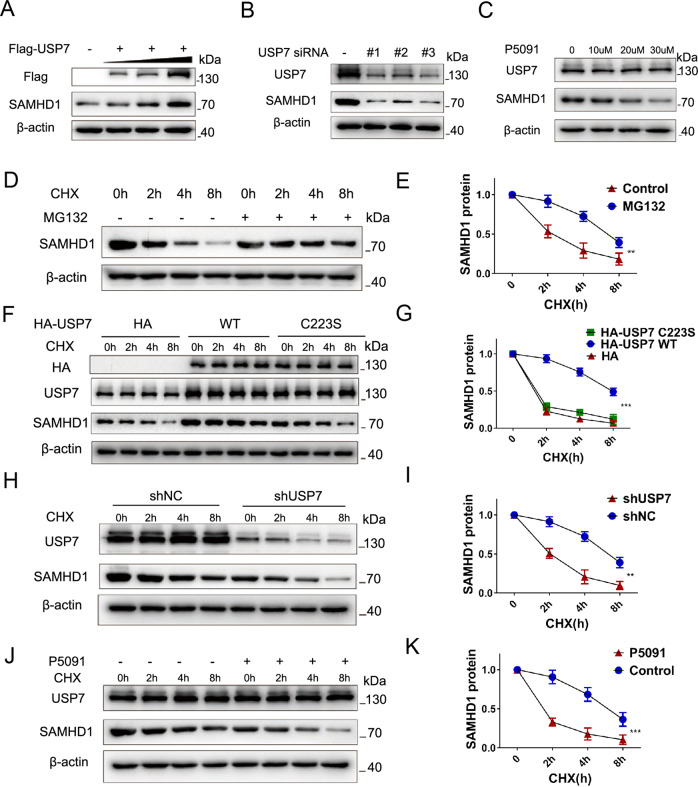
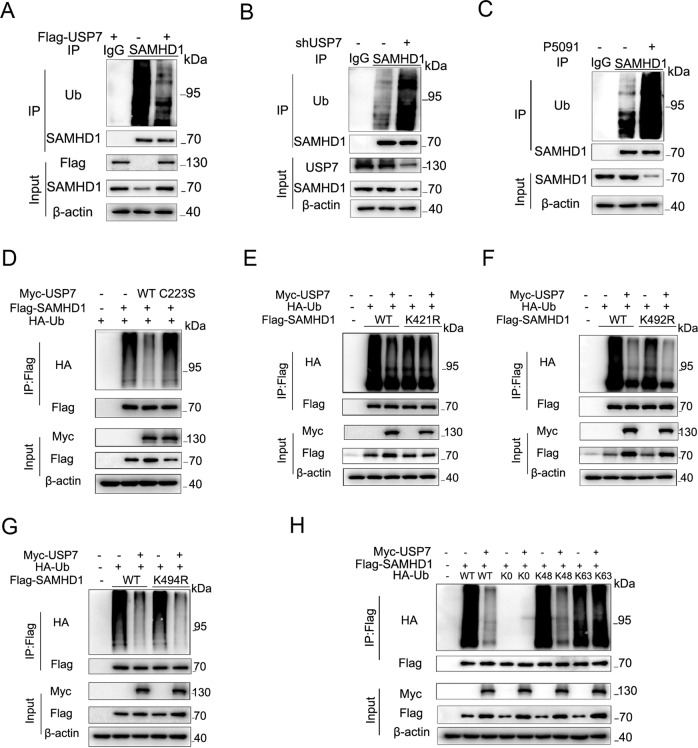
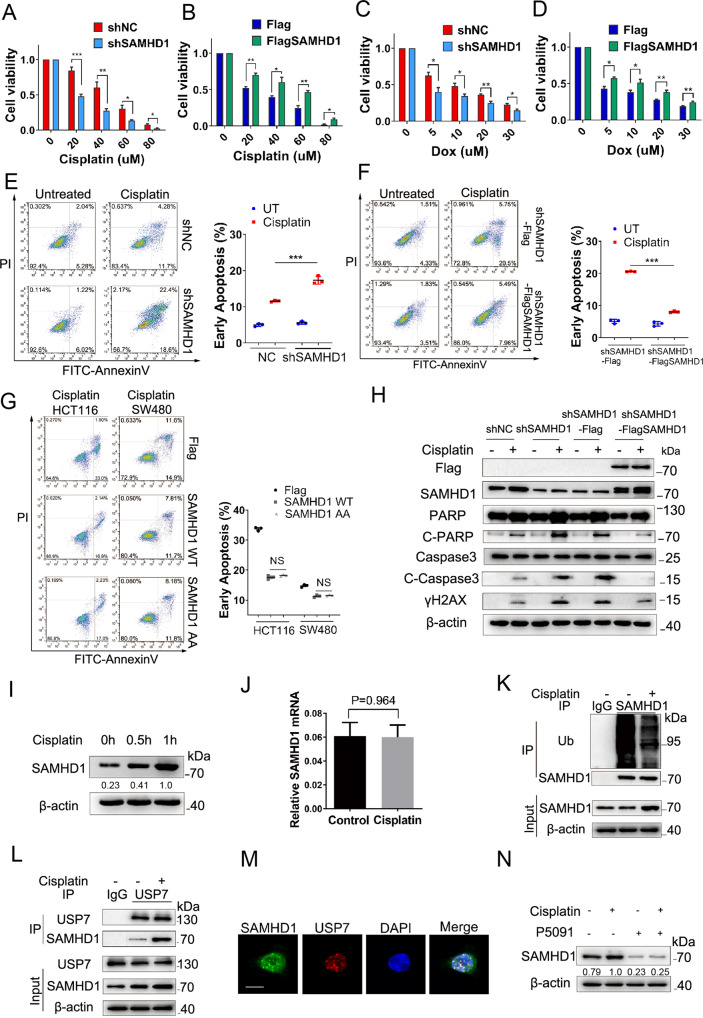
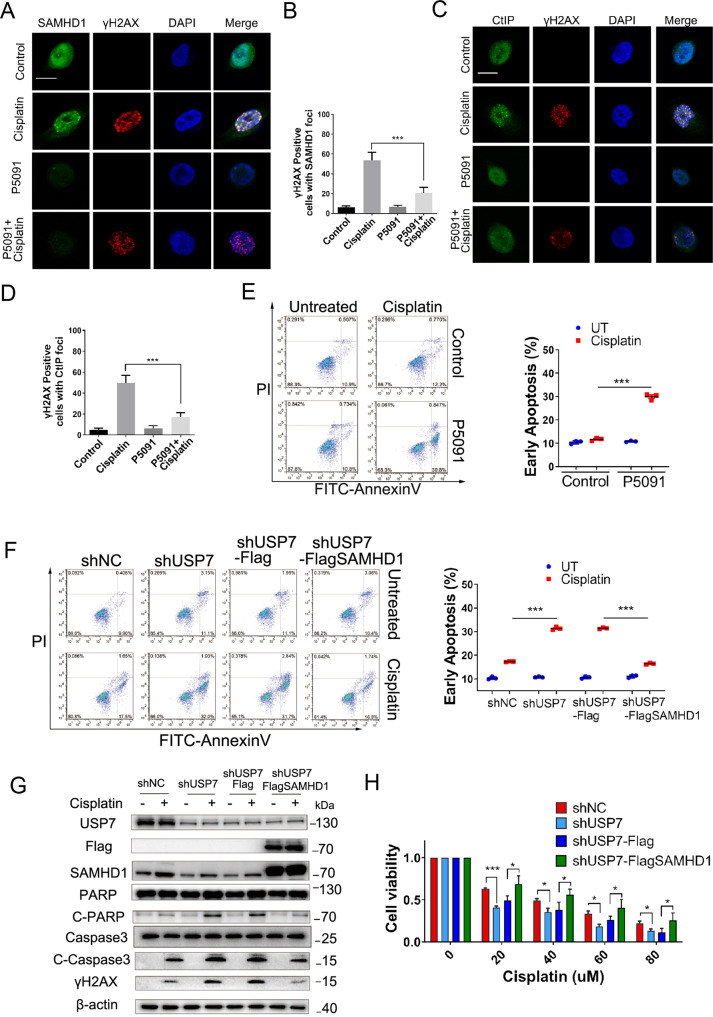
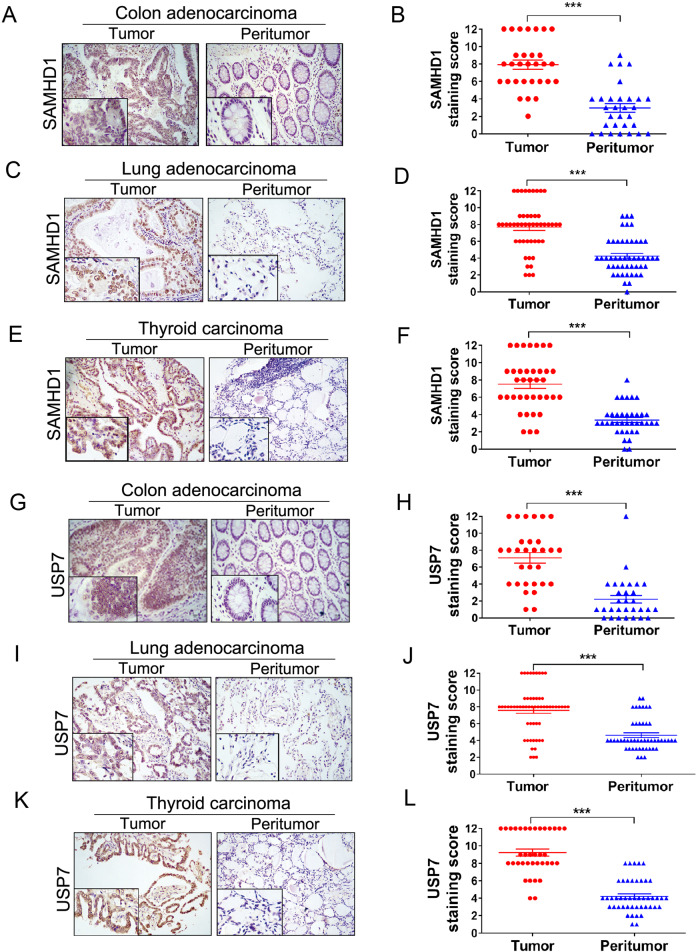
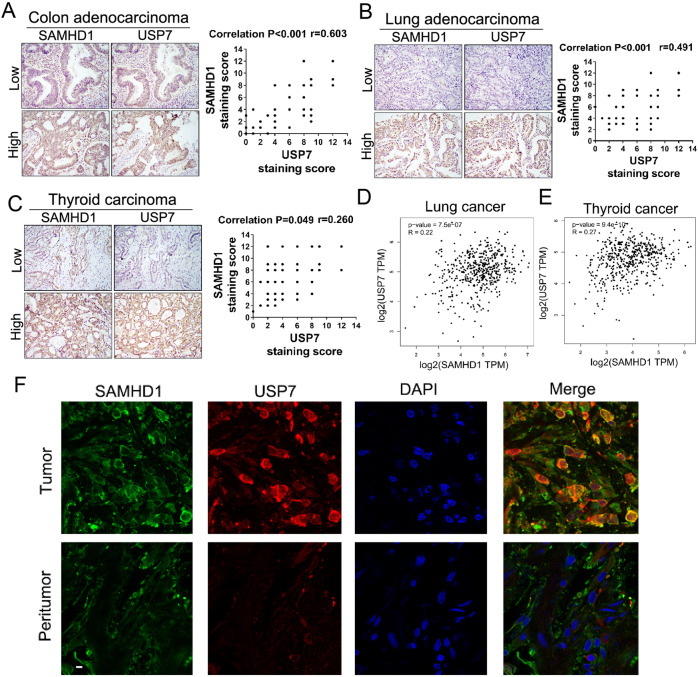
Oncogenic stress induces DNA damage repair (DDR) that permits escape from mitotic catastrophe and allows early precursor lesions during the evolution of cancer. SAMHD1, a dNTPase protecting cells from viral infections, has been recently found to participate in DNA damage repair process. However, its role in tumorigenesis remains largely unknown. Here, we show that SAMHD1 is up-regulated in early-stage human carcinoma tissues and cell lines under oxidative stress or genotoxic insults. We further demonstrate that de-ubiquitinating enzyme USP7 interacts with SAMHD1 and de-ubiquitinates it at lysine 421, thus stabilizing SAMHD1 protein expression for further interaction with CtIP for DDR, which promotes tumor cell survival under genotoxic stress. Furthermore, SAMHD1 levels positively correlates with USP7 in various human carcinomas, and is associated with an unfavorable survival outcome in patients who underwent chemotherapy. Moreover, USP7 inhibitor sensitizes tumor cells to chemotherapeutic agents by decreasing SAMHD1 in vitro and in vivo. These findings suggest that de-ubiquitination of SAMHD1 by USP7 promotes DDR to overcome oncogenic stress and affect chemotherapy sensitivity.
致癌应激诱导 DNA 损伤修复(DDR),使细胞能够逃避有丝分裂灾难,并在癌症的演变过程中产生早期前体损伤。SAMHD1 是一种能够保护细胞免受病毒感染的 dNTP 酶,最近发现它参与了 DNA 损伤修复过程。然而,其在肿瘤发生中的作用在很大程度上仍不清楚。在这里,我们发现在氧化应激或遗传毒性损伤下,SAMHD1 在早期人类癌组织和细胞系中上调。我们进一步证明去泛素化酶 USP7 与 SAMHD1 相互作用,并在赖氨酸 421 处对其进行去泛素化,从而稳定 SAMHD1 蛋白表达,以进一步与 CtIP 进行 DDR 相互作用,从而促进肿瘤细胞在遗传毒性应激下的存活。此外,SAMHD1 水平在各种人类癌组织中与 USP7 呈正相关,并与接受化疗的患者的不良生存结局相关。此外,USP7 抑制剂通过降低体外和体内的 SAMHD1 来增敏肿瘤细胞对化疗药物的敏感性。这些发现表明,USP7 对 SAMHD1 的去泛素化促进 DDR 以克服致癌应激并影响化疗敏感性。