Department of Medicinal Biosciences, College of Biomedical & Health Science, Konkuk University, 268, Chungwon-daero, Chungju 27478, Chungbuk, Republic of Korea.
BK21 Program, Department of Applied Life Science, Graduate School, Konkuk University, 268, Chungwon-daero, Chungju 27478, Chungbuk, Republic of Korea.
Int J Mol Sci. 2024 Feb 27;25(5):2768. doi: 10.3390/ijms25052768.
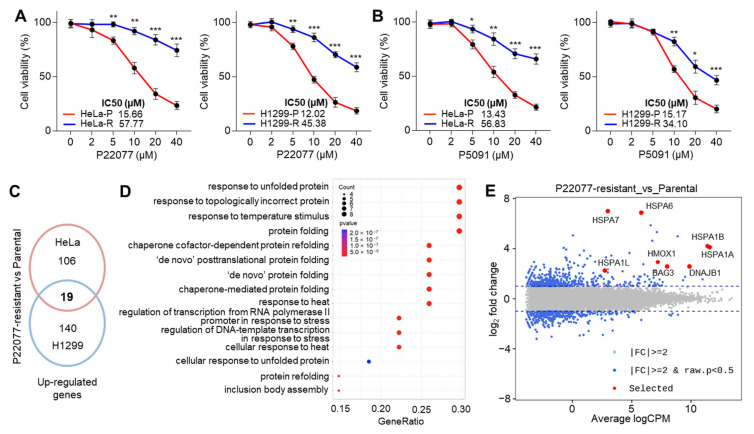
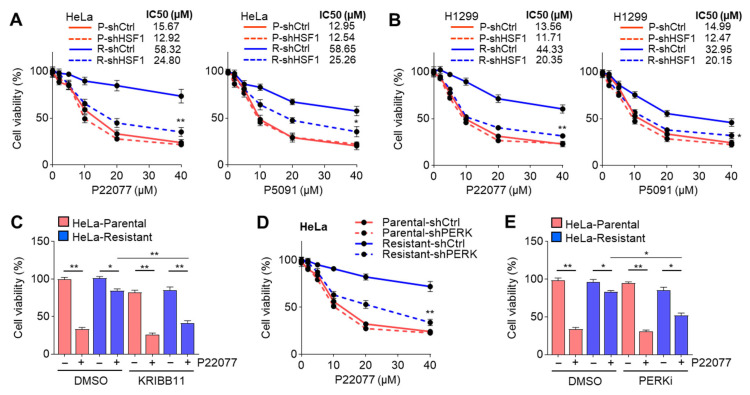
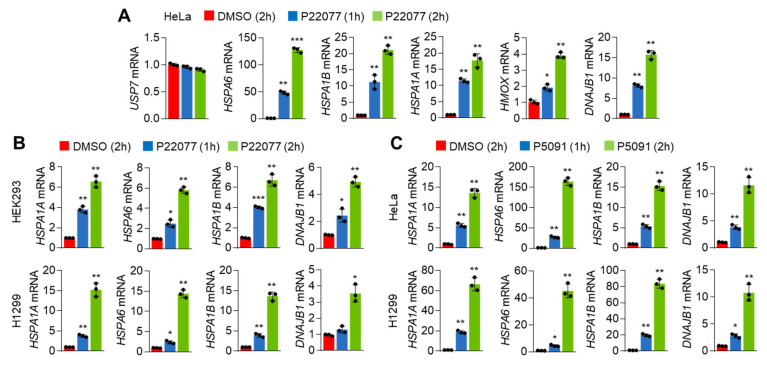
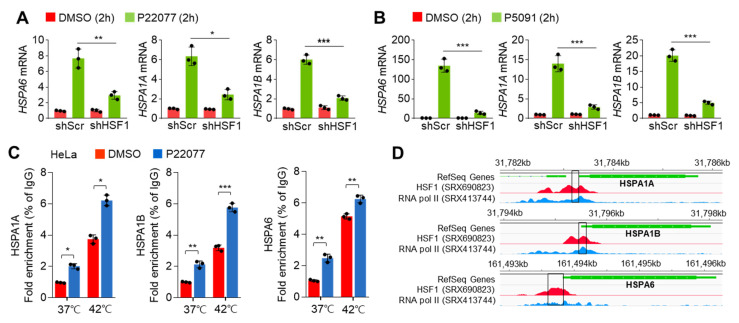
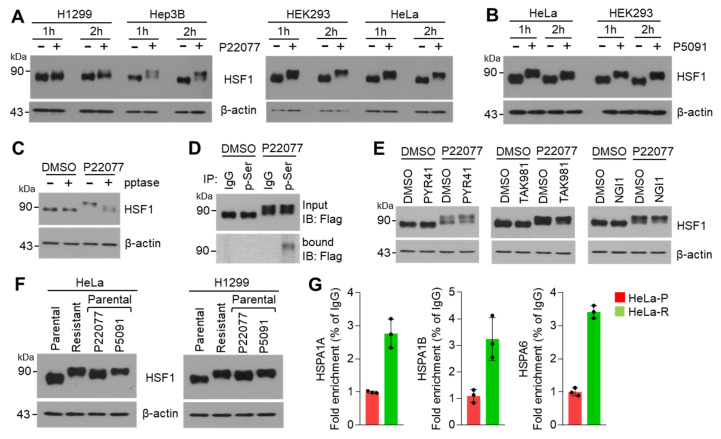
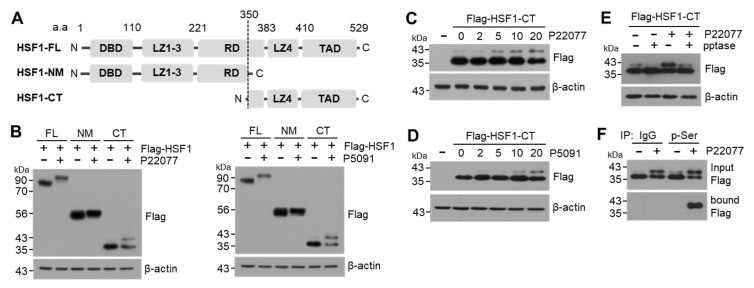
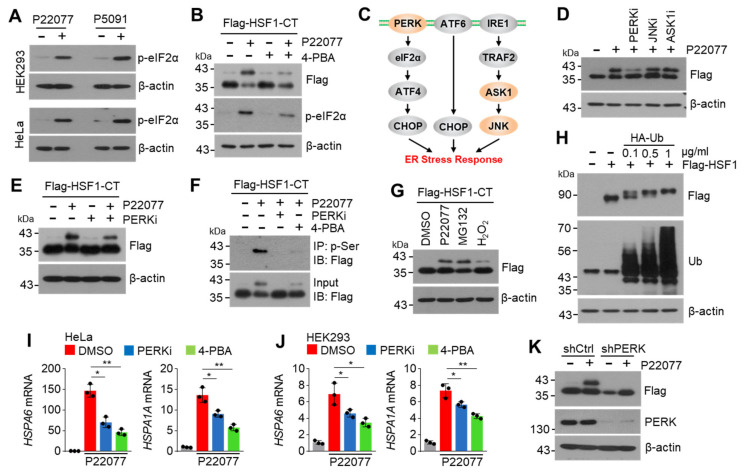
Ubiquitin-specific protease 7 inhibitors (USP7i) are considered a novel class of anticancer drugs. Cancer cells occasionally become insensitive to anticancer drugs, known as chemoresistance, by acquiring multidrug resistance, resulting in poor clinical outcomes in patients with cancer. However, the chemoresistance of cancer cells to USP7i (P22077 and P5091) and mechanisms to overcome it have not yet been investigated. In the present study, we generated human cancer cells with acquired resistance to USP7i-induced cell death. Gene expression profiling showed that heat stress response (HSR)- and unfolded protein response (UPR)-related genes were largely upregulated in USP7i-resistant cancer cells. Biochemical studies showed that USP7i induced the phosphorylation and activation of heat shock transcription factor 1 (HSF1), mediated by the endoplasmic reticulum (ER) stress protein kinase R-like ER kinase (PERK) signaling pathway. Inhibition of HSF1 and PERK significantly sensitized cancer cells to USP7i-induced cytotoxicity. Our study demonstrated that the ER stress-PERK axis is responsible for chemoresistance to USP7i, and inhibiting PERK is a potential strategy for improving the anticancer efficacy of USP7i.
泛素特异性蛋白酶 7 抑制剂(USP7i)被认为是一类新型的抗癌药物。癌细胞通过获得多药耐药性,偶尔会对抗癌药物产生不敏感,称为化疗耐药性,导致癌症患者的临床结局较差。然而,癌细胞对 USP7i(P22077 和 P5091)的化疗耐药性及其克服机制尚未得到研究。在本研究中,我们生成了对 USP7i 诱导的细胞死亡具有获得性耐药的人类癌细胞。基因表达谱分析表明,热应激反应(HSR)和未折叠蛋白反应(UPR)相关基因在 USP7i 耐药癌细胞中大量上调。生化研究表明,USP7i 通过内质网(ER)应激蛋白激酶 R 样 ER 激酶(PERK)信号通路诱导热休克转录因子 1(HSF1)的磷酸化和激活。抑制 HSF1 和 PERK 可显著增强癌细胞对 USP7i 诱导的细胞毒性的敏感性。我们的研究表明,ER 应激-PERK 轴是导致 USP7i 化疗耐药的原因,抑制 PERK 是提高 USP7i 抗癌疗效的潜在策略。