Harvard John A. Paulson School of Engineering and Applied Sciences, Harvard University, Cambridge, MA, USA.
Department of Chemistry, University of Copenhagen, Copenhagen, Denmark.
Sci Rep. 2023 Apr 20;13(1):6457. doi: 10.1038/s41598-023-32574-9.
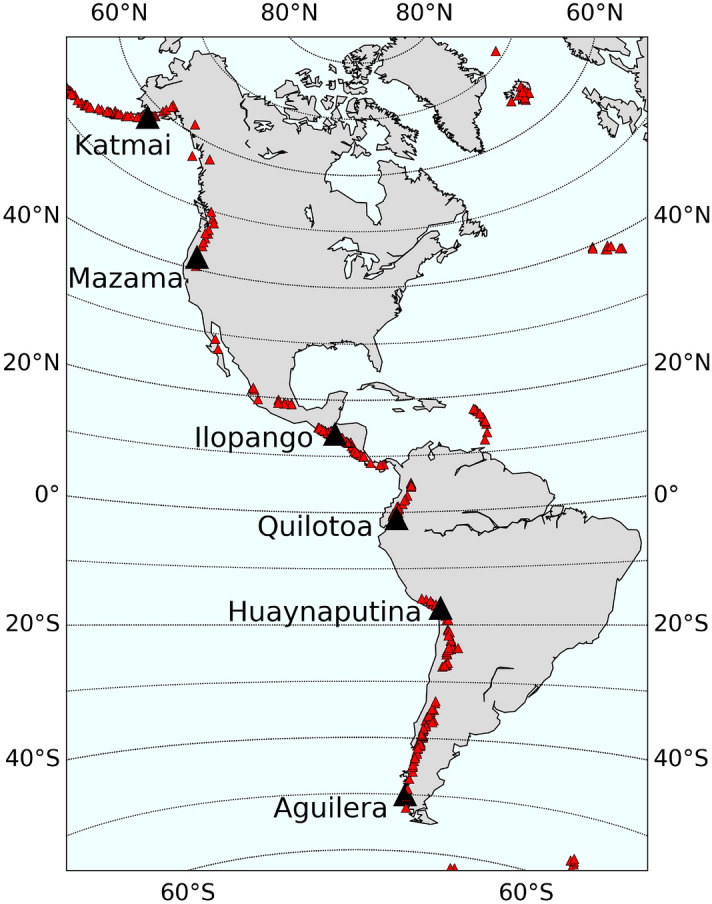
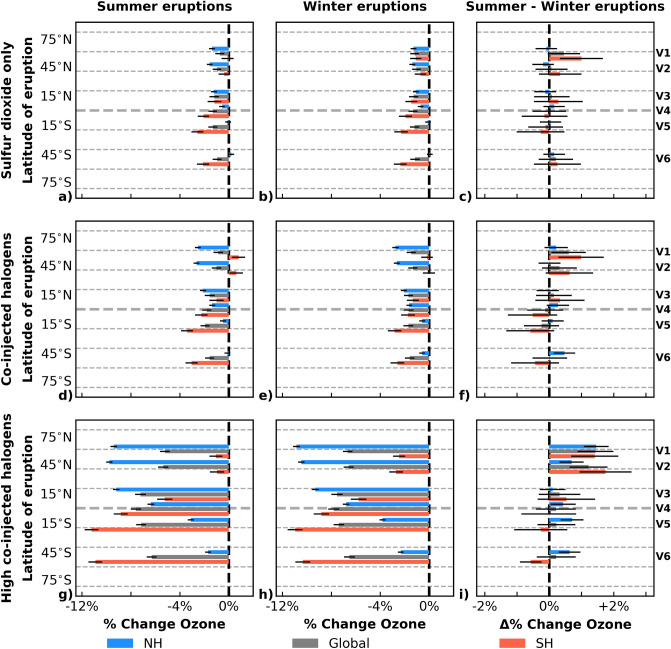
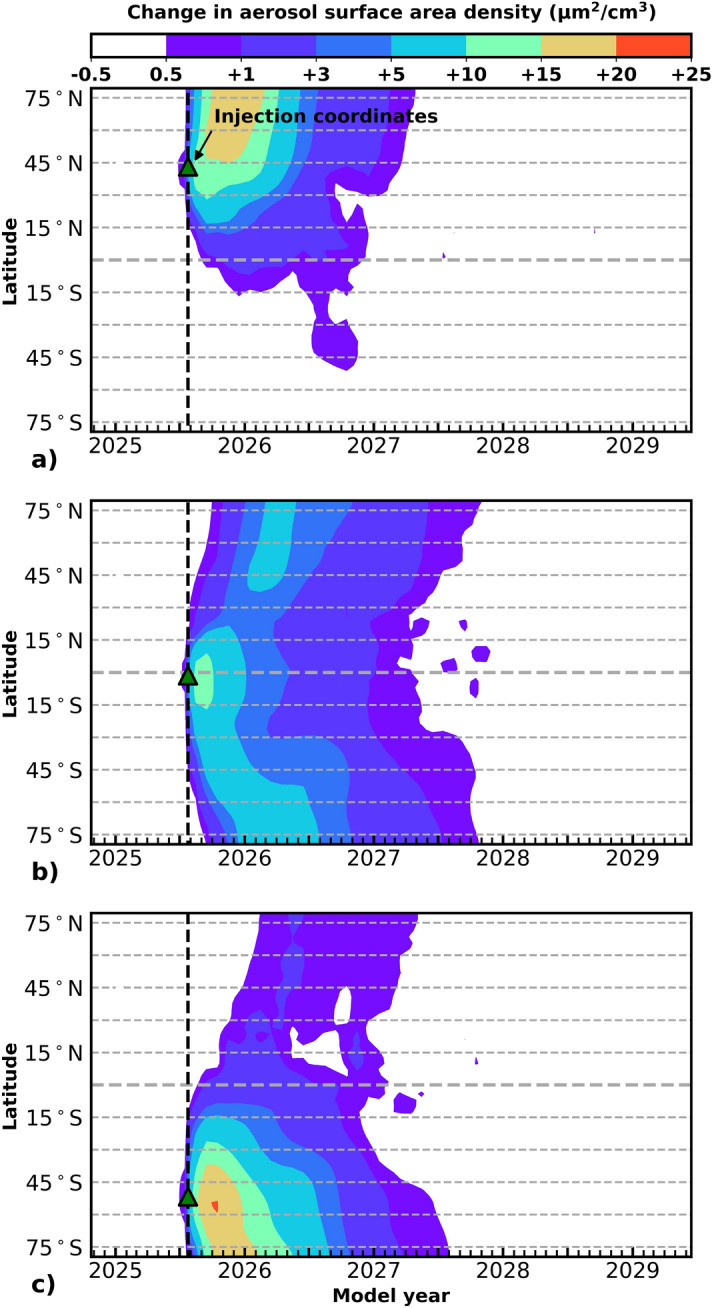
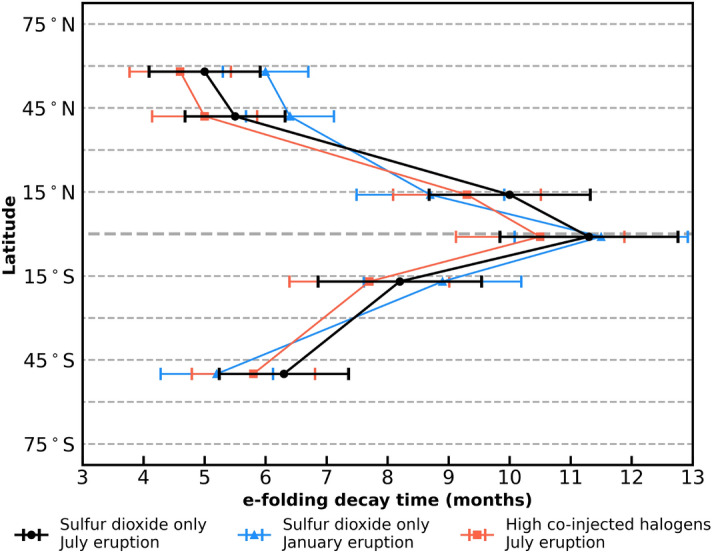
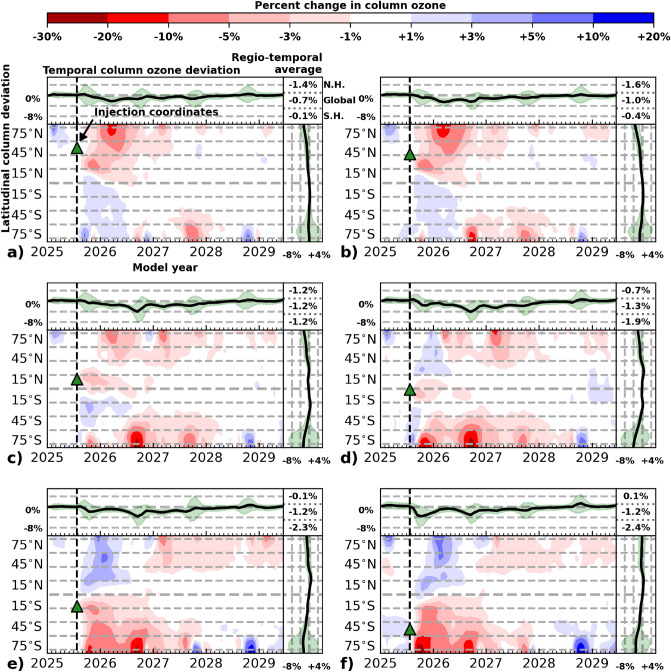
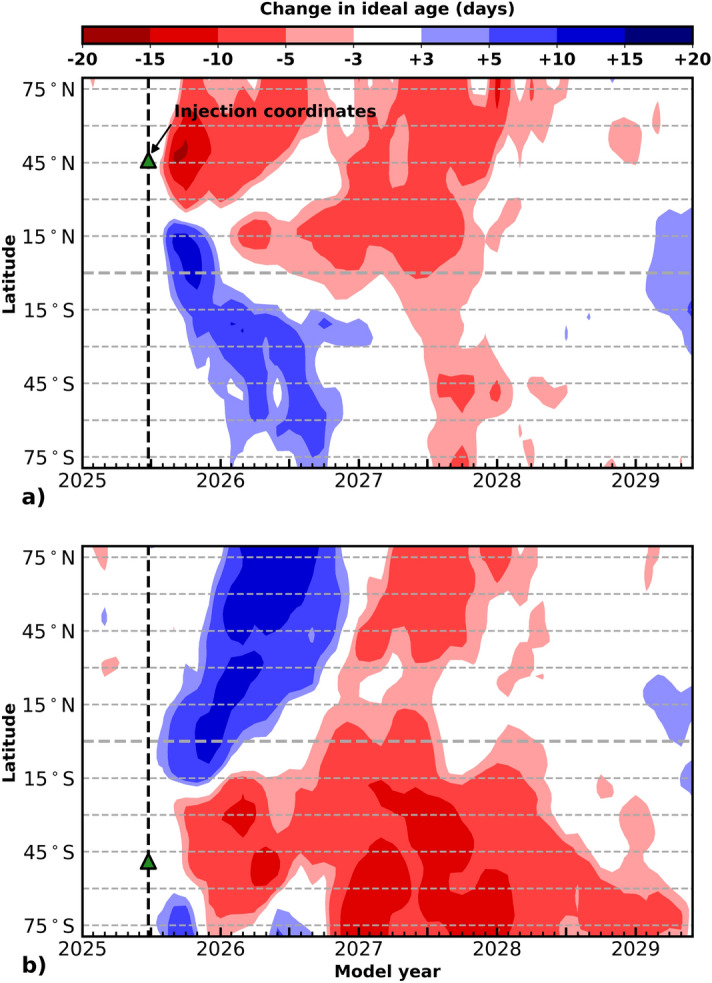
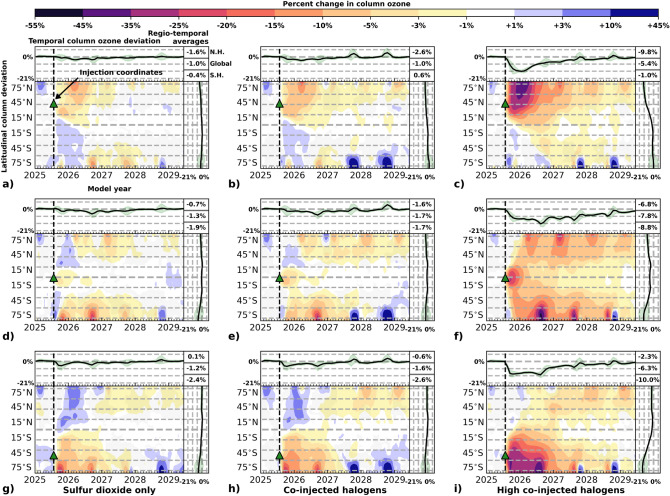
We present a systematic evaluation of the perturbation to the stratosphere from an explosive volcanic eruption injecting sulfur dioxide into the atmosphere, as a function of latitude, season, and injection gas halogen content in a chemistry-climate state representative of the present day (modeled as year 2025). Enhancements in aerosol surface area density and decreases in stratospheric ozone are observed for a period of years following all modeled scenarios, with volcanic eruptions near the equator impacting both hemispheres relatively equally, and eruptions at higher latitudes reducing the thickness of the ozone layer more substantially in the hemisphere of the eruption. Our simulations reveal that there that are significant seasonal differences when comparing the stratospheric impact of a volcanic eruption occurring in summer versus winter, and this holds true regardless of whether volcanic halogen gases (Cl, Br) are co-injected with sulfur dioxide. If an explosive halogen-rich eruption were to occur, there would be substantial ozone losses in both hemispheres, regardless of latitude or season, with recovery potentially exceeding 4 years.
我们对大气中二氧化硫爆炸式喷发对平流层的影响进行了系统评估,这取决于纬度、季节和注入气体的卤素含量,采用的是当今(模拟为 2025 年)化学气候状态的代表。在所有模拟场景之后的数年中,都观察到气溶胶表面积密度增加和平流层臭氧减少,赤道附近的火山喷发相对均匀地影响两个半球,而高纬度的喷发则使喷发半球的臭氧层厚度大大降低。我们的模拟表明,与夏季相比,冬季发生的火山喷发对平流层的影响存在显著的季节性差异,而且无论是否与二氧化硫一起注入火山卤族气体(Cl、Br),情况均如此。如果发生富含卤族元素的爆炸式喷发,两个半球都会出现大量臭氧损失,无论纬度或季节如何,恢复可能需要超过 4 年。