Clinical and Experimental Optometry Research Lab (CEORLab), Center of Physics (Optometry), School of Sciences, University of Minho, Braga, Portugal.
PLoS One. 2023 Apr 21;18(4):e0284703. doi: 10.1371/journal.pone.0284703. eCollection 2023.
To investigate the prevalence, distribution and trends of refractive error from ophthalmic lens manufacturing data over a ten-year period.
Fully anonymized data from ophthalmic lenses, for the years between 2010 and 2020, provided by the leading ophthalmic lens manufacturer operating in Portugal were analysed (no human participants were involved in the research). Prescriptions delivered were divided in single vision prescriptions and progressive/multifocal prescriptions and categorized into 14 spherical equivalent ranges. Given the lack of absolute values, indirect estimates and a qualitative analysis of the current situation and trends on refractive error epidemiology was carried out.
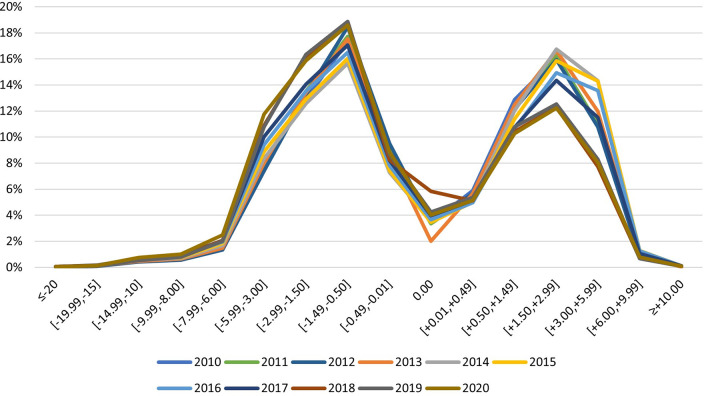
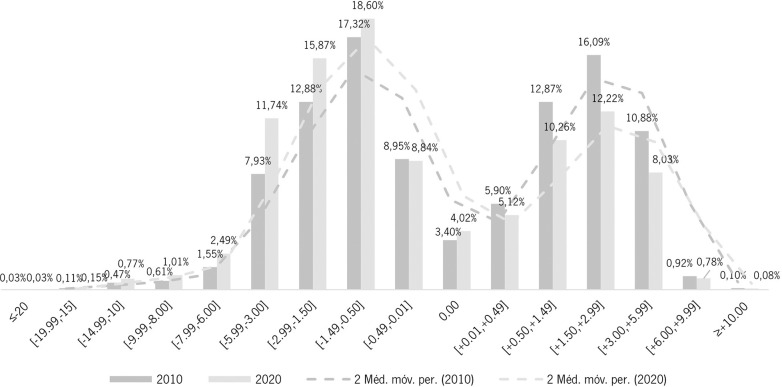
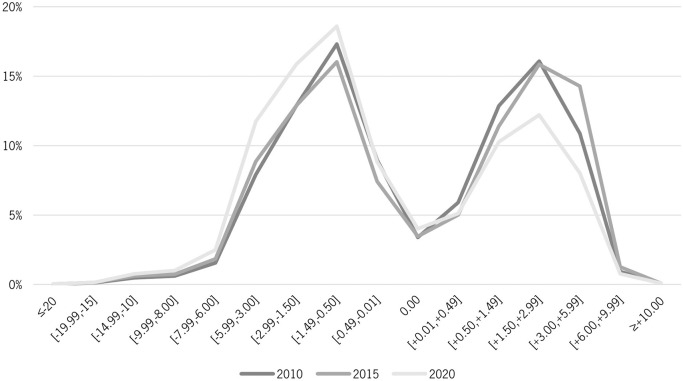
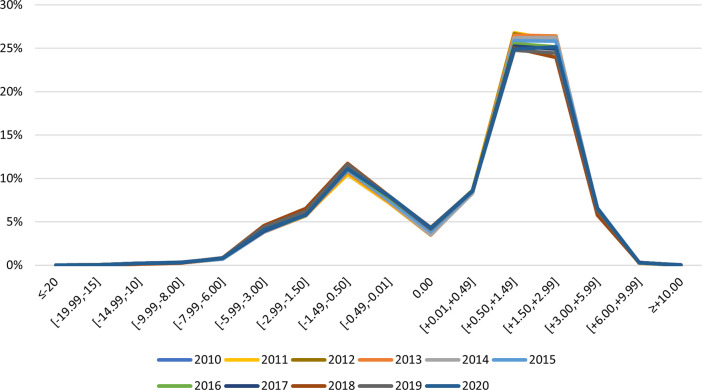
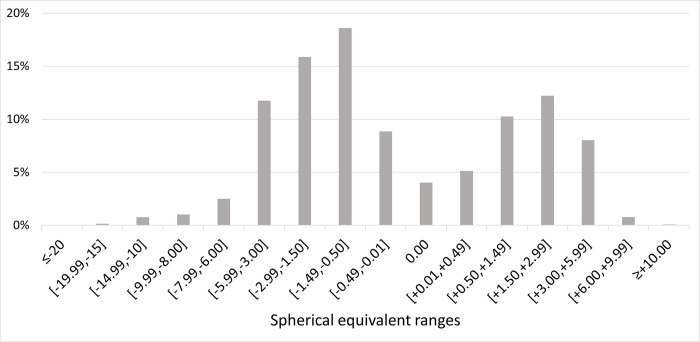
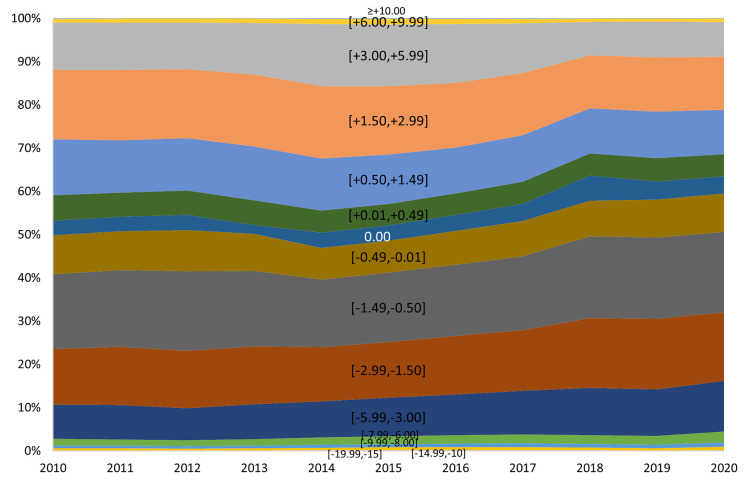
Dataset from manufacturer comprises percentage values of ophthalmic lenses dispensed in Portugal. The distribution of ophthalmic prescriptions for single vision prescriptions presents most of the observations in the range [-1.49, -0.50] diopters, in every year from 2010 to 2020. For the progressive prescription's lenses, most of the observations is in an interval of two ranges, [0.50, 1.49] and [1.50, 2.99] diopters. From 2010 to 2020 the proportion of single vision ophthalmic lens prescriptions for myopia increased from 38.13% to 46.21%; the proportion for high myopia increased from 2.76% to 4.45%; and the proportion for hyperopia decreased from 40.85% to 31.36%.
Ophthalmic lens manufacturing data can be a valuable source for long-term analysis of refractive error prescription and trends over time. It was possible to observe a trend of increasing prevalence of myopia and high myopia from 40.89% in 2010 to 50.66% in 2020. That increase trend has important implications for public health and in the planning of services.
从眼科镜片制造数据中调查过去十年屈光不正的流行率、分布和趋势。
对在葡萄牙运营的领先眼科镜片制造商提供的 2010 年至 2020 年期间的完全匿名眼科镜片数据进行了分析(研究中未涉及人类参与者)。提供的处方被分为单视处方和渐进/多焦点处方,并分为 14 个等效球镜范围。鉴于缺乏绝对值,对当前屈光不正流行病学的情况和趋势进行了间接估计和定性分析。
制造商的数据集包括在葡萄牙配眼镜的百分比值。单视处方的眼科处方分布在 2010 年至 2020 年的每一年中,大部分观察结果都在-1.49 至-0.50 屈光度范围内。对于渐进式镜片,大多数观察结果都在 0.50 至 1.49 和 1.50 至 2.99 屈光度两个范围内。从 2010 年到 2020 年,近视单视眼科镜片处方的比例从 38.13%增加到 46.21%;高度近视的比例从 2.76%增加到 4.45%;远视的比例从 40.85%下降到 31.36%。
眼科镜片制造数据可以成为长期分析屈光不正处方和随时间变化趋势的有价值的来源。可以观察到近视和高度近视的患病率从 2010 年的 40.89%上升到 2020 年的 50.66%的趋势。这种增加趋势对公共卫生和服务规划具有重要意义。