Biomacromolecule Research Team, RIKEN Center for Sustainable Resource Science, Wako-shi, Saitama 351-0198, Japan.
Institute for Advanced Biosciences, Keio University, Tsuruoka-shi, Yamagata 997-0017, Japan.
Biomacromolecules. 2023 Jun 12;24(6):2721-2729. doi: 10.1021/acs.biomac.3c00160. Epub 2023 Apr 21.
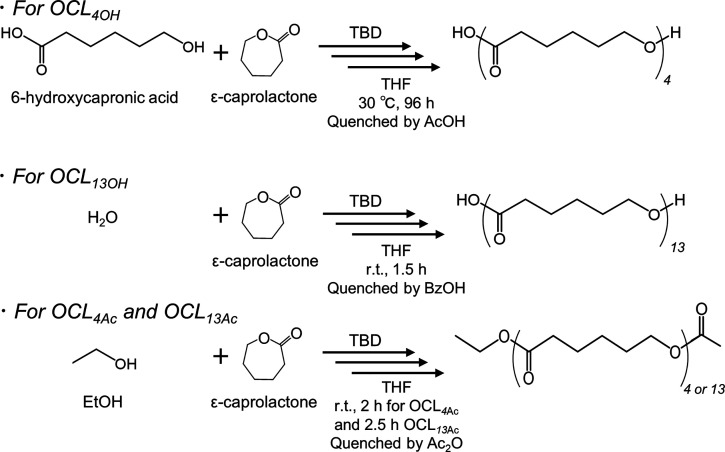
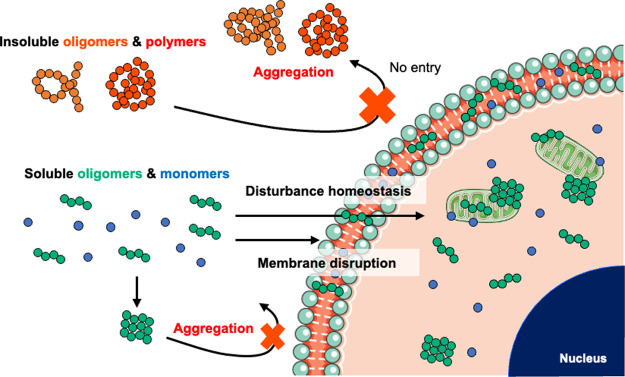
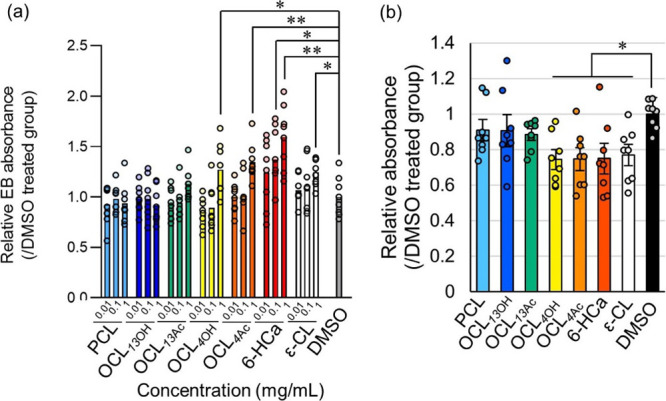
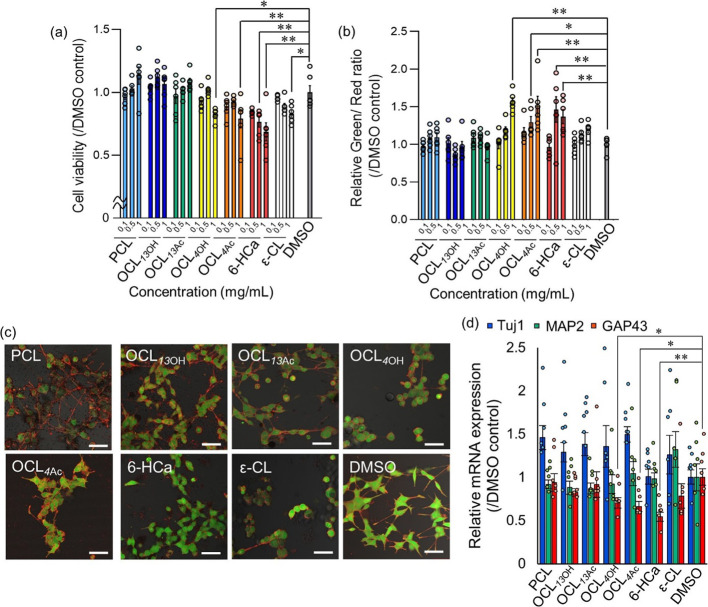
Biodegradable polymers are eco-friendly materials and have attracted attention for use in a sustainable society because they are not accumulated in the environment. Although the characteristics of biodegradable polymers have been assessed well, the effects of their degradation products have not. Herein, we comprehensively evaluated the chemical toxicities of biodegradable polyester, polycaprolactone (PCL), and synthetic oligocaprolactones (OCLs) with different degrees of polymerization. While the PCL did not show any adverse effects on various organisms, high levels of shorter OCLs and the monomer (1 μg/mL for freshwater microorganisms and 1 mg/mL for marine algae and mammalian cells) damaged the tested organisms, including freshwater microorganisms, marine algae, and mammalian cells, which indicated the toxicities of the degradation products under unnaturally high concentrations. These results highlight the need for a further understanding of the effects of the degradation products resulting from biodegradable polyesters to ensure a genuinely sustainable society.
可生物降解聚合物是环保材料,因其不会在环境中积累而引起了人们对其在可持续社会中应用的关注。尽管已经很好地评估了可生物降解聚合物的特性,但它们的降解产物的影响尚未得到评估。在此,我们全面评估了具有不同聚合度的可生物降解聚酯、聚己内酯(PCL)和合成低聚己内酯(OCL)的化学毒性。虽然 PCL 对各种生物体没有任何不良影响,但高浓度的较短 OCL 及其单体(淡水微生物为 1μg/mL,海洋藻类和哺乳动物细胞为 1mg/mL)会破坏测试的生物体,包括淡水微生物、海洋藻类和哺乳动物细胞,这表明在非自然高浓度下降解产物具有毒性。这些结果强调了需要进一步了解可生物降解聚酯的降解产物的影响,以确保建立一个真正可持续的社会。