Washburn Mary E, Shanks Ryan A, McCartney Melissa, Robertson Chuck L, Segura-Totten Miriam
Department of Plant Biology, University of Georgia, Athens, Georgia, USA.
Biology Department, University of North Georgia, Dahlonega, Georgia, USA.
J Microbiol Biol Educ. 2023 Jan 23;24(1). doi: 10.1128/jmbe.00154-22. eCollection 2023 Apr.
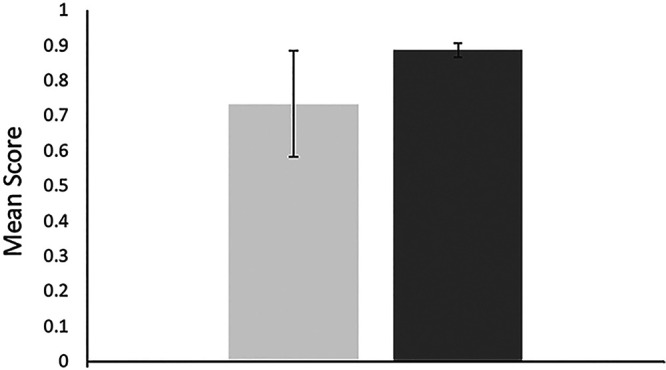
As the amount and complexity of scientific knowledge continues to grow, it is essential to educate scientifically literate citizens who can comprehend the process of science and the implications of technological advances. This is especially important when educating science, technology, engineering, and mathematics (STEM) college students, since they may play a central role in the future of scientific research and its communication. A central part of decoding and interpreting scientific information is the ability to analyze scientific research articles. For this reason, many different approaches for reading scientific research articles have been developed and published. Despite the availability of numerous ways of analyzing scientific research articles, biology students can face challenges that may prevent them from fully comprehending the text. We sought to address student challenges with science vocabulary and content knowledge by adding structural supports to in-classroom article discussions through the use of annotated articles from the Science in the Classroom initiative. We describe the pedagogical approach used for discussing scientific research articles within a required biology course. In this context, we found that students' scientific literacy skills increased at the end of the semester. We also found that, for each article discussed, the majority of students could interpret graphical representations of article results and that they could identify and comprehend components of the experimental design of the study.
随着科学知识的数量和复杂性不断增加,培养具有科学素养的公民至关重要,这些公民能够理解科学过程以及技术进步的影响。在对科学、技术、工程和数学(STEM)专业的大学生进行教育时,这一点尤为重要,因为他们可能在未来的科学研究及其交流中发挥核心作用。分析科学研究文章的能力是解码和解释科学信息的核心部分。因此,人们开发并发表了许多不同的阅读科学研究文章的方法。尽管有众多分析科学研究文章的方法,但生物专业的学生可能会面临一些挑战,这些挑战可能会阻碍他们完全理解文章内容。我们试图通过使用“课堂中的科学”倡议提供的注释文章,在课堂文章讨论中增加结构支持,以应对学生在科学词汇和内容知识方面的挑战。我们描述了在一门必修生物学课程中用于讨论科学研究文章的教学方法。在这种情况下,我们发现学生的科学素养技能在学期末有所提高。我们还发现,对于每篇讨论的文章,大多数学生能够解释文章结果的图形表示,并且能够识别和理解研究实验设计的组成部分。