Alami Hassane, Shaw Sara E, Fortin Jean-Paul, Savoldelli Mathilde, Fleet Richard, Têtu Bernard
Nuffield Department of Primary Care Health Sciences, University of Oxford, Oxford, UK.
Department of Social and Preventive Medicine, Faculty of Medicine, Laval University, Quebec, Canada.
Digit Health. 2023 Apr 16;9:20552076231169835. doi: 10.1177/20552076231169835. eCollection 2023 Jan-Dec.
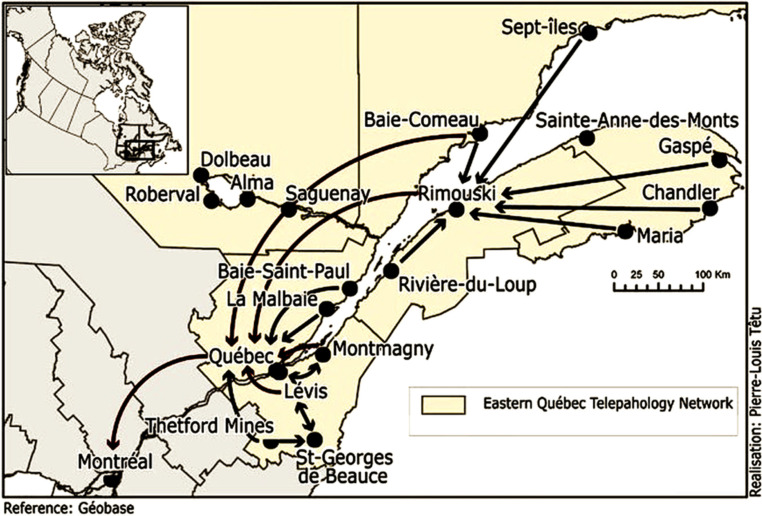
The COVID-19 pandemic has accelerated the deployment of telehealth services in many countries around the world. It also revealed many barriers and challenges to the use of digital health technologies in health organisations and systems that have persisted for decades. One of these barriers is what is known as the 'wrong pocket' problem - where an organisation or sector makes expenditures and investments to address a given problem, but the benefits (return on investment) are captured by another organisation or sector (the wrong pocket). This problem is the origin of many difficulties in public policies and programmes (e.g. education, environment, justice and public health), especially in terms of sustainability and scaling-up of technology and innovation. In this essay/perspective, we address the wrong pocket problem in the context of a major telehealth project in Canada. We show how the problem of sharing investments and expenses, as well as the redistribution of economies among the different stakeholders involved, may have threatened the sustainability and scaling-up of this project, even though it has demonstrated the clinical utility and contributed to improving the health of populations. In conclusion, the wrong pocket problem may be decisive in the reduced take-up, and potential failure, of certain telehealth programmes and policies. It is not enough for a telehealth service to be clinically relevant and 'efficient', it must also be mutually beneficial to the various stakeholders involved, particularly in terms of the equitable sharing of costs and benefits (return on investment) associated with the implementation of this new service model. Finally, the wrong pocket concept offers a helpful lens for studying the success, sustainability, and scale-up of digital transformations in health organisations and systems. This needs to be considered in future research and evaluations in the field.
新冠疫情加速了远程医疗服务在全球许多国家的部署。它还揭示了卫生组织和系统在使用数字健康技术方面存在的诸多障碍和挑战,这些障碍和挑战已持续数十年。其中一个障碍就是所谓的“错口袋”问题——即一个组织或部门为解决特定问题进行支出和投资,但收益(投资回报)却被另一个组织或部门获取(错口袋)。这个问题是公共政策和项目(如教育、环境、司法和公共卫生)中诸多困难的根源,尤其是在技术与创新的可持续性及扩大规模方面。在本文/观点中,我们以加拿大一个大型远程医疗项目为例探讨“错口袋”问题。我们展示了投资与费用分担问题,以及不同利益相关者之间经济利益的重新分配,是如何可能威胁到该项目的可持续性和扩大规模的,尽管该项目已证明了其临床效用并有助于改善民众健康。总之,“错口袋”问题可能对某些远程医疗项目和政策的采用率降低及潜在失败起决定性作用。一项远程医疗服务仅在临床方面相关且“高效”是不够的,它还必须对各相关利益者互利,特别是在公平分担与实施这种新服务模式相关的成本和收益(投资回报)方面。最后,“错口袋”概念为研究卫生组织和系统数字化转型的成功、可持续性及扩大规模提供了一个有用的视角。这在该领域未来的研究和评估中需要加以考虑。