Sutanto Henry, Soegiarto Gatot
Department of Internal Medicine, Faculty of Medicine, Universitas Airlangga, Surabaya 60132, Indonesia.
Department of Internal Medicine, Dr. Soetomo Teaching Hospital, Surabaya 60286, Indonesia.
Hematol Rep. 2023 Apr 3;15(2):225-243. doi: 10.3390/hematolrep15020024.
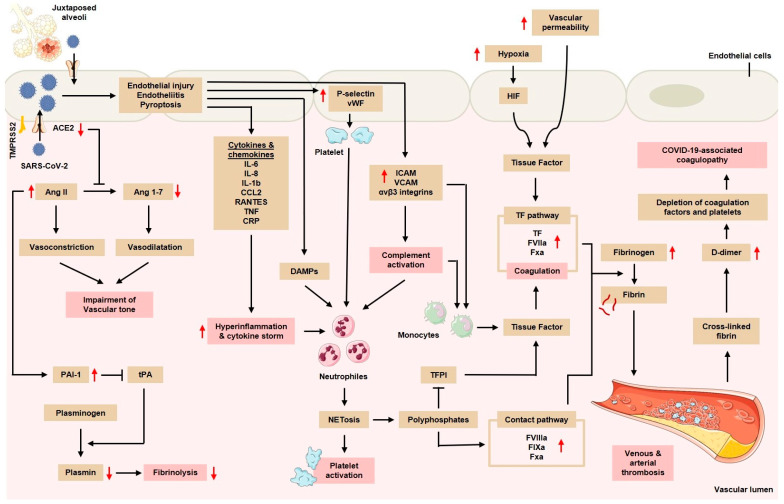
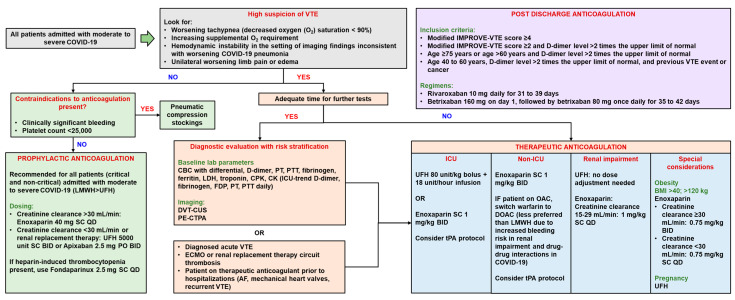
Coronavirus disease 2019 (COVID-19) increases the risk of thromboembolic events, especially in patients with severe infections requiring intensive care and cardiorespiratory support. COVID-19 patients with thromboembolic complications have a higher risk of death, and if they survive, these complications are expected to negatively affect these patients' quality of life. Moreover, recent data reported that the risk of thromboembolism remains high months after a COVID-19 infection. Therefore, understanding the pathogenesis of thrombosis in the setting of COVID-19 may facilitate the early prevention and treatment of COVID-19-associated thromboembolism to reduce concomitant morbidity, mortality, and disability. This review will first discuss the clinical characteristics of COVID-19 infections, particularly with regard to the underlying pathophysiology. Then, the pathogenesis of COVID-19-associated thrombosis at the molecular and cellular levels will be comprehensively reviewed. Next, the clinical manifestations of venous and arterial thromboembolism in COVID-19 as well as the potential benefits of several laboratory markers of thrombosis will be further discussed. Lastly, the preventive and therapeutic management of thromboembolism during and after COVID-19 will also be explained.
2019冠状病毒病(COVID-19)会增加血栓栓塞事件的风险,尤其是在需要重症监护和心肺支持的严重感染患者中。患有血栓栓塞并发症的COVID-19患者死亡风险更高,而且即便存活下来,这些并发症预计也会对患者的生活质量产生负面影响。此外,近期数据报告显示,COVID-19感染数月后,血栓栓塞风险仍然很高。因此,了解COVID-19背景下血栓形成的发病机制可能有助于早期预防和治疗COVID-19相关的血栓栓塞,以降低随之而来的发病率、死亡率和残疾率。本综述将首先讨论COVID-19感染的临床特征,特别是潜在的病理生理学方面。然后,将全面综述COVID-19相关血栓形成在分子和细胞水平的发病机制。接下来,将进一步讨论COVID-19中静脉和动脉血栓栓塞的临床表现以及几种血栓形成实验室标志物的潜在益处。最后,还将解释COVID-19期间及之后血栓栓塞的预防和治疗管理。