Wifi Mohamed-Naguib, Morad Mohamed Abdelkader, El Sheemy Reem, Abdeen Nermeen, Afify Shimaa, Abdalgaber Mohammad, Abdellatef Abeer, Zaghloul Mariam, Alboraie Mohamed, El-Kassas Mohamed
Department of Internal Medicine, Hepatogastro- enterology Unit, Kasr Al-Ainy School of Medicine, Cairo University, Cairo 11451, Egypt.
Clinical Hematology Unit, Department of Internal Medicine, Kasr Al-Ainy, Faculty of Medicine, Cairo University, Cairo 11451, Egypt.
World J Methodol. 2022 Sep 20;12(5):331-349. doi: 10.5662/wjm.v12.i5.331.
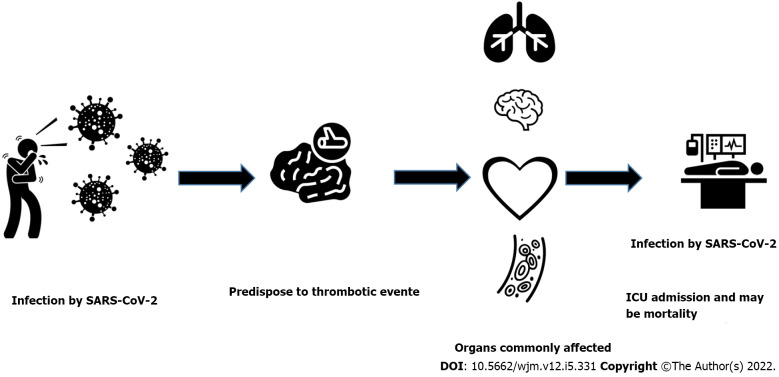
Since the discovery of severe acute respiratory syndrome coronavirus 2 (SARS-CoV-2) and its resultant coronavirus disease 2019 (COVID-19) pandemic, respiratory manifestations have been the mainstay of clinical diagnosis, laboratory evaluations, and radiological investigations. As time passed, other pathological aspects of SARS-CoV-2 have been revealed. Various hemostatic abnormalities have been reported since the rise of the pandemic, which was sometimes superficial, transient, or fatal. Mild thrombocytopenia, thrombocytosis, venous, arterial thromboembolism, and disseminated intravascular coagulation are among the many hemostatic events associated with COVID-19. Venous thromboembolism necessitating therapeutic doses of anticoagulants is more frequently seen in severe cases of COVID-19, especially in patients admitted to intensive care units. Hemorrhagic complications rarely arise in COVID-19 patients either due to a hemostatic imbalance resulting from severe disease or as a complication of over anticoagulation. Although the pathogenesis of coagulation disturbance in SARS-CoV-2 infection is not yet understood, professional societies recommend prophylactic antithrombotic therapy in severe cases, especially in the presence of abnormal coagulation indices. The review article discusses the various available evidence on coagulation disorders, management strategies, outcomes, and prognosis associated with COVID-19 coagulopathy, which raises awareness about the importance of anticoagulation therapy for COVID-19 patients to guard against possible thromboembolic events.
自严重急性呼吸综合征冠状病毒2(SARS-CoV-2)被发现及其引发2019冠状病毒病(COVID-19)大流行以来,呼吸道表现一直是临床诊断、实验室评估和影像学检查的主要依据。随着时间的推移,SARS-CoV-2的其他病理方面也被揭示出来。自大流行开始以来,已经报告了各种止血异常情况,这些异常情况有时是轻微的、短暂的或致命的。轻度血小板减少、血小板增多、静脉和动脉血栓栓塞以及弥散性血管内凝血是与COVID-19相关的众多止血事件。需要治疗剂量抗凝剂的静脉血栓栓塞在COVID-19重症病例中更为常见,尤其是在入住重症监护病房的患者中。COVID-19患者很少出现出血并发症,这要么是由于严重疾病导致的止血失衡,要么是过度抗凝的并发症。尽管SARS-CoV-2感染中凝血紊乱的发病机制尚不清楚,但专业协会建议在重症病例中进行预防性抗血栓治疗,尤其是在凝血指标异常的情况下。这篇综述文章讨论了与COVID-19凝血病相关的凝血障碍、管理策略、结果和预后的各种现有证据,这提高了人们对抗凝治疗对COVID-19患者预防可能的血栓栓塞事件重要性的认识。