Wouthuyzen-Bakker Marjan
Department of Medical Microbiology and Infection Prevention, University Medical Center Groningen, University of Groningen, Groningen, the Netherlands.
EFORT Open Rev. 2023 Apr 25;8(4):175-179. doi: 10.1530/EOR-22-0115.
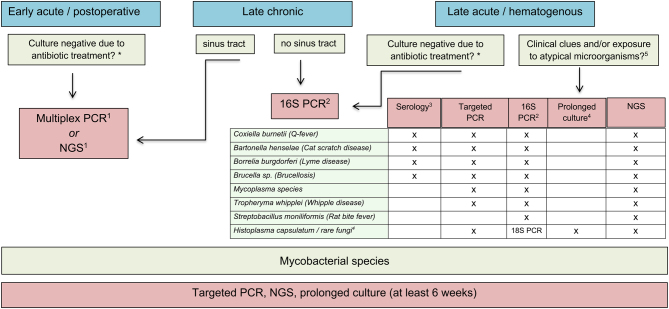
Culture-negative periprosthetic joint infections (PJI) are commonly described in the literature. By implementing a routine diagnostic workup and by optimizing tissue sampling and processing, the culture-negative rate can easily be reduced. When faced with a culture-negative PJI, several serological and molecular techniques are available that may aid in finding the causative microorganism. Clinical clues may guide the treating physician towards more atypical and rare microorganisms. A multidisciplinary team consisting of orthopaedic surgeons, microbiologists and infectious disease specialist are warranted in tailoring diagnostic testing and deciding on the surgical and antibiotic treatment approach.
文献中经常描述培养阴性的人工关节周围感染(PJI)。通过实施常规诊断检查以及优化组织采样和处理,培养阴性率很容易降低。面对培养阴性的PJI时,有几种血清学和分子技术可用于帮助找出致病微生物。临床线索可引导治疗医生关注更不典型和罕见的微生物。由骨科医生、微生物学家和传染病专家组成的多学科团队对于定制诊断测试以及决定手术和抗生素治疗方法是必要的。