Centre for Genomic Regulation (CRG), The Barcelona Institute of Science and Technology, Barcelona, Spain.
Pulmobiotics Ltd., Barcelona, Spain.
Microbiol Spectr. 2023 Jun 15;11(3):e0485922. doi: 10.1128/spectrum.04859-22. Epub 2023 Apr 25.
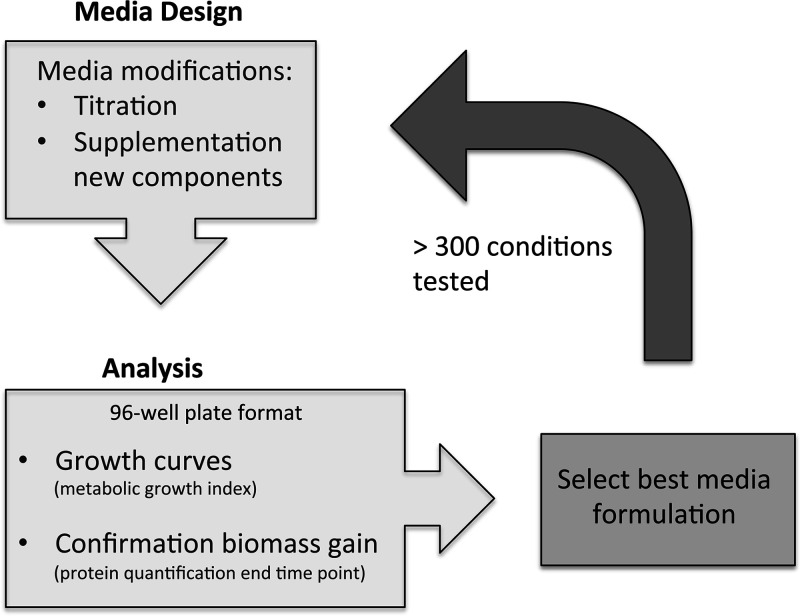
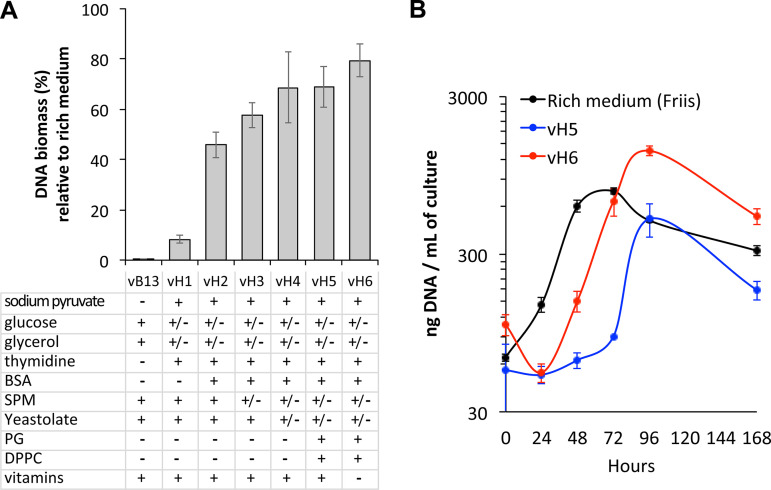
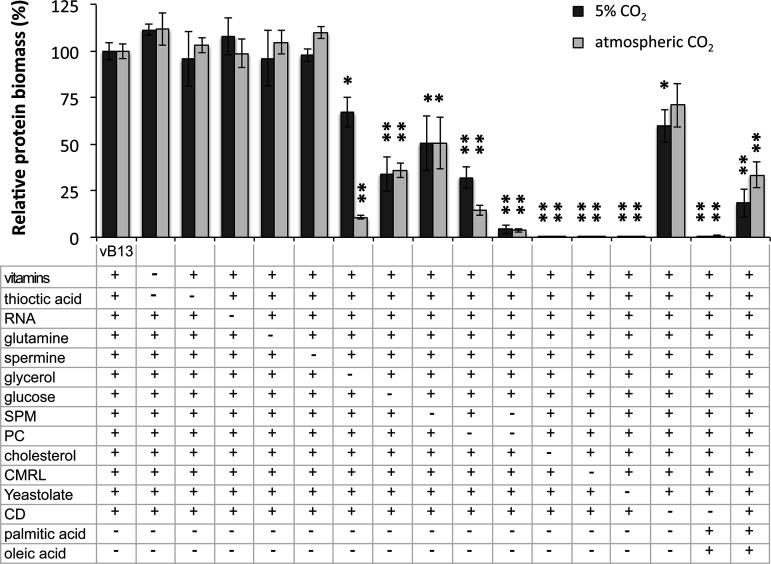
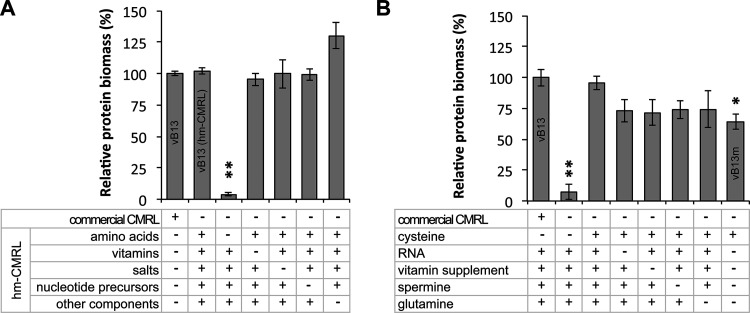
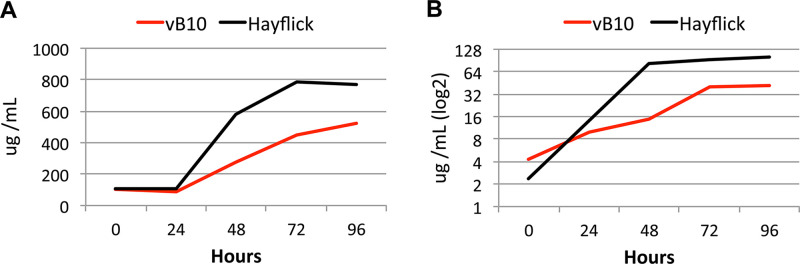
To assist in the advancement of the large-scale production of safe vaccines and other -based therapies, we developed a culture medium free of animal serum and other animal components for Mycoplasma pneumoniae growth. By establishing a workflow method to systematically test different compounds and concentrations, we provide optimized formulations capable of supporting serial passaging and robust growth reaching 60 to 70% of the biomass obtained in rich medium. Global transcriptomic and proteomic analysis showed minor physiological changes upon cell culture in the animal component-free medium, supporting its suitability for the production of M. pneumoniae-based therapies. The major contributors to growth performance were found to be glucose as a carbon source, glycerol, cholesterol, and phospholipids as a source of fatty acids. Bovine serum albumin or cyclodextrin (in the animal component-free medium) were required as lipid carriers to prevent lipid toxicity. Connaught Medical Research Laboratories medium (CMRL) used to simplify medium preparation as a source of amino acids, nucleotide precursors, vitamins, and other cofactors could be substituted by cysteine. In fact, the presence of protein hydrolysates such as yeastolate or peptones was found to be essential and preferred over free amino acids, except for the cysteine. Supplementation of nucleotide precursors and vitamins is not strictly necessary in the presence of yeastolate, suggesting that this animal origin-free hydrolysate serves as an efficient source for these compounds. Finally, we adapted the serum-free medium formulation to support growth of Mycoplasma hyopneumoniae, a swine pathogen for which inactivated whole-cell vaccines are available. infections have a significant negative impact on both livestock production and human health. Vaccination is often the first option to control disease and alleviate the economic impact that some infections cause on milk production, weight gain, and animal health. The fastidious nutrient requirements of these bacteria, however, challenges the industrial production of attenuated or inactivated whole-cell vaccines, which depends on the use of animal serum and other animal raw materials. Apart from their clinical relevance, some species have become cellular models for systems and synthetic biology, owing to the small size of their genomes and the absence of a cell wall, which offers unique opportunities for the secretion and delivery of biotherapeutics. This study proposes medium formulations free of serum and animal components with the potential of supporting large-scale production upon industrial optimization, thus contributing to the development of safe vaccines and other -based therapies.
为了协助大规模生产安全的疫苗和其他基于 - 的疗法,我们开发了一种不含动物血清和其他动物成分的培养基,用于肺炎支原体的生长。通过建立一个系统地测试不同化合物和浓度的工作流程方法,我们提供了优化的配方,能够支持连续传代和达到 60-70%的丰富培养基中获得的生物量的稳健生长。全球转录组和蛋白质组分析表明,在无动物成分的培养基中进行细胞培养时,细胞的生理变化很小,支持其用于生产基于肺炎支原体的疗法。研究发现,对生长性能贡献最大的是葡萄糖作为碳源,甘油、胆固醇和磷脂作为脂肪酸的来源。牛血清白蛋白或环糊精(在无动物成分的培养基中)作为脂质载体是必需的,以防止脂质毒性。康奈特医学研究实验室培养基(CMRL)被用来简化培养基的制备,作为氨基酸、核苷酸前体、维生素和其他辅因子的来源,可以用半胱氨酸替代。事实上,发现酵母提取物或蛋白胨等蛋白质水解物是必需的,并且比游离氨基酸更受欢迎,除了半胱氨酸。在酵母提取物存在的情况下,核苷酸前体和维生素的补充不是严格必需的,这表明这种无动物来源的水解物是这些化合物的有效来源。最后,我们将无血清培养基配方适应于支持猪肺炎支原体的生长,猪肺炎支原体是一种猪病原体,有灭活的全细胞疫苗可用。 感染对畜牧业生产和人类健康都有重大负面影响。接种疫苗通常是控制疾病和减轻一些感染对牛奶生产、体重增加和动物健康造成的经济影响的首选方法。然而,这些细菌对营养物质的苛刻要求,挑战了减毒或灭活全细胞疫苗的工业生产,这取决于动物血清和其他动物原材料的使用。除了它们的临床相关性外,一些 物种已成为系统和合成生物学的细胞模型,这要归功于它们基因组的小尺寸和没有细胞壁,这为生物治疗剂的分泌和输送提供了独特的机会。本研究提出了无血清和无动物成分的培养基配方,具有在工业优化后支持大规模生产的潜力,从而为安全疫苗和其他基于 - 的疗法的发展做出贡献。