Department of Ophthalmology, University of California, San Francisco, San Francisco, California, United States.
Division of Cell Medicine, Medical Research Institute, Kanazawa Medical University, Ishikawa, Japan.
Invest Ophthalmol Vis Sci. 2023 Apr 3;64(4):30. doi: 10.1167/iovs.64.4.30.
The unfolded protein response (UPR) is triggered when the protein folding capacity of the endoplasmic reticulum (ER) is overwhelmed and misfolded proteins accumulate in the ER, a condition referred to as ER stress. IRE1α is an ER-resident protein that plays major roles in orchestrating the UPR. Several lines of evidence implicate the UPR and its transducers in neurodegenerative diseases, including retinitis pigmentosa (RP), a group of inherited diseases that cause progressive dysfunction and loss of rod and cone photoreceptors. This study evaluated the contribution of IRE1α to photoreceptor development, homeostasis, and degeneration.
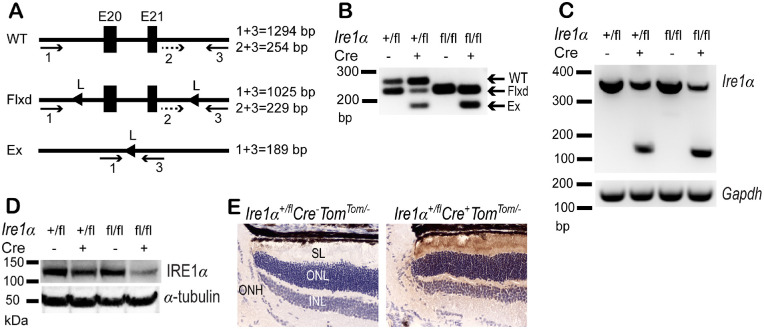
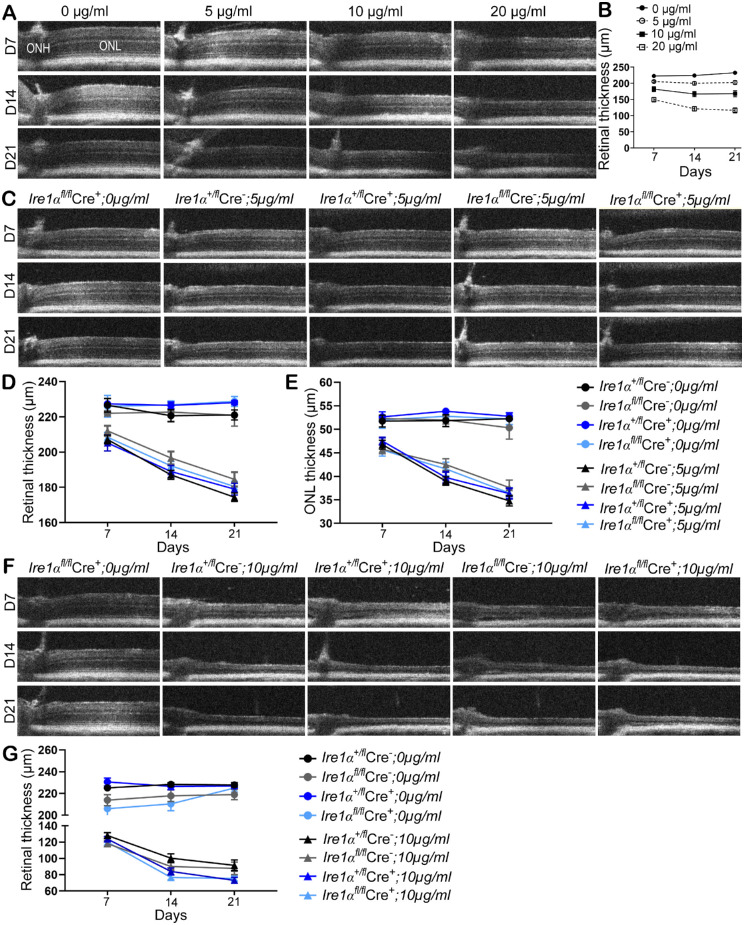
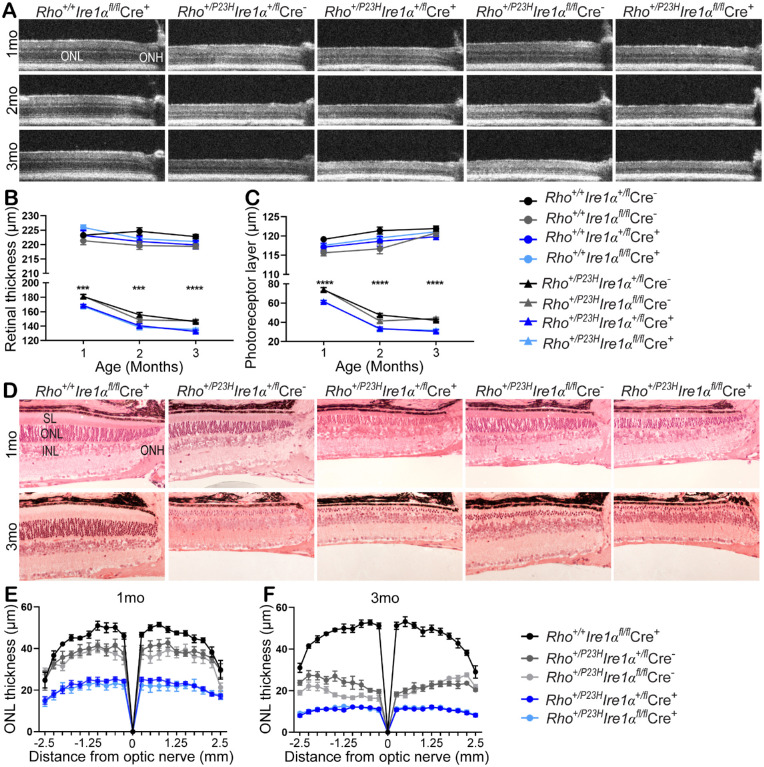
We used a conditional gene targeting strategy to selectively inactivate Ire1α in mouse rod photoreceptors. We used a combination of optical coherence tomography (OCT) imaging, histology, and electroretinography (ERG) to assess longitudinally the effect of IRE1α deficiency in retinal development and function. Furthermore, we evaluated the IRE1α-deficient retina responses to tunicamycin-induced ER stress and in the context of RP caused by the rhodopsin mutation RhoP23H.
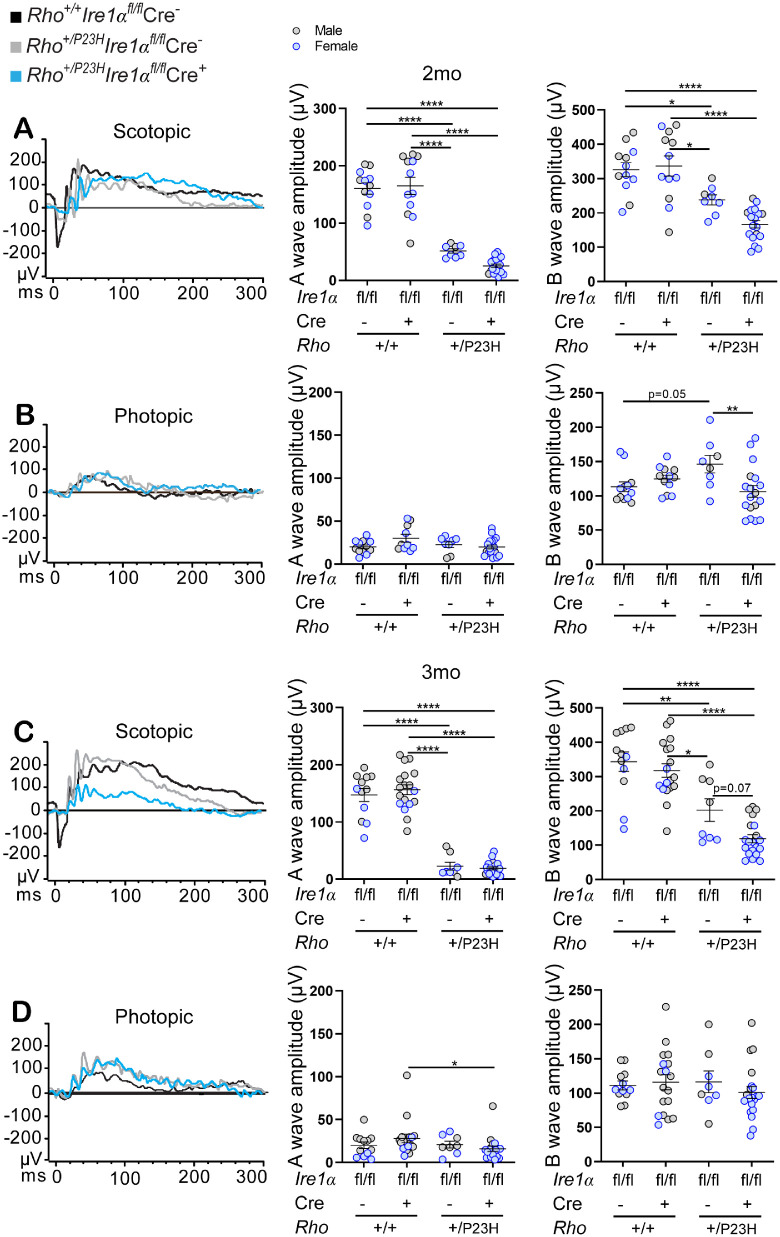
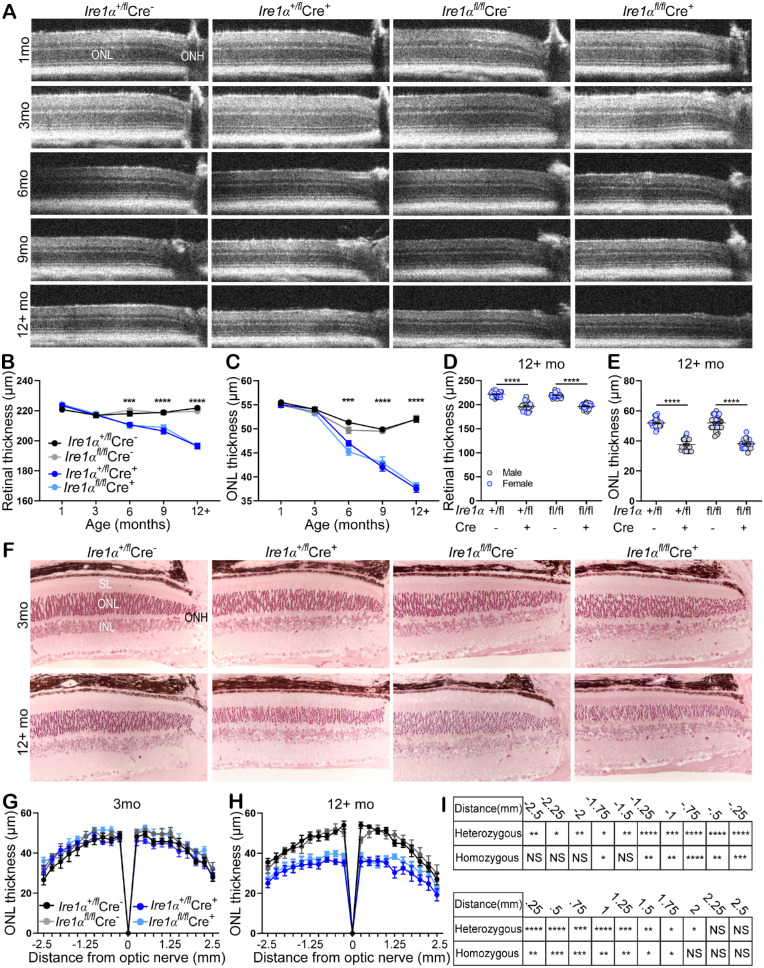
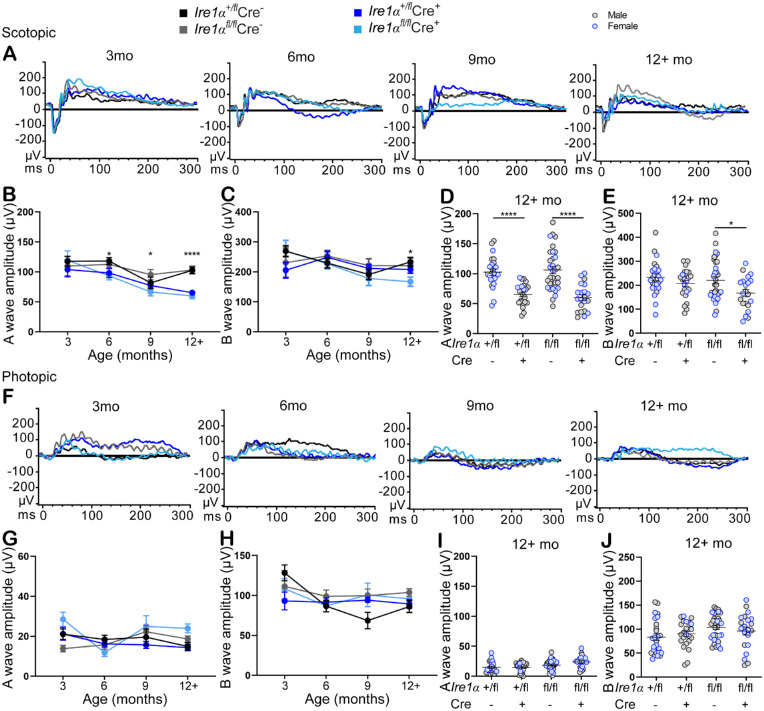
OCT imaging, histology, and ERG analyses did not reveal abnormalities in IRE1α-deficient retinas up to 3 months old. However, by 6 months of age, the Ire1α mutant animals showed reduced outer nuclear layer thickness and deficits in retinal function. Furthermore, conditional inactivation of Ire1α in rod photoreceptors accelerated retinal degeneration caused by the RhoP23H mutation.
These data suggest that IRE1α is dispensable for photoreceptor development but important for photoreceptor homeostasis in aging retinas and for protecting against ER stress-mediated photoreceptor degeneration.
内质网(ER)的蛋白质折叠能力不堪重负,导致错误折叠的蛋白质在 ER 中堆积,从而引发未折叠蛋白反应(UPR),这种情况被称为 ER 应激。IRE1α 是一种驻留在 ER 中的蛋白质,在协调 UPR 中发挥主要作用。有几条证据表明 UPR 及其转导物与神经退行性疾病有关,包括色素性视网膜炎(RP),这是一组导致杆状和锥状光感受器进行性功能障碍和丧失的遗传性疾病。本研究评估了 IRE1α 对光感受器发育、稳态和变性的贡献。
我们使用条件性基因靶向策略选择性地在小鼠杆状光感受器中失活 Ire1α。我们结合光学相干断层扫描(OCT)成像、组织学和视网膜电图(ERG),对 IRE1α 缺乏对视网膜发育和功能的影响进行纵向评估。此外,我们评估了 IRE1α 缺陷型视网膜对衣霉素诱导的 ER 应激的反应以及 RhoP23H 突变引起的 RP 背景下的反应。
OCT 成像、组织学和 ERG 分析显示,IRE1α 缺陷型视网膜在 3 个月大之前没有异常。然而,到 6 个月大时,Ire1α 突变动物的外核层厚度减少,视网膜功能受损。此外,在杆状光感受器中条件性失活 Ire1α 加速了 RhoP23H 突变引起的视网膜变性。
这些数据表明,IRE1α在光感受器发育中不是必需的,但在衰老视网膜的光感受器稳态和保护免受 ER 应激介导的光感受器变性中很重要。