Gaeini Zahra, Malmir Hanieh, Mirmiran Parvin, Feizy Zahra, Azizi Fereidoun
Nutrition and Endocrine Research Center, Research Institute for Endocrine Sciences, Shahid Beheshti University of Medical Sciences, Tehran, Iran.
Department of Nutritional Sciences, Texas Tech University, Lubbock, TX, 79409, USA.
Nutr Metab (Lond). 2023 Apr 26;20(1):25. doi: 10.1186/s12986-023-00745-0.
Few studies considered the association between snack patterns and metabolic abnormalities. Here we aimed to characterize the major snack patterns among Iranian adults and determine their association with the risk of metabolic syndrome (MetS).
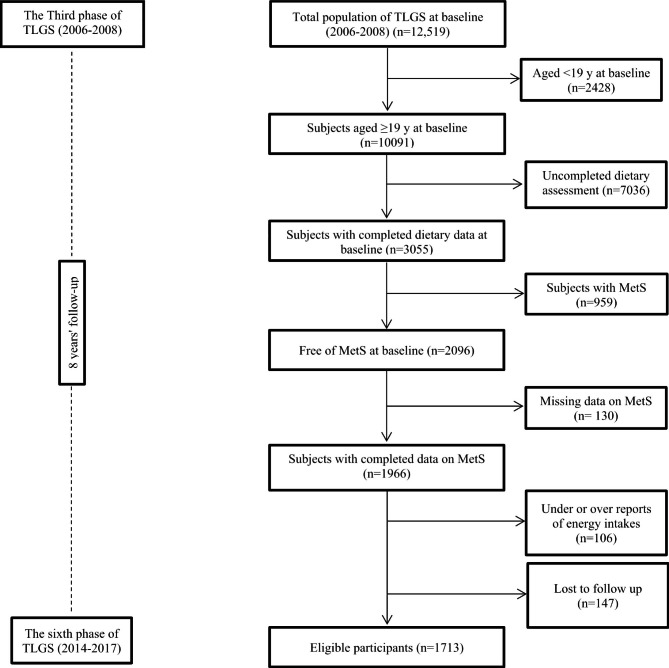
This study was conducted on 1713 MetS-free adults who participated in the third phase of the Tehran Lipid and Glucose Study (TLGS). At baseline, dietary intake of snack was assessed using a validated 168-items food frequency questionnaire, and snack patterns were obtained by principal component analysis (PCA). Adjusted Hazard Ratios (HRs) and 95% confidence intervals (CIs) were calculated for the association of incident MetS with the extracted snack patterns.
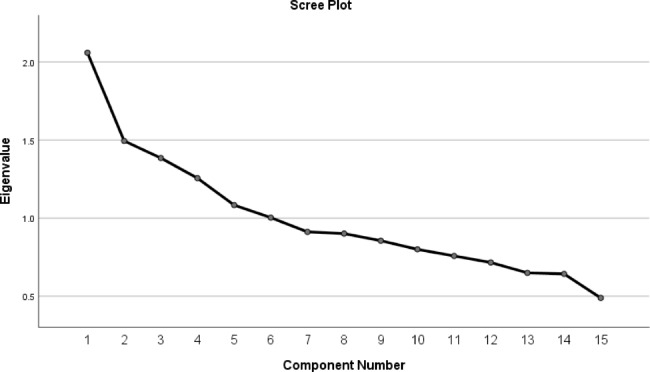
PCA identified five major snack patterns, defined as "healthy pattern", "low-fructose pattern", "high-trans pattern", "high-caffeine pattern" and "high-fructose pattern". Participants in the highest tertile of the "high-caffeine pattern" had lower risk of MetS (HR = 0.80, 95% CI = 0.65-0.99, P for trend = 0.032). Other snack patterns have not shown any significant association with MetS incidence.
Our findings suggest that consuming a snack pattern with high loads of caffeine, defined as "High-caffeine pattern" in the present study, could reduce the risk of MetS in healthy adults. Further prospective studies are needed to more fully determine the association between snack patterns and MetS incidence.
很少有研究考虑零食模式与代谢异常之间的关联。在此,我们旨在描述伊朗成年人中的主要零食模式,并确定它们与代谢综合征(MetS)风险的关联。
本研究对1713名未患MetS的成年人进行,这些人参与了德黑兰脂质与葡萄糖研究(TLGS)的第三阶段。在基线时,使用经过验证的168项食物频率问卷评估零食的饮食摄入量,并通过主成分分析(PCA)获得零食模式。计算了新发MetS与提取的零食模式关联的调整风险比(HRs)和95%置信区间(CIs)。
PCA确定了五种主要零食模式,定义为“健康模式”、“低果糖模式”、“高反式脂肪酸模式”、“高咖啡因模式”和“高果糖模式”。处于“高咖啡因模式”最高三分位数的参与者患MetS的风险较低(HR = 0.80,95% CI = 0.65 - 0.99,趋势P值 = 0.032)。其他零食模式与MetS发病率未显示出任何显著关联。
我们的研究结果表明,食用本研究中定义为“高咖啡因模式”的高咖啡因零食模式可降低健康成年人患MetS的风险。需要进一步的前瞻性研究来更全面地确定零食模式与MetS发病率之间的关联。