Laboratory of Cancer Epigenetics and Plasticity, Brown University, Rhode Island Hospital, Providence, Rhode Island.
Department of Molecular Microbiology and Immunology, Brown University, Providence, Rhode Island.
Cancer Res. 2023 Jun 15;83(12):1984-1999. doi: 10.1158/0008-5472.CAN-21-3629.
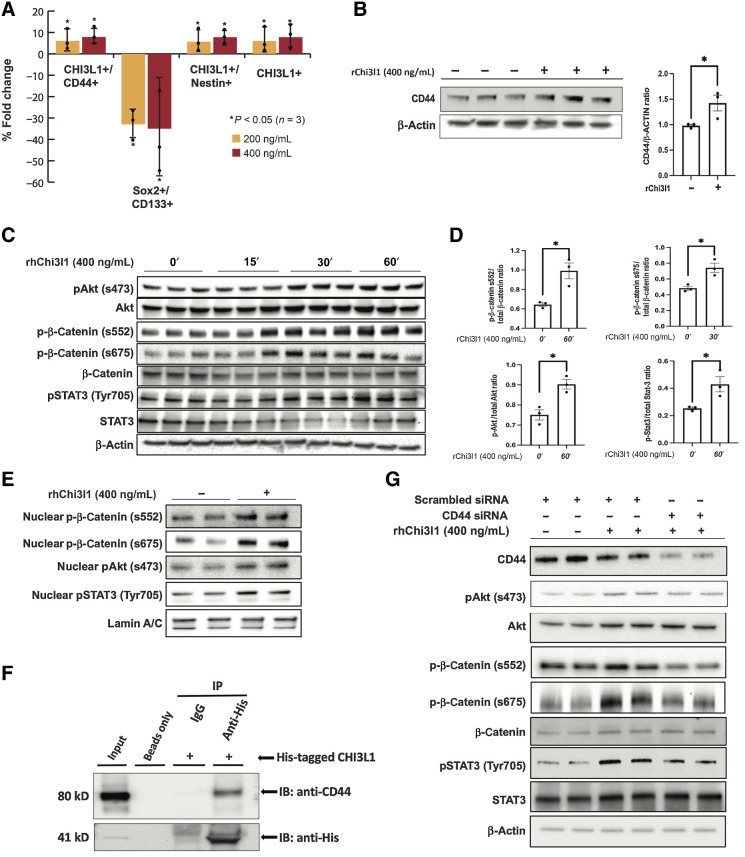
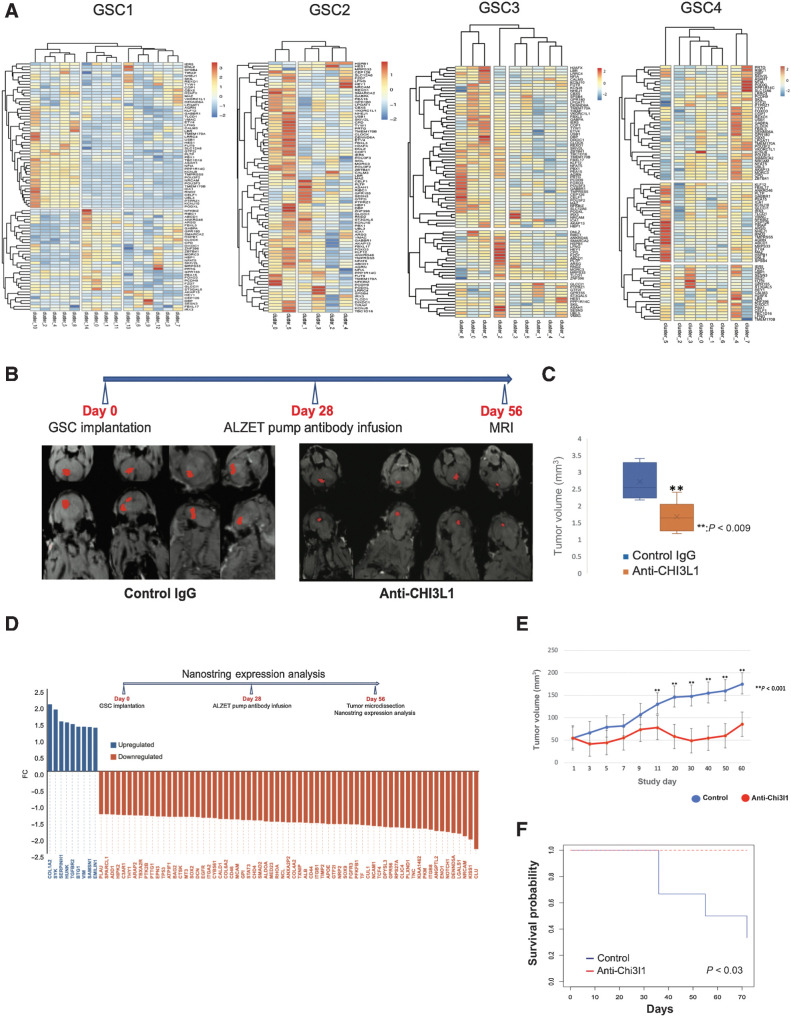
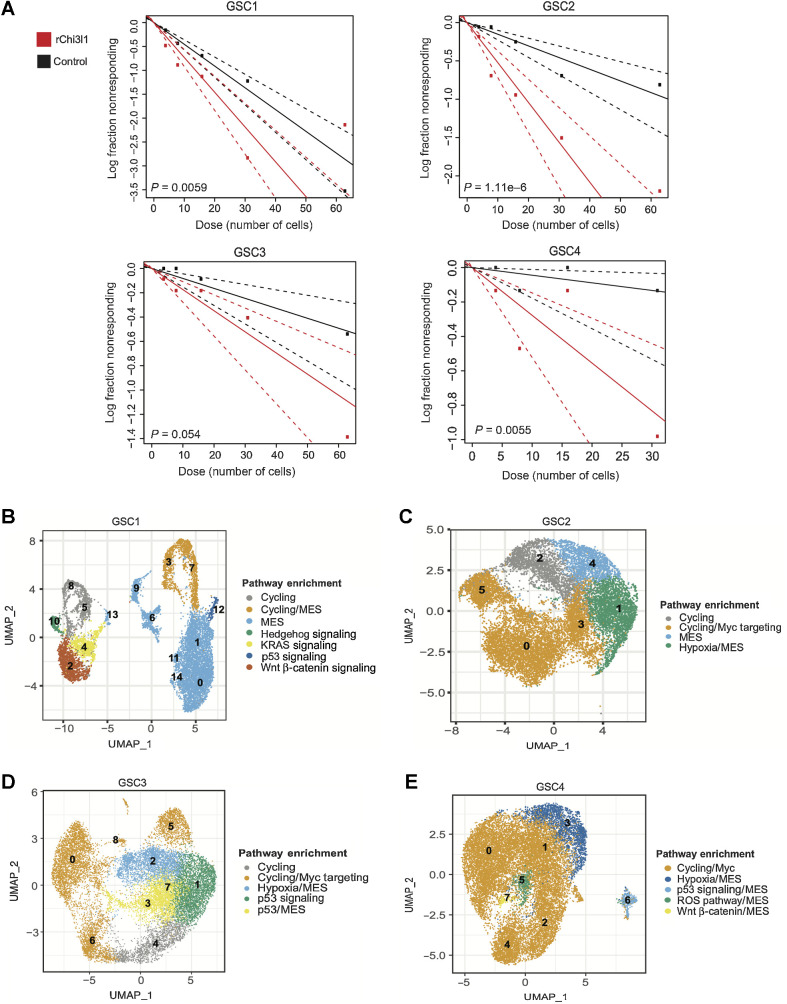
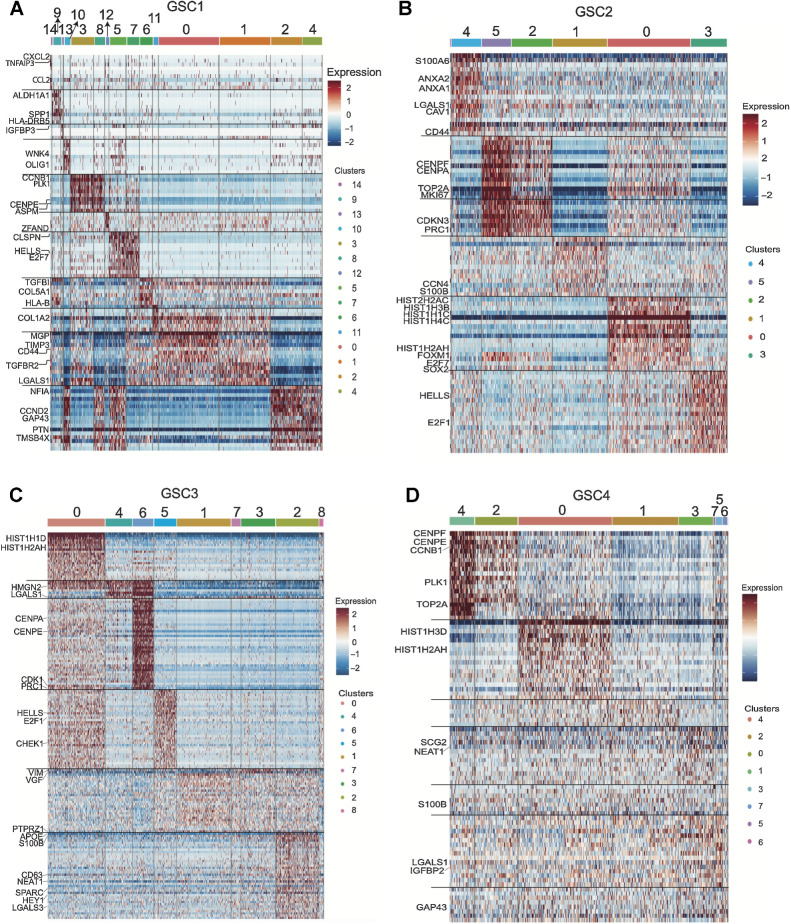
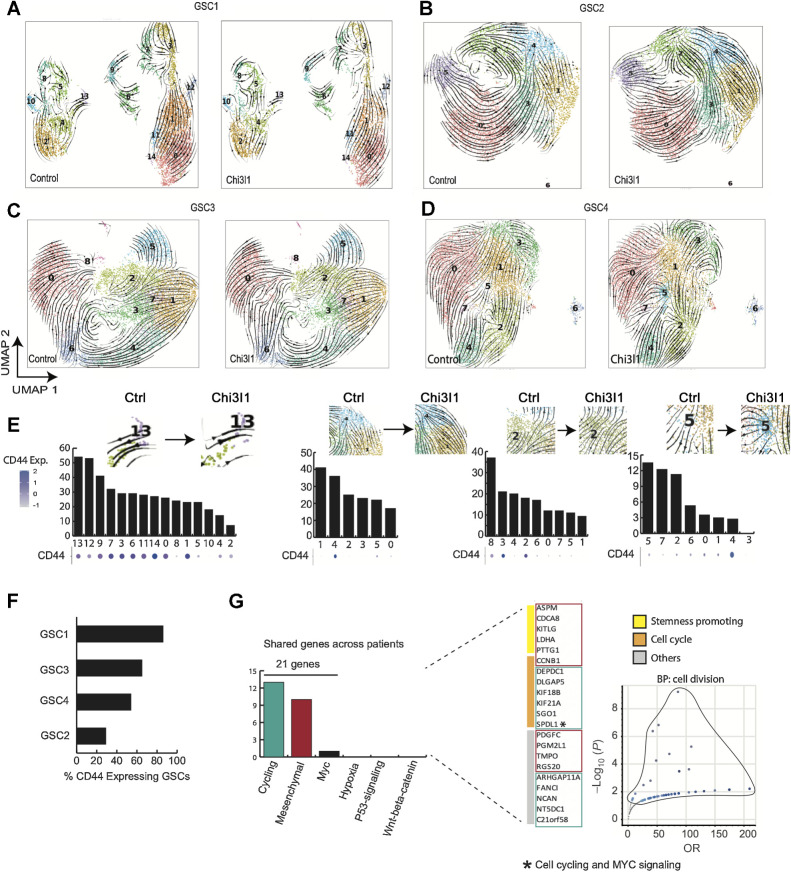
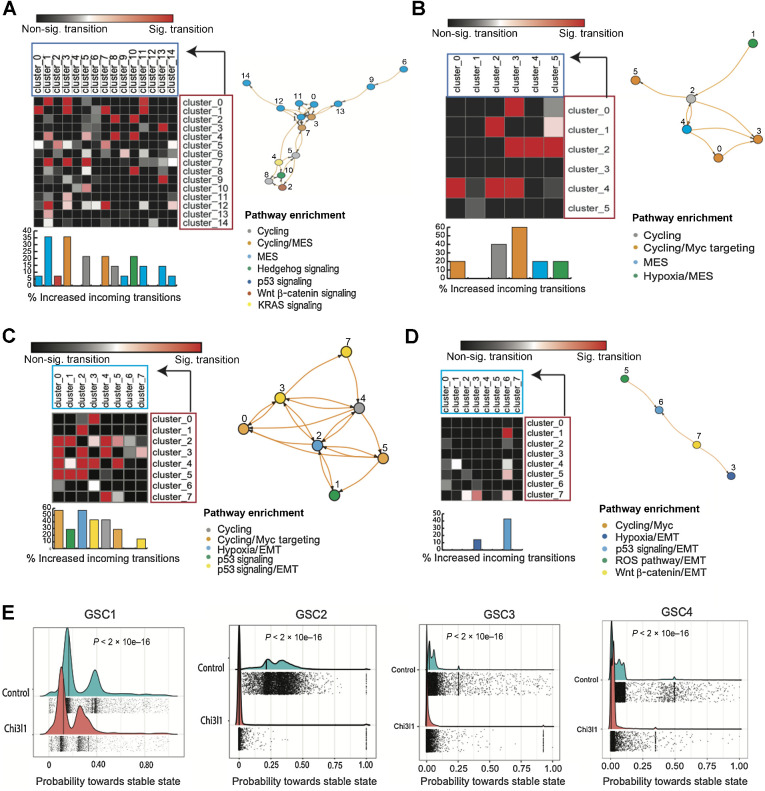
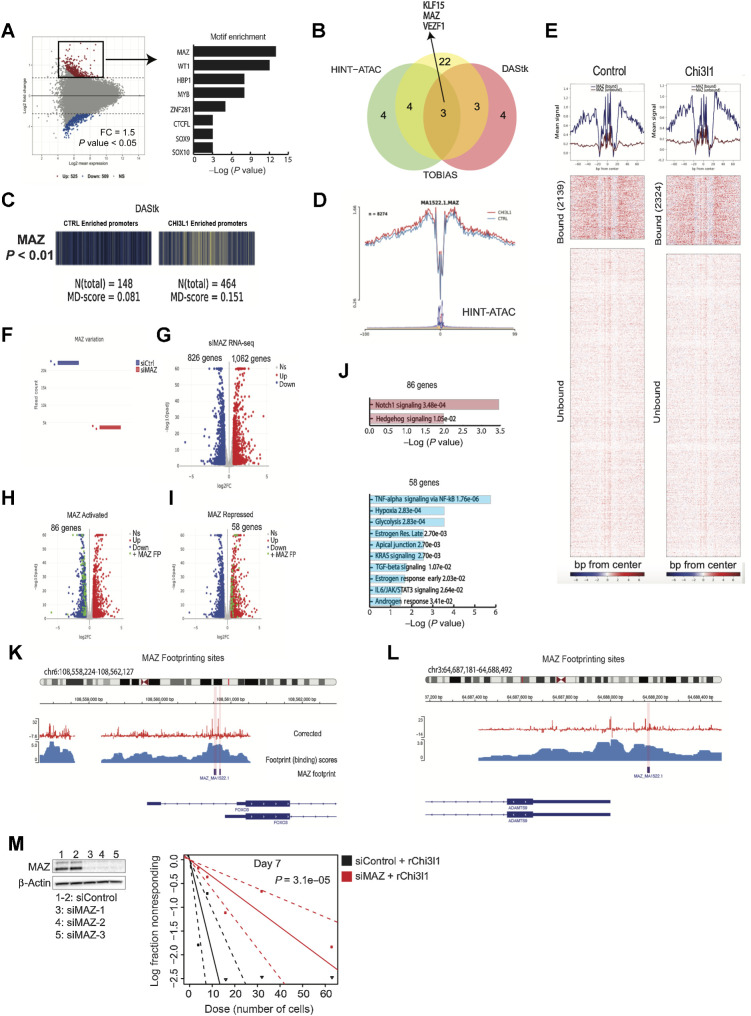
Chitinase 3-like 1 (Chi3l1) is a secreted protein that is highly expressed in glioblastoma. Here, we show that Chi3l1 alters the state of glioma stem cells (GSC) to support tumor growth. Exposure of patient-derived GSCs to Chi3l1 reduced the frequency of CD133+SOX2+ cells and increased the CD44+Chi3l1+ cells. Chi3l1 bound to CD44 and induced phosphorylation and nuclear translocation of β-catenin, Akt, and STAT3. Single-cell RNA sequencing and RNA velocity following incubation of GSCs with Chi3l1 showed significant changes in GSC state dynamics driving GSCs towards a mesenchymal expression profile and reducing transition probabilities towards terminal cellular states. ATAC-seq revealed that Chi3l1 increases accessibility of promoters containing a Myc-associated zinc finger protein (MAZ) transcription factor footprint. Inhibition of MAZ downregulated a set of genes with high expression in cellular clusters that exhibit significant cell state transitions after treatment with Chi3l1, and MAZ deficiency rescued the Chi3L-induced increase of GSC self-renewal. Finally, targeting Chi3l1 in vivo with a blocking antibody inhibited tumor growth and increased the probability of survival. Overall, this work suggests that Chi3l1 interacts with CD44 on the surface of GSCs to induce Akt/β-catenin signaling and MAZ transcriptional activity, which in turn upregulates CD44 expression in a pro-mesenchymal feed-forward loop. The role of Chi3l1 in regulating cellular plasticity confers a targetable vulnerability to glioblastoma.
Chi3l1 is a modulator of glioma stem cell states that can be targeted to promote differentiation and suppress growth of glioblastoma.
几丁质酶 3 样蛋白 1(Chi3l1)是一种在神经胶质瘤中高度表达的分泌蛋白。在这里,我们表明 Chi3l1 改变了神经胶质瘤干细胞(GSC)的状态以支持肿瘤生长。将患者来源的 GSC 暴露于 Chi3l1 中,减少了 CD133+SOX2+细胞的频率,并增加了 CD44+Chi3l1+细胞。Chi3l1 与 CD44 结合,并诱导 β-连环蛋白、Akt 和 STAT3 的磷酸化和核易位。单细胞 RNA 测序和 RNA 速度显示,在用 Chi3l1 孵育 GSC 后,GSC 状态动力学发生了显著变化,促使 GSC 向间充质表达谱发展,并降低了向终末细胞状态的转变概率。ATAC-seq 显示 Chi3l1 增加了含有 Myc 相关锌指蛋白(MAZ)转录因子足迹的启动子的可及性。MAZ 抑制下调了一组在细胞簇中高表达的基因,这些基因在经过 Chi3l1 处理后表现出显著的细胞状态转变,而 MAZ 缺陷则挽救了 Chi3L 诱导的 GSC 自我更新增加。最后,用阻断抗体在体内靶向 Chi3l1 抑制肿瘤生长并增加存活概率。总的来说,这项工作表明 Chi3l1 与 GSC 表面的 CD44 相互作用,诱导 Akt/β-连环蛋白信号和 MAZ 转录活性,进而在促间充质的正反馈环中上调 CD44 的表达。Chi3l1 在调节细胞可塑性中的作用赋予了神经胶质瘤可靶向的脆弱性。
Chi3l1 是神经胶质瘤干细胞状态的调节剂,可以作为靶点促进分化并抑制神经胶质瘤的生长。