Fennell Benjamin D, Mezyk Stephen P, McKay Garrett
Zachry Department of Civil & Environmental Engineering, Texas A&M University, College Station, Texas 77843, United States.
Department of Chemistry and Biochemistry, California State University, Long Beach, Long Beach, California 90840, United States.
ACS Environ Au. 2022 Feb 14;2(3):178-205. doi: 10.1021/acsenvironau.1c00042. eCollection 2022 May 18.
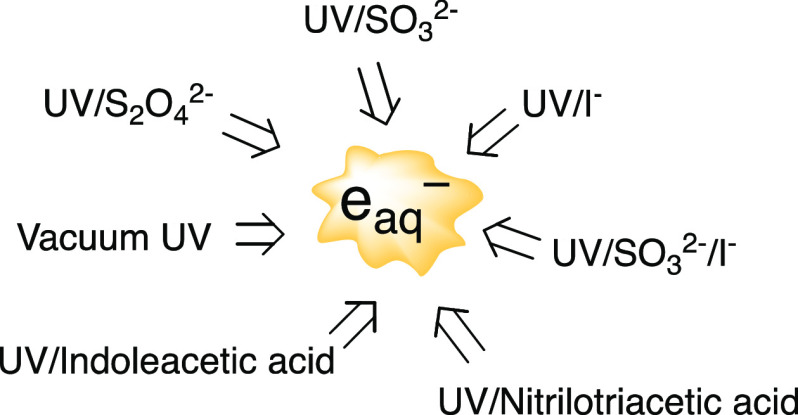
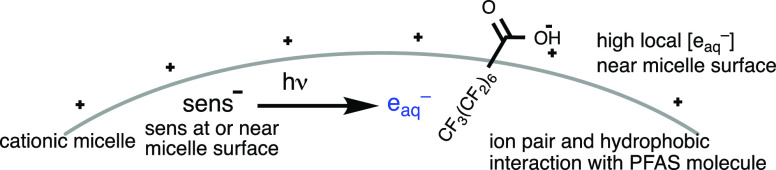
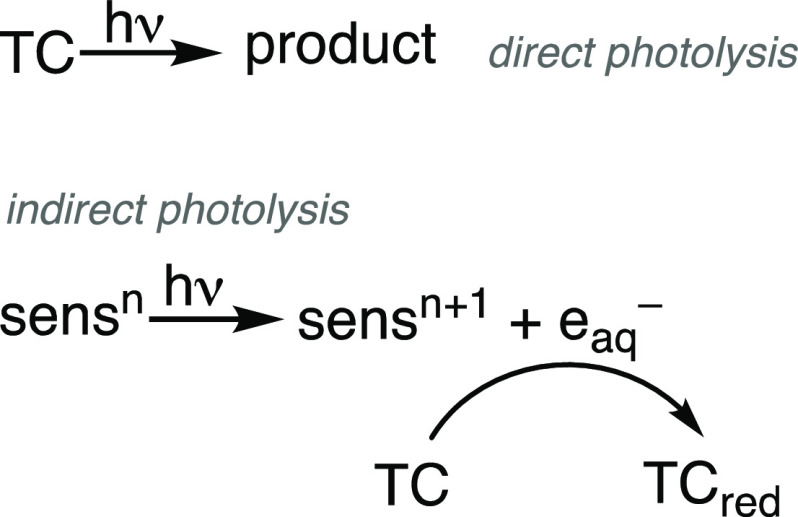
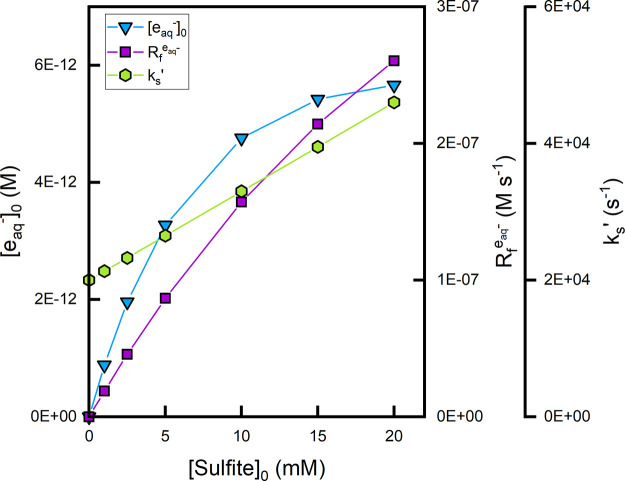
UV-advanced reduction processes (UV-ARP) are an advanced water treatment technology characterized by the reductive transformation of chemical contaminants. Contaminant abatement in UV-ARP is most often accomplished through reaction with hydrated electrons (e ) produced from UV photolysis of chemical sensitizers (e.g., sulfite). In this Review, we evaluate the photochemical kinetics, substrate scope, and optimization of UV-ARP. We find that quantities typically reported in photochemical studies of natural and engineered systems are under-reported in the UV-ARP literature, especially the formation rates, scavenging capacities, and concentrations of key reactive species like e . The absence of these quantities has made it difficult to fully evaluate the impact of operating conditions and the role of water matrix components on the efficiencies of UV-ARP. The UV-ARP substrate scope is weighted heavily toward contaminant classes that are resistant to degradation by advanced oxidation processes, like oxyanions and per- and polyfluoroalkyl substances. Some studies have sought to optimize the UV-ARP treatment of these contaminants; however, a thorough evaluation of the impact of water matrix components like dissolved organic matter on these optimization strategies is needed. Overall, the data compilation, analysis, and research recommendations provided in this Review will assist the UV-ARP research community in future efforts toward optimizing UV-ARP systems, modeling the e -based chemical transformation kinetics, and developing new UV-ARP systems.
紫外线高级还原工艺(UV-ARP)是一种先进的水处理技术,其特点是对化学污染物进行还原转化。UV-ARP中的污染物去除通常是通过与化学敏化剂(如亚硫酸盐)的紫外线光解产生的水合电子(e )反应来实现的。在本综述中,我们评估了UV-ARP的光化学动力学、底物范围和优化情况。我们发现,在UV-ARP文献中,自然和工程系统光化学研究中通常报告的量被低估了,特别是关键反应物种如e 的生成速率、清除能力和浓度。这些量的缺失使得难以全面评估操作条件的影响以及水基质成分对UV-ARP效率的作用。UV-ARP的底物范围严重偏向于对高级氧化工艺具有抗性的污染物类别,如含氧阴离子以及全氟和多氟烷基物质。一些研究试图优化这些污染物的UV-ARP处理;然而,需要对溶解有机物等水基质成分对这些优化策略的影响进行全面评估。总体而言,本综述中提供的数据汇编、分析和研究建议将有助于UV-ARP研究界在未来努力优化UV-ARP系统、模拟基于e 的化学转化动力学以及开发新的UV-ARP系统。