Broad Institute of MIT and Harvard, Cambridge, MA, USA.
Center for System Biology, Department of Organismic and Evolutionary Biology, Harvard University, Cambridge, MA, USA.
Science. 2023 Apr 28;380(6643):eabn2253. doi: 10.1126/science.abn2253.
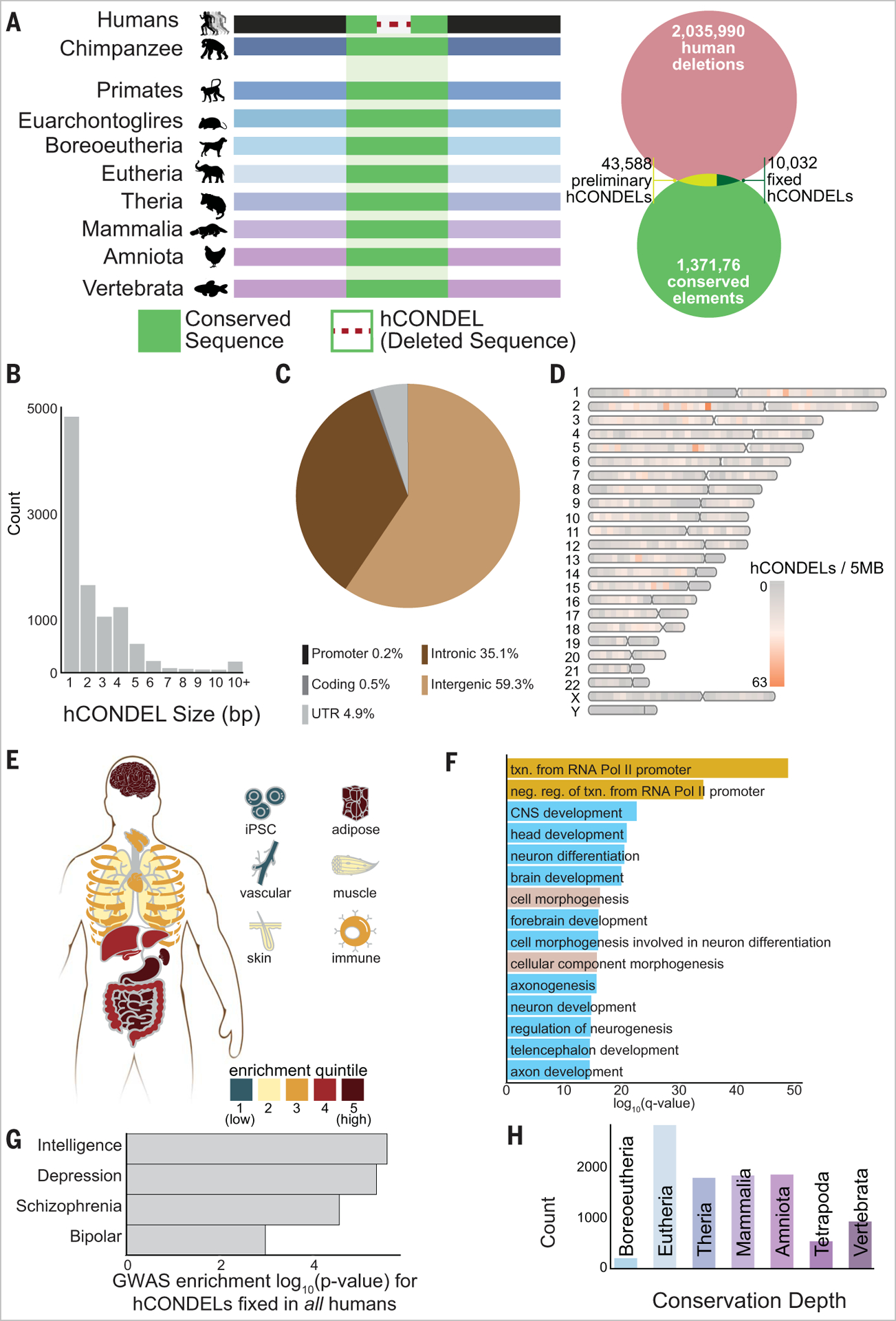
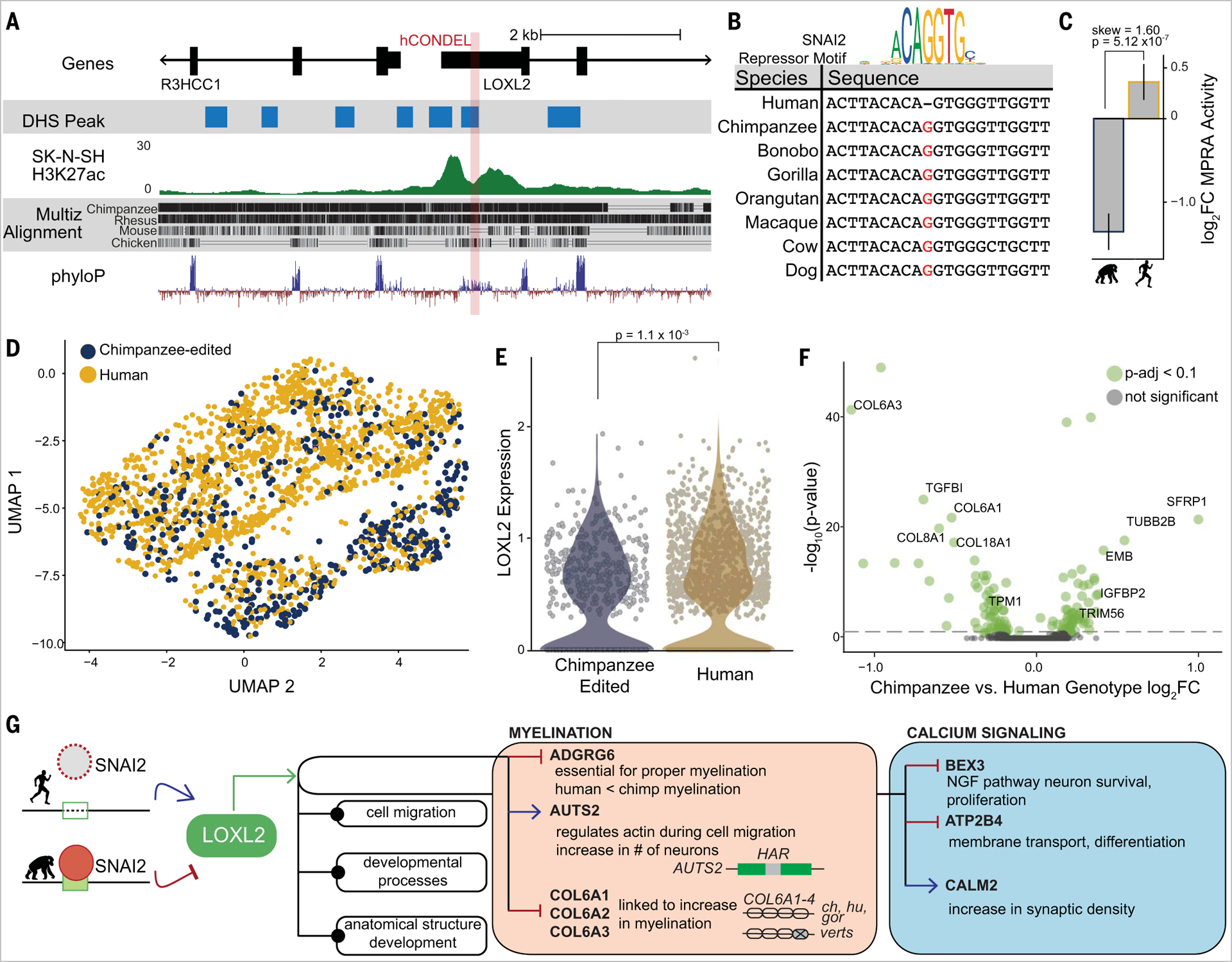
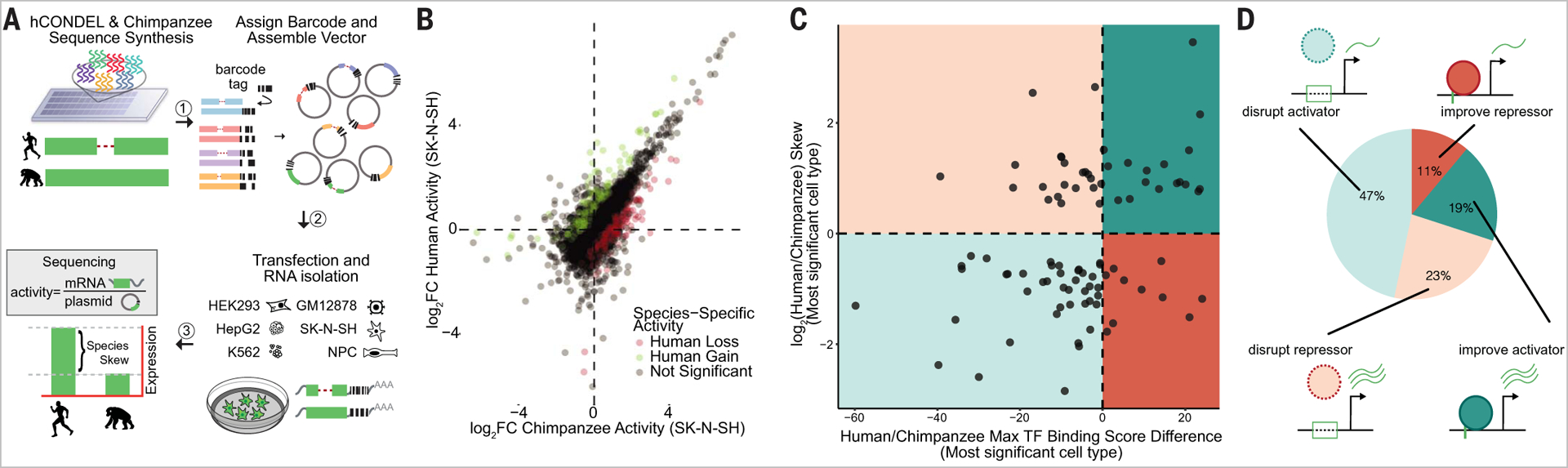
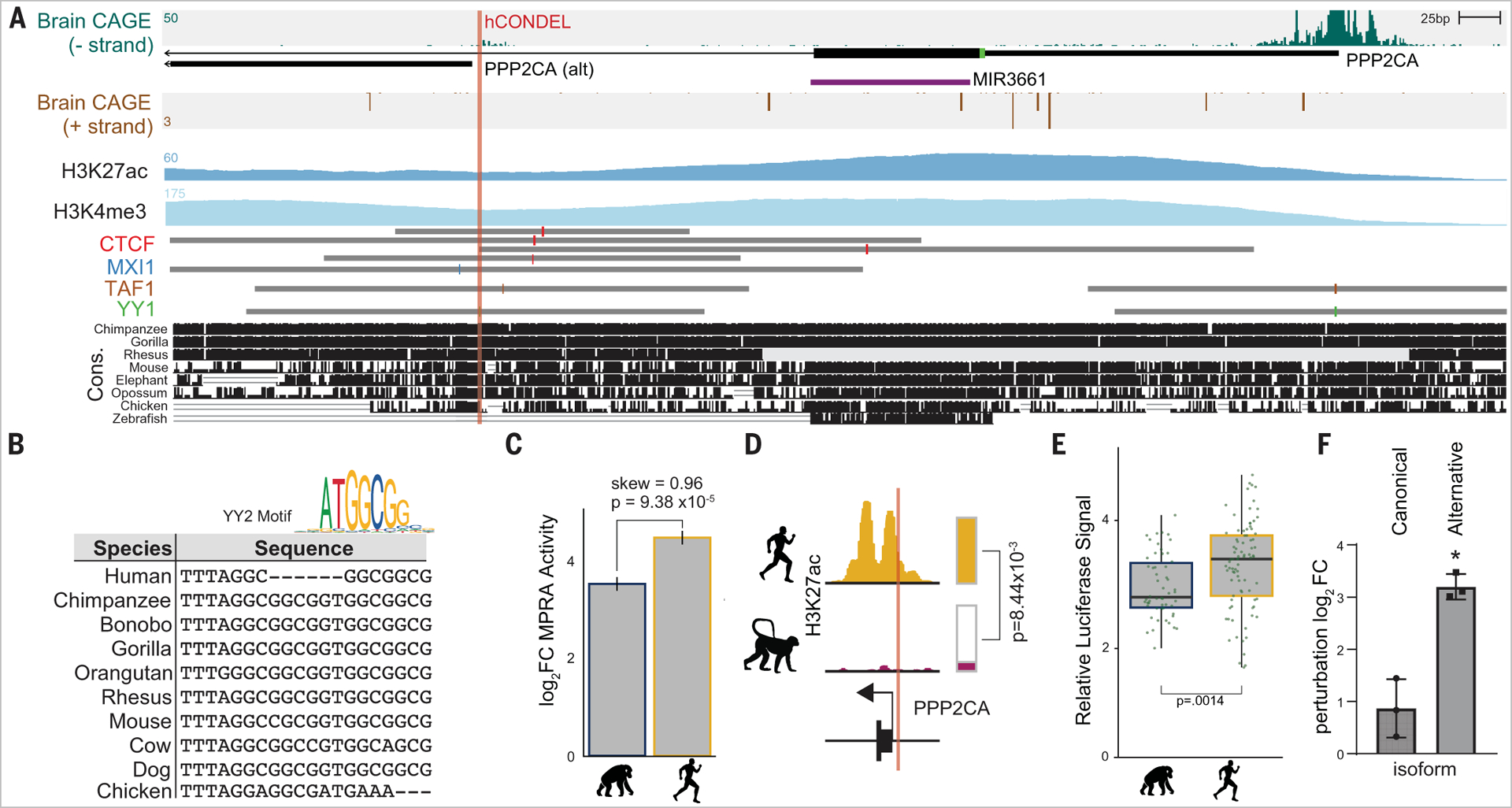
Conserved genomic sequences disrupted in humans may underlie uniquely human phenotypic traits. We identified and characterized 10,032 human-specific conserved deletions (hCONDELs). These short (average 2.56 base pairs) deletions are enriched for human brain functions across genetic, epigenomic, and transcriptomic datasets. Using massively parallel reporter assays in six cell types, we discovered 800 hCONDELs conferring significant differences in regulatory activity, half of which enhance rather than disrupt regulatory function. We highlight several hCONDELs with putative human-specific effects on brain development, including , , and . Reverting an hCONDEL to the ancestral sequence alters the expression of and developmental genes involved in myelination and synaptic function. Our data provide a rich resource to investigate the evolutionary mechanisms driving new traits in humans and other species.
在人类中被破坏的保守基因组序列可能是人类特有的表型特征的基础。我们鉴定和描述了 10032 个人类特异性保守缺失(hCONDEL)。这些短(平均 2.56 个碱基对)缺失在遗传、表观遗传和转录组数据集中富集了人类大脑功能。在六种细胞类型中使用大规模平行报告基因检测,我们发现 800 个 hCONDEL 赋予了显著的调控活性差异,其中一半增强而不是破坏了调控功能。我们突出了几个 hCONDEL 对大脑发育具有潜在的人类特异性影响,包括、和。将 hCONDEL 回复到祖先序列会改变髓鞘形成和突触功能相关的发育基因和的表达。我们的数据为研究驱动人类和其他物种新特征的进化机制提供了丰富的资源。