Department of Chemical and Biomolecular Engineering, Korea Advanced Institute of Science and Technology (KAIST), Daejeon 34141, Republic of Korea.
KAIST Institute for NanoCentury (KINC), Daejeon 34141, Republic of Korea.
Int J Mol Sci. 2023 Apr 17;24(8):7403. doi: 10.3390/ijms24087403.
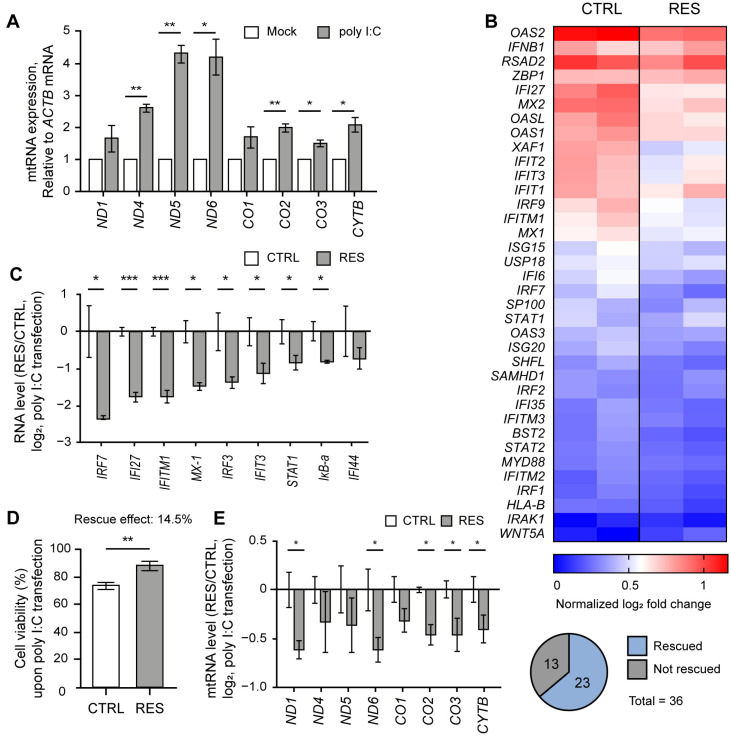
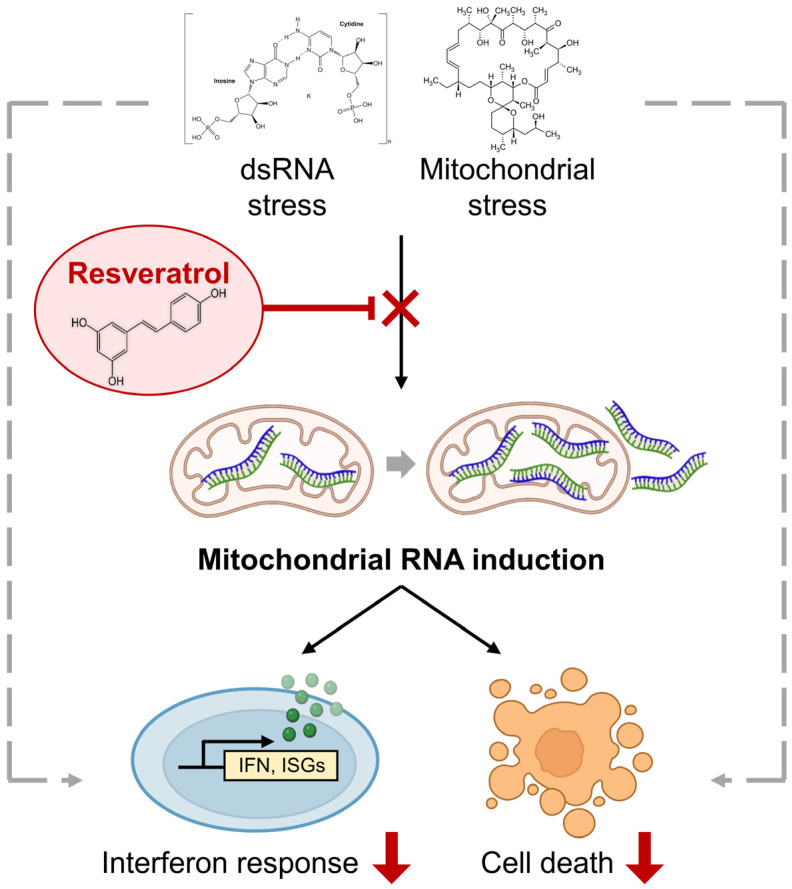
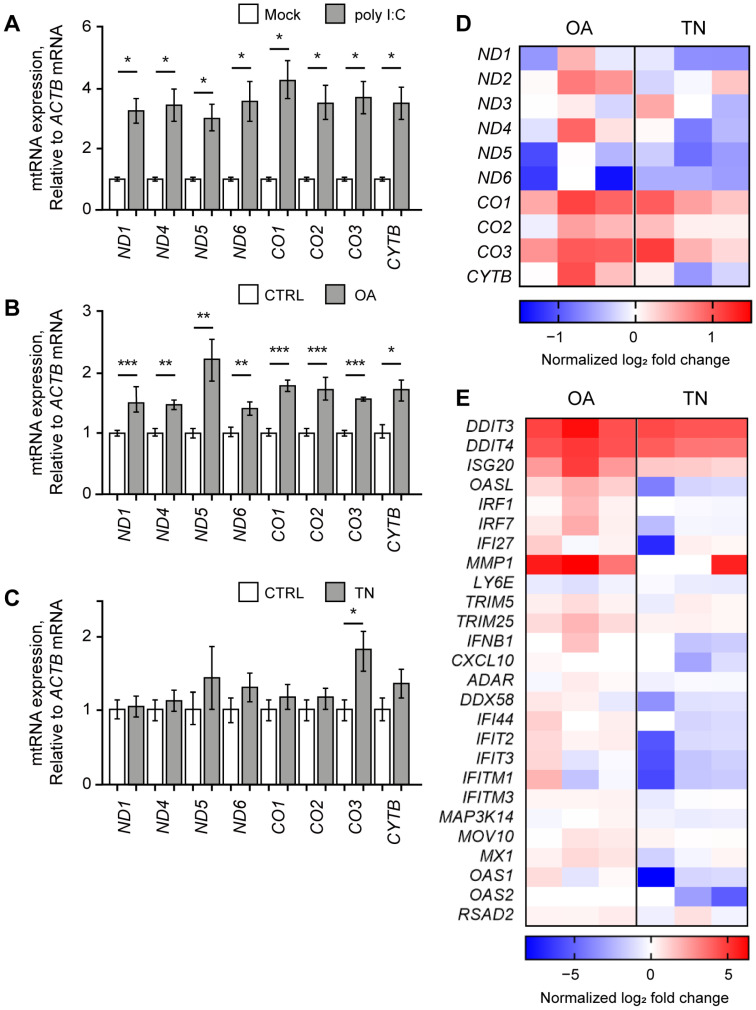
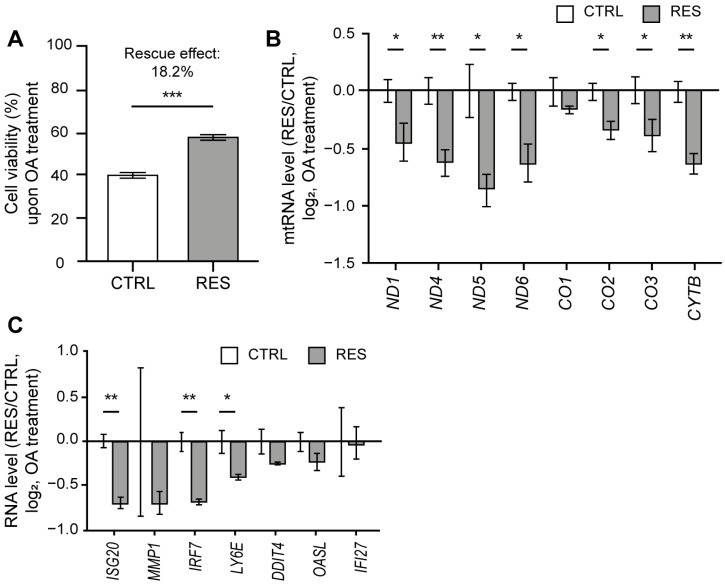
Human mitochondria contain a circular genome that encodes 13 subunits of the oxidative phosphorylation system. In addition to their role as powerhouses of the cells, mitochondria are also involved in innate immunity as the mitochondrial genome generates long double-stranded RNAs (dsRNAs) that can activate the dsRNA-sensing pattern recognition receptors. Recent evidence shows that these mitochondrial dsRNAs (mt-dsRNAs) are closely associated with the pathogenesis of human diseases that accompany inflammation and aberrant immune activation, such as Huntington's disease, osteoarthritis, and autoimmune Sjögren's syndrome. Yet, small chemicals that can protect cells from a mt-dsRNA-mediated immune response remain largely unexplored. Here, we investigate the potential of resveratrol (RES), a plant-derived polyphenol with antioxidant properties, on suppressing mt-dsRNA-mediated immune activation. We show that RES can revert the downstream response to immunogenic stressors that elevate mitochondrial RNA expressions, such as stimulation by exogenous dsRNAs or inhibition of ATP synthase. Through high-throughput sequencing, we find that RES can regulate mt-dsRNA expression, interferon response, and other cellular responses induced by these stressors. Notably, RES treatment fails to counter the effect of an endoplasmic reticulum stressor that does not affect the expression of mitochondrial RNAs. Overall, our study demonstrates the potential usage of RES to alleviate the mt-dsRNA-mediated immunogenic stress response.
线粒体含有一个环状基因组,编码氧化磷酸化系统的 13 个亚基。除了作为细胞的能量工厂之外,线粒体还参与先天免疫,因为线粒体基因组产生可以激活双链 RNA (dsRNA)感应模式识别受体的长双链 RNA (mt-dsRNA)。最近的证据表明,这些线粒体 dsRNA (mt-dsRNA)与伴随炎症和异常免疫激活的人类疾病的发病机制密切相关,如亨廷顿病、骨关节炎和自身免疫性干燥综合征。然而,能够保护细胞免受 mt-dsRNA 介导的免疫反应的小分子在很大程度上仍未得到探索。在这里,我们研究了植物来源的多酚白藜芦醇(RES)抑制 mt-dsRNA 介导的免疫激活的潜力。我们表明,RES 可以逆转对外源 dsRNA 刺激或 ATP 合酶抑制等增加线粒体 RNA 表达的免疫原性应激物的下游反应。通过高通量测序,我们发现 RES 可以调节由这些应激物诱导的 mt-dsRNA 表达、干扰素反应和其他细胞反应。值得注意的是,RES 处理不能抵消不会影响线粒体 RNA 表达的内质网应激物的作用。总的来说,我们的研究表明 RES 有潜力缓解 mt-dsRNA 介导的免疫原性应激反应。