Department of Biotechnology and Genetic Engineering, Faculty of Pharmaceutical Sciences in Sosnowiec, Medical University of Silesia, Jedności 8, 41-200 Sosnowiec, Poland.
Int J Mol Sci. 2023 Apr 20;24(8):7585. doi: 10.3390/ijms24087585.
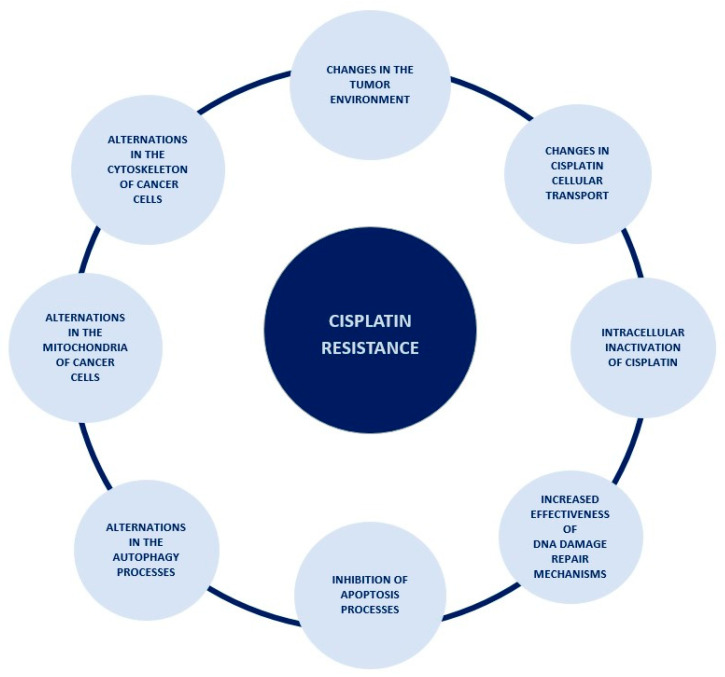
Cisplatin is one of the most commonly used anticancer drugs worldwide. It is mainly used in the treatment of ovarian cancer, but also used in testicular, bladder and lung cancers. The significant advantage of this drug is the multidirectional mechanism of its anticancer action, with the most important direction being damaging the DNA of cancer cells. Unfortunately, cisplatin displays a number of serious disadvantages, including toxicity to the most important organs, such as kidneys, heart, liver and inner ear. Moreover, a significant problem among patients with ovarian cancer, treated with cisplatin, is the development of numerous resistance mechanisms during therapy, including changes in the processes of cellular drug import and export, changes in the DNA damage repair mechanisms, as well as numerous changes in the processes of apoptosis and autophagy. Due to all of the mentioned problems, strategies to increase the effectiveness of cisplatin in the treatment of ovarian cancer are intensively sought. The most important strategy includes the development of less toxic cisplatin analogs. Another important direction is combination therapy, involving the simultaneous use of cisplatin with different anticancer drugs, substances derived from plants, temperature or radiotherapy. Many years of observations accompanying the presence of cisplatin in the therapy made it possible to provide a series of verifiable, statistically significant data, but also to show how, over time, with the new information and scientific discoveries, it is possible to describe and understand the therapeutic problems observed in practice, such as the acquisition of drug resistance by tumor cells or induction of changes in the tumor microenvironment. According to the authors, confronting what we knew so far with what new trends offer has a profound meaning. This paper presents information on the history of cisplatin and describes the molecular mechanisms of its action and the development of resistance by cancer cells. In addition, our goal was to highlight a number of therapeutic strategies to increase the effectiveness of cisplatin in the treatment of ovarian cancer, as well as to identify methods to eliminate problems associated with the use of cisplatin.
顺铂是全球最常用的抗癌药物之一。它主要用于治疗卵巢癌,但也用于治疗睾丸癌、膀胱癌和肺癌。这种药物的显著优势在于其抗癌作用的多向机制,最重要的方向是破坏癌细胞的 DNA。不幸的是,顺铂存在许多严重的缺点,包括对肾脏、心脏、肝脏和内耳等重要器官的毒性。此外,接受顺铂治疗的卵巢癌患者存在一个重大问题,即在治疗过程中会产生许多耐药机制,包括细胞药物进出口过程的变化、DNA 损伤修复机制的变化,以及细胞凋亡和自噬过程的许多变化。由于所有这些问题,人们正在积极寻找增加顺铂在卵巢癌治疗中的有效性的策略。最重要的策略包括开发毒性较低的顺铂类似物。另一个重要的方向是联合治疗,包括同时使用顺铂与不同的抗癌药物、植物来源的物质、温度或放射疗法。在顺铂治疗中进行多年的观察,使得人们能够提供一系列可验证的、具有统计学意义的数据,同时也展示了随着时间的推移,随着新的信息和科学发现,如何能够描述和理解在实践中观察到的治疗问题,例如肿瘤细胞获得耐药性或诱导肿瘤微环境的变化。作者认为,将我们迄今为止所了解的与新趋势提供的信息进行对比具有深远的意义。本文介绍了顺铂的历史,并描述了其作用的分子机制和癌细胞产生耐药性的机制。此外,我们的目标是强调一些提高顺铂治疗卵巢癌疗效的治疗策略,并确定消除与顺铂使用相关问题的方法。