Shimamura Yuko, Noaki Rina, Oura Yukino, Ichikawa Kenya, Kan Toshiyuki, Masuda Shuichi
School of Food and Nutritional Sciences, University of Shizuoka, 52-1 Yada, Suruga-ku, Shizuoka 422-8526, Japan.
Department of Synthetic Organic & Medicinal Chemistry, School of Pharmaceutical Sciences, University of Shizuoka, 52-1 Yada, Suruga-ku, Shizuoka 422-8526, Japan.
Microorganisms. 2023 Apr 15;11(4):1039. doi: 10.3390/microorganisms11041039.
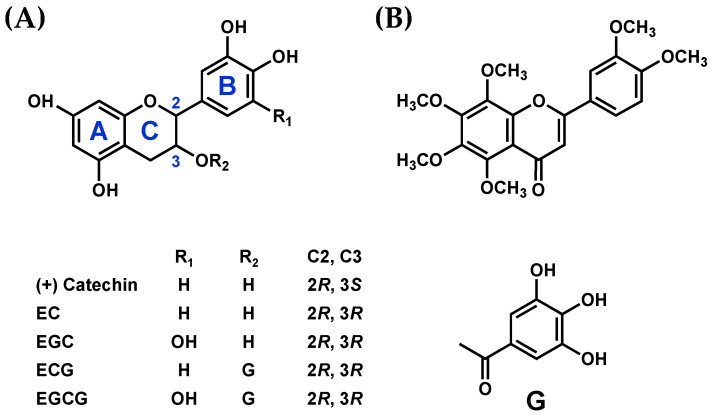
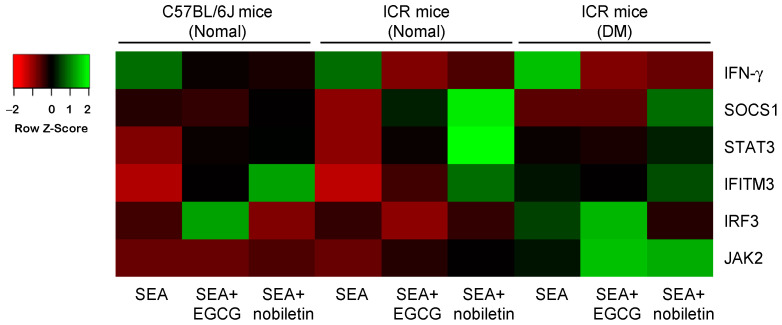
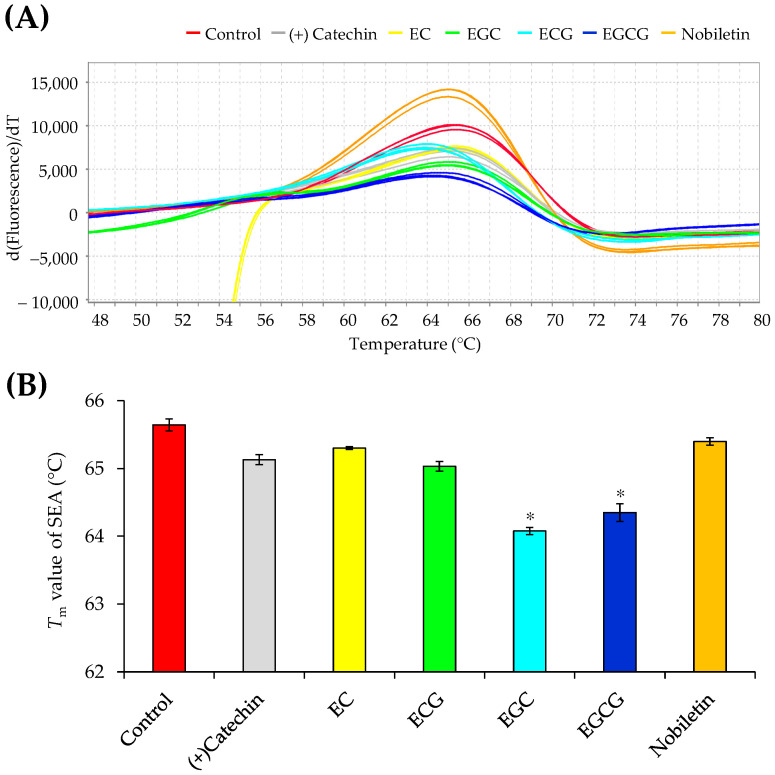
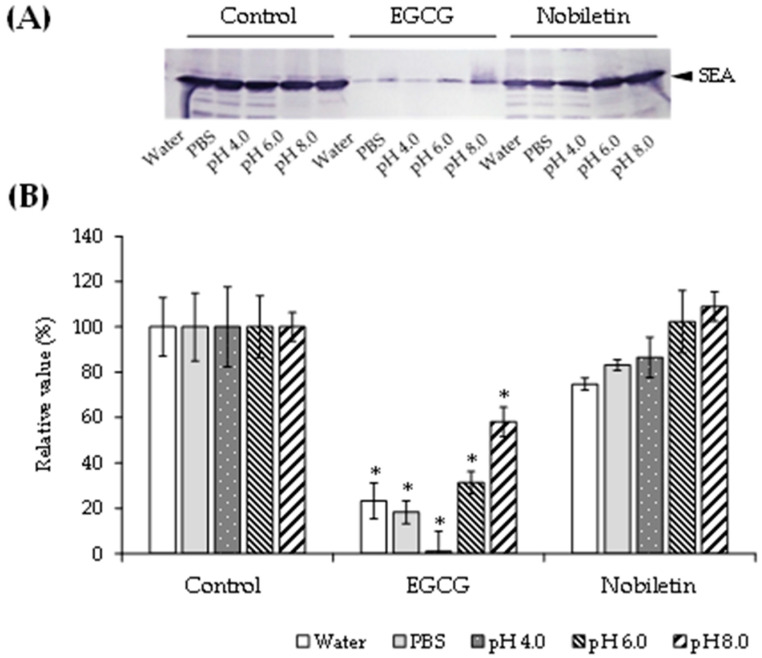
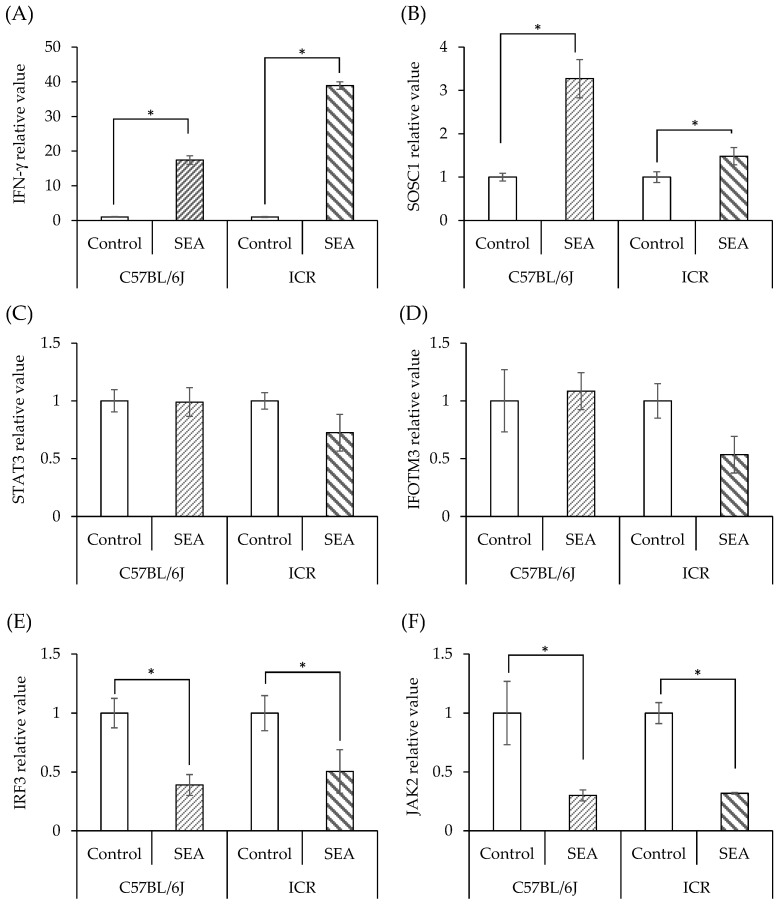
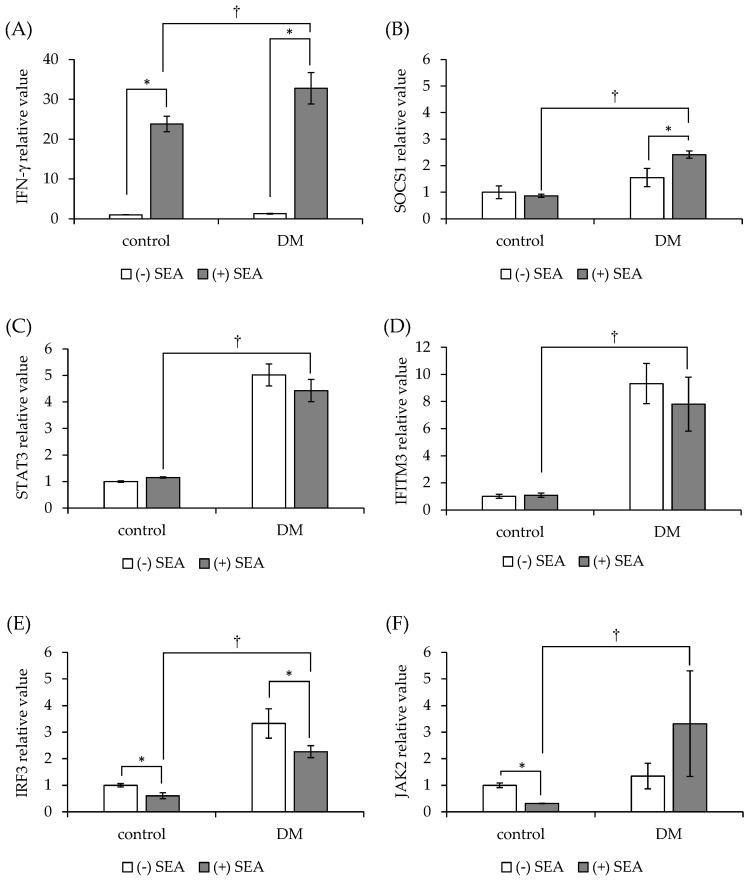
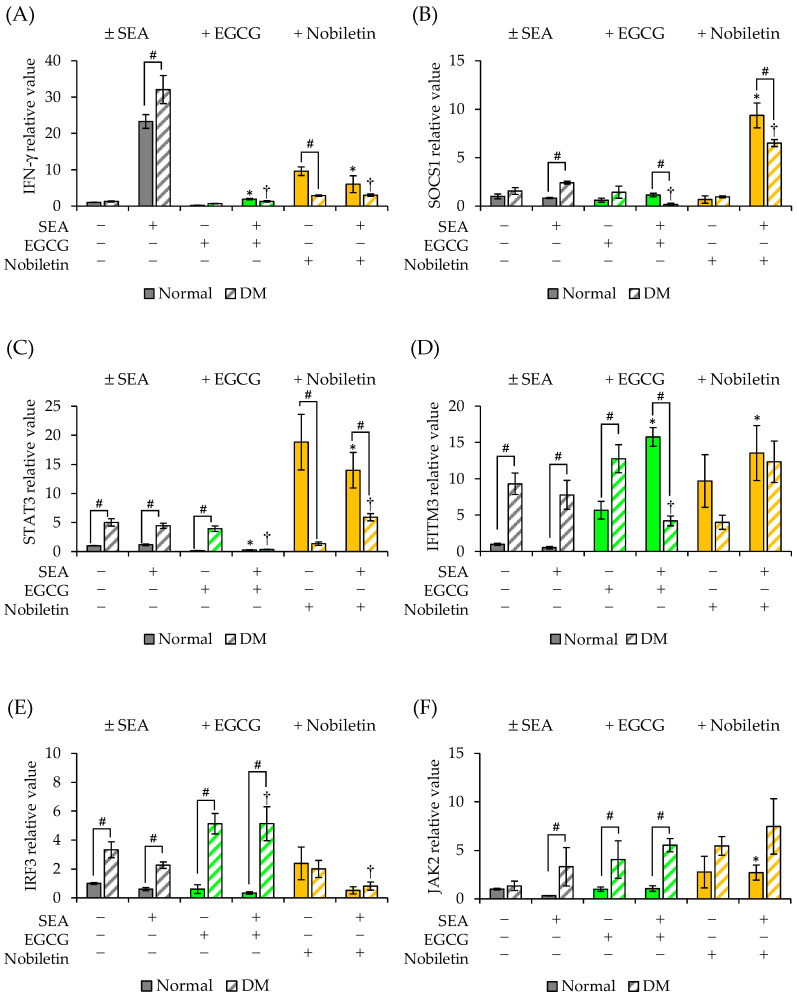
Patients with diabetes are known to be more susceptible to infections following the establishment of in their nasal passages and on their skin. The present study evaluated the effects of staphylococcal enterotoxin A (SEA) on the immune responses of spleen cells derived from diabetic mice, and examined the effects of polyphenols, catechins, and nobiletin on inflammation-related gene expression associated with the immune response. (-)-Epigallocatechin gallate (EGCG), possessing hydroxyl groups, interacted with SEA, whereas nobiletin, possessing methyl groups, did not interact with SEA. The exposure of spleen cells derived from diabetic mice to SEA enhanced the expression of interferon gamma, suppressor of cytokine signaling 1, signal transducer and activator of transcription 3, interferon-induced transmembrane protein 3, Janus kinase 2, and interferon regulatory factor 3, suggesting that SEA sensitivity is variable in the development of diabetes. Both EGCG and nobiletin changed the expression of genes related to SEA-induced inflammation in spleen cells, suggesting that they inhibit inflammation through different mechanisms. These results may lead to a better understanding of the SEA-induced inflammatory response during diabetogenesis, and the establishment of methods to control these effects with polyphenols.
众所周知,糖尿病患者在鼻腔通道和皮肤出现[具体内容缺失]后更容易受到感染。本研究评估了葡萄球菌肠毒素A(SEA)对糖尿病小鼠脾脏细胞免疫反应的影响,并研究了多酚、儿茶素和川陈皮素对与免疫反应相关的炎症相关基因表达的影响。具有羟基的(-)-表没食子儿茶素没食子酸酯(EGCG)与SEA相互作用,而具有甲基的川陈皮素则不与SEA相互作用。将糖尿病小鼠的脾脏细胞暴露于SEA可增强γ干扰素、细胞因子信号转导抑制因子1、信号转导和转录激活因子3、干扰素诱导跨膜蛋白3、Janus激酶2和干扰素调节因子3的表达,这表明在糖尿病发展过程中SEA敏感性存在差异。EGCG和川陈皮素均改变了脾脏细胞中与SEA诱导的炎症相关的基因表达,这表明它们通过不同机制抑制炎症。这些结果可能有助于更好地理解糖尿病发生过程中SEA诱导的炎症反应,以及建立用多酚控制这些效应的方法。