State Key Laboratory of Virology, Hubei Key Laboratory of Cell Homeostasis, Department of Cell Biology, College of Life Sciences, Wuhan University, 430072, Wuhan, China.
Hubei-MOST KLOS & KLOBME, School & Hospital of Stomatology, Wuhan University, Wuhan, 430072, China.
Cell Mol Immunol. 2018 Sep;15(9):858-867. doi: 10.1038/cmi.2017.15. Epub 2017 Apr 24.
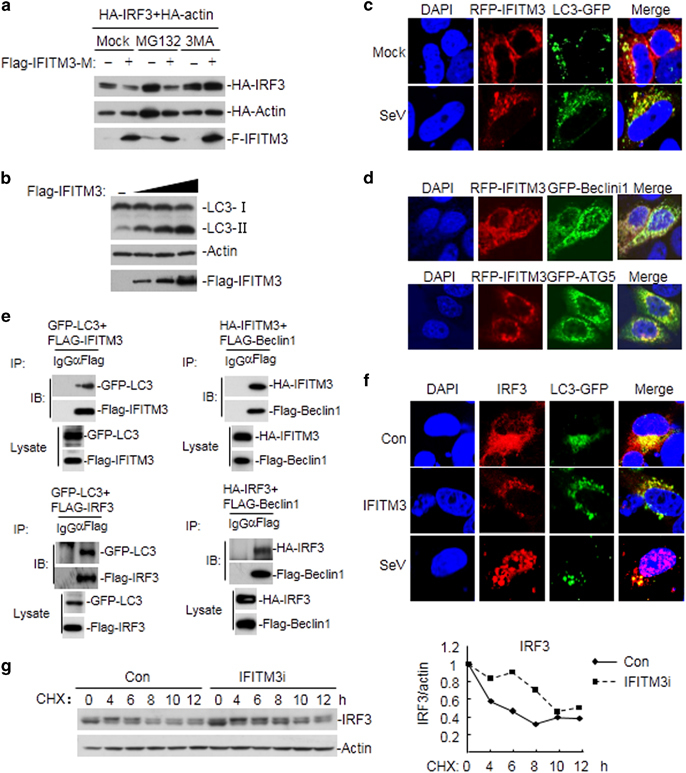
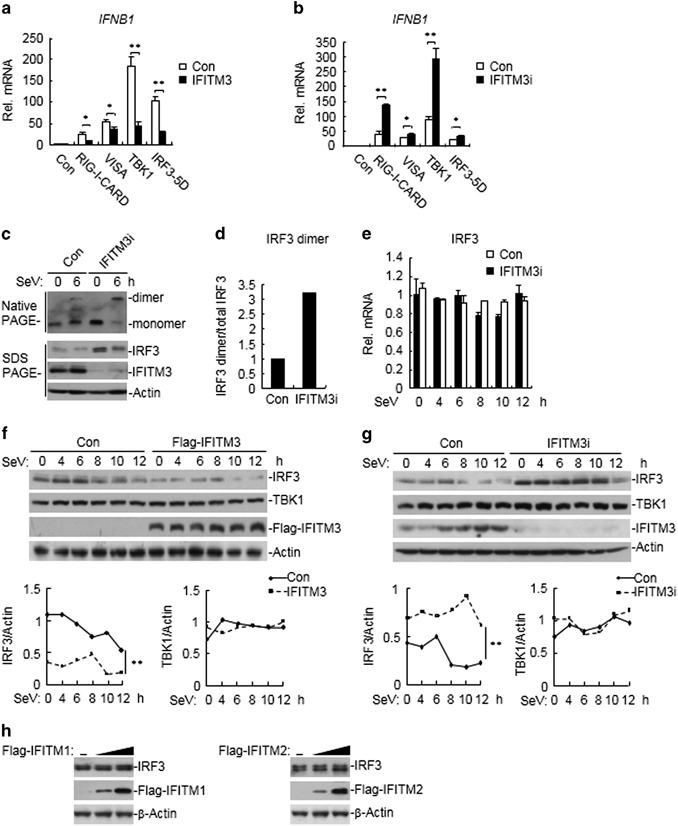
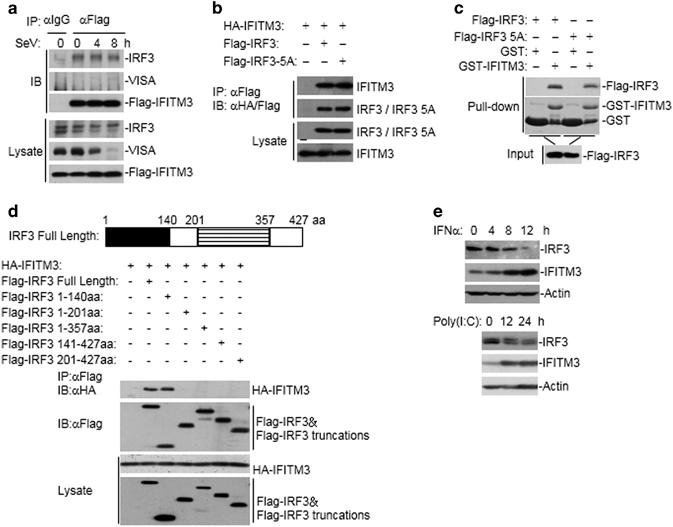
Interferon-induced transmembrane protein 3 (IFITM3) is a restriction factor that can be induced by viral infection and interferons (IFNs). It inhibits the entry and replication of many viruses, which are independent of receptor usage but dependent on processes that occur in endosomes. In this study, we demonstrate that IFITM3 plays important roles in regulating the RNA-virus-triggered production of IFN-β in a negative-feedback manner. Overexpression of IFITM3 inhibited Sendai virus-triggered induction of IFN-β, whereas knockdown of IFITM3 had the opposite effect. We also showed that IFITM3 was constitutively associated with IRF3 and regulated the homeostasis of IRF3 by mediating the autophagic degradation of IRF3. These findings suggest a novel inhibitory function of IFITM3 on the RNA-virus-triggered production of type I IFNs and cellular antiviral responses.
干扰素诱导跨膜蛋白 3(IFITM3)是一种限制因子,可被病毒感染和干扰素(IFNs)诱导。它可以抑制多种病毒的进入和复制,这一过程不依赖于受体的使用,但依赖于内体中发生的过程。在这项研究中,我们证明 IFITM3 以负反馈的方式在调节 RNA 病毒触发的 IFN-β 产生中发挥重要作用。IFITM3 的过表达抑制了 Sendai 病毒触发的 IFN-β 的诱导,而 IFITM3 的敲低则产生了相反的效果。我们还表明,IFITM3 与 IRF3 持续相关,并通过介导 IRF3 的自噬降解来调节 IRF3 的动态平衡。这些发现表明 IFITM3 对 RNA 病毒触发的 I 型 IFN 产生和细胞抗病毒反应具有新的抑制功能。