MS-Nutrition, 13005 Marseille, France.
Center for Public Health Nutrition, University of Washington, Seattle, WA 98195, USA.
Nutrients. 2023 Apr 14;15(8):1897. doi: 10.3390/nu15081897.
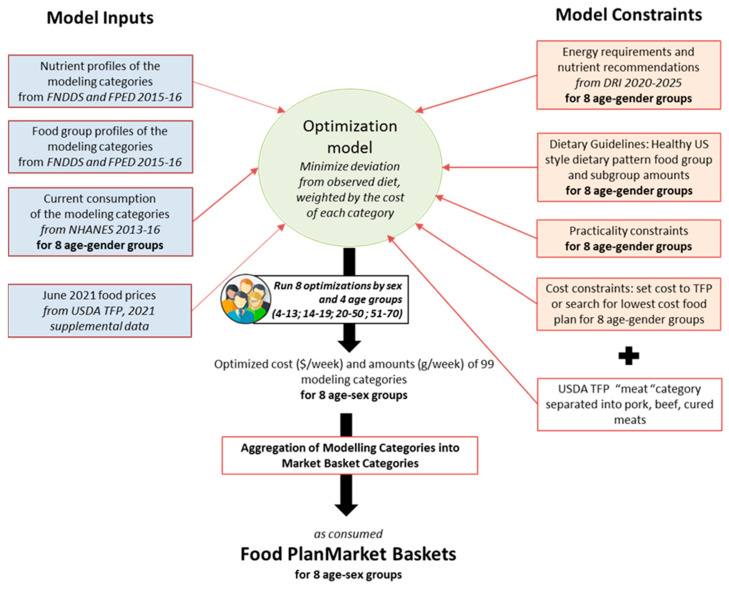
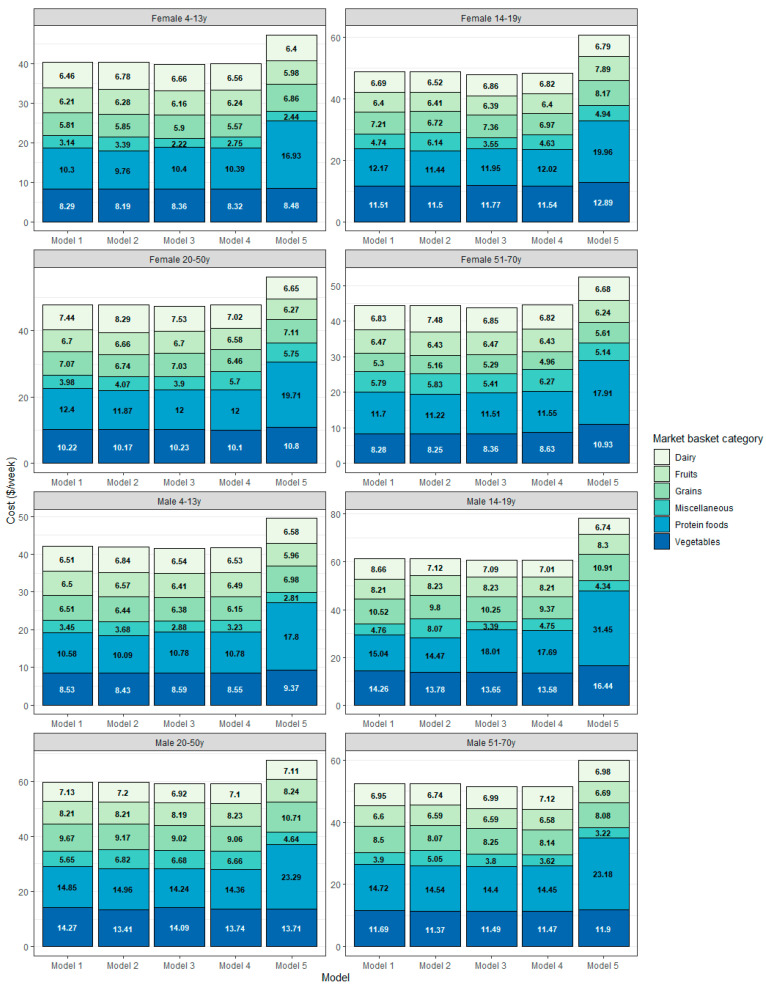
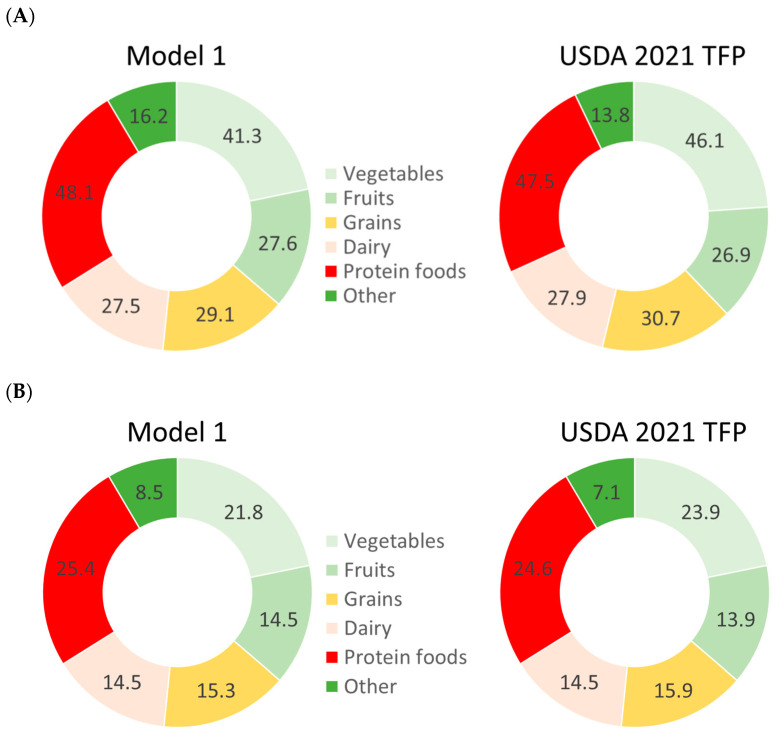
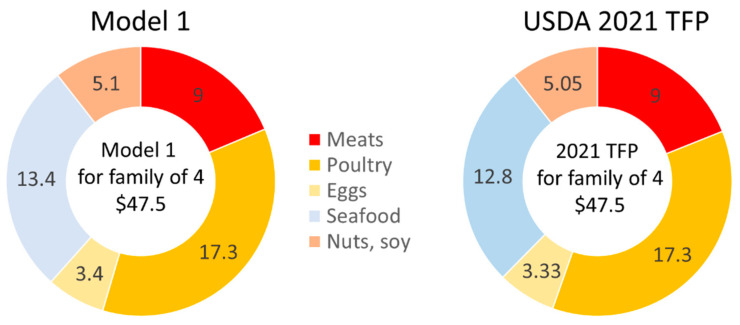
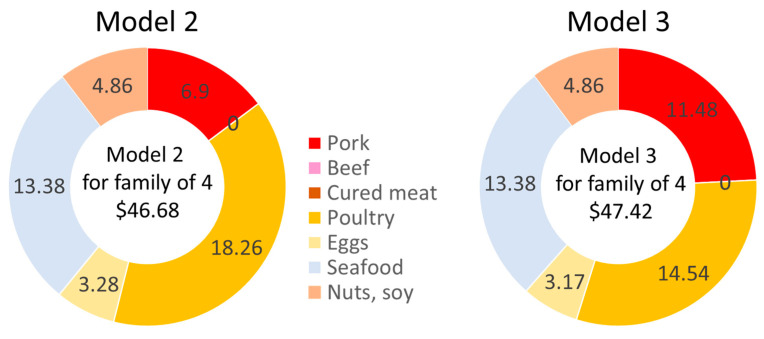
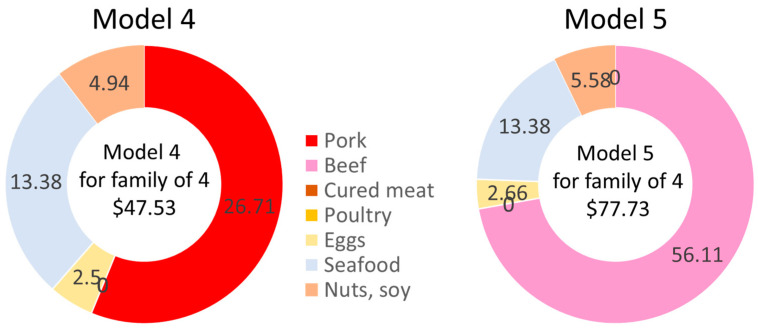
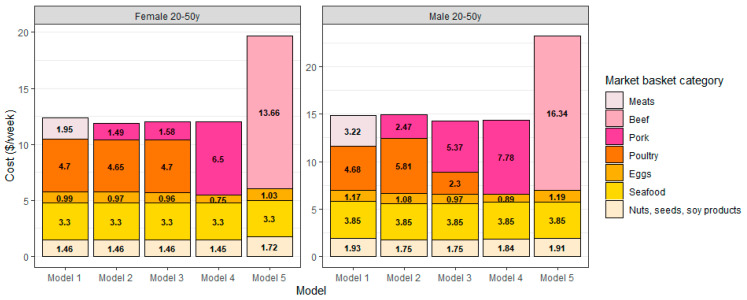
The USDA Thrifty Food Plan (TFP) is an estimate of a lowest-cost healthy diet that meets dietary guidelines while respecting existing eating habits. In the US, the TFP provides the basis for federal food assistance. Included in the TFP are protein foods from both animal and plant sources. The present goal was to explore the place of fresh pork among protein foods in the revised TFP 2021. Our analyses used the same databases and the same quadratic programming (QP) methods as had been used by the USDA to develop the TFP 2021. Dietary intakes came from the National Health and Nutrition Examination Survey (NHANES 2015-16); nutrient composition data came from the Food and Nutrient Database for Dietary Studies (FNDDS 2015-16), and national food prices came from the 2021 TFP report. Amounts and prices were for foods as consumed. Our QP Model 1 used USDA modeling categories to replicate the TFP 2021. The non-poultry meat category was then separated into pork and beef. Model 2 examined whether the TFP 2021 algorithm would select pork or beef. Model 3 sought the lowest cost healthy diet, the same as the TFP 2021. Model 4 replaced beef and poultry with pork; whereas Model 5 replaced pork and poultry with beef. Weekly costs were calculated for a family of four and eight age-gender groups. All models met the nutrient requirements. The market basket cost for a family of four in Model 1 was USD 189.88, compared to the purchase price of USD 192.84 in the TFP 2021. In Model 2, fresh pork was selected preferentially over beef. The lowest-cost healthy food plan in Model 3 increased fresh pork to 3.4 lbs/week. Replacing beef and poultry with pork in Model 4 led to a modest decrease in the weekly cost. Replacing pork and poultry with beef in Model 5 led to a major increase in the weekly cost. We conclude, based on TFP-analogous modeling, that fresh pork is the preferred meat source, providing high-quality protein at a low cost. QP methods, as used in the TFP 2021, are a valuable tool for designing food plans that are affordable, acceptable, and nutrient-rich.
美国农业部节俭食品计划(TFP)是对满足饮食指南同时尊重现有饮食习惯的最低成本健康饮食的估计。在美国,TFP 为联邦食品援助提供了基础。TFP 中包含来自动物和植物来源的蛋白质食品。目前的目标是探索新鲜猪肉在修订后的 TFP 2021 中在蛋白质食品中的地位。我们的分析使用了与美国农业部开发 TFP 2021 相同的数据库和相同的二次规划(QP)方法。饮食摄入量来自国家健康和营养检查调查(NHANES 2015-16);营养成分数据来自膳食研究食品和营养数据库(FNDDS 2015-16),国家食品价格来自 2021 年 TFP 报告。数量和价格是指食用食品的数量和价格。我们的 QP 模型 1 使用美国农业部的建模类别来复制 TFP 2021。然后,非禽肉类别分为猪肉和牛肉。模型 2 检验 TFP 2021 算法是否会选择猪肉或牛肉。模型 3 寻求最低成本的健康饮食,与 TFP 2021 相同。模型 4 用猪肉代替牛肉和禽肉;而模型 5 用牛肉代替猪肉和禽肉。为四个年龄性别组的一个家庭计算每周费用。所有模型都满足营养需求。模型 1 中一个四口之家的一篮子食品成本为 189.88 美元,而 TFP 2021 的购买价格为 192.84 美元。在模型 2 中,新鲜猪肉优先于牛肉被选中。模型 3 中最低成本的健康食品计划将新鲜猪肉增加到每周 3.4 磅。在模型 4 中用猪肉代替牛肉和禽肉会导致每周成本略有下降。在模型 5 中用牛肉代替猪肉和禽肉会导致每周成本大幅增加。我们的结论是,基于 TFP 类似的建模,新鲜猪肉是首选的肉类来源,以低成本提供高质量的蛋白质。QP 方法,如 TFP 2021 中使用的方法,是设计负担得起、可接受和营养丰富的食品计划的宝贵工具。