Department of Agrifood, Environmental and Animal Science, University of Udine, Via Cotonificio 108, 33100 Udine, Italy.
Sensors (Basel). 2023 Apr 12;23(8):3915. doi: 10.3390/s23083915.
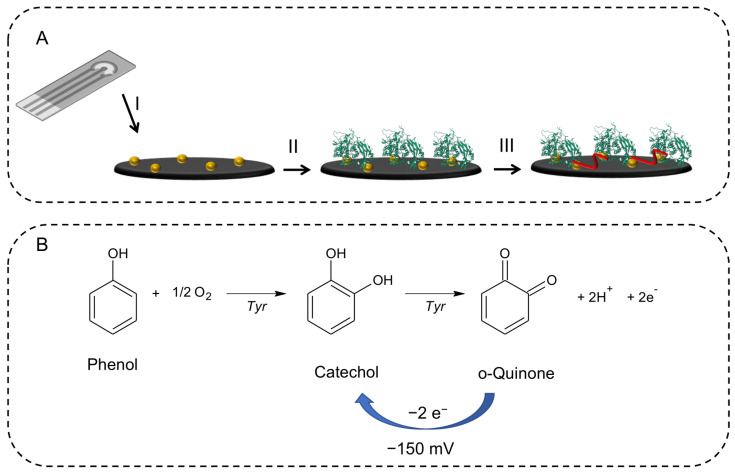
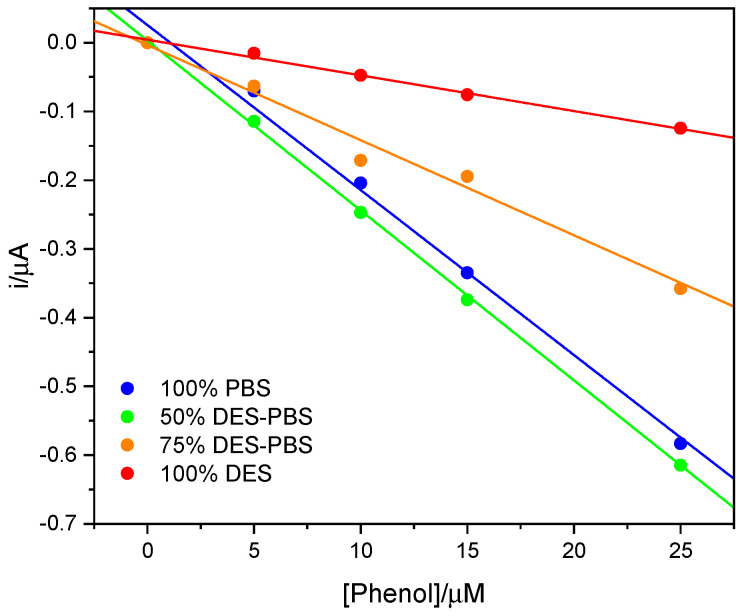
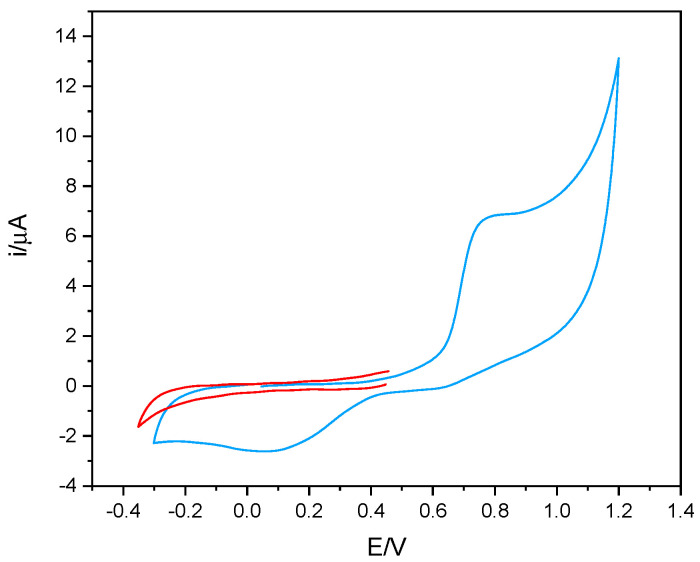
The use of green, inexpensive, and biodegradable deep eutectic solvents as nonaqueous solvents and electrolytes could be a useful way to potentially improve the enzyme biosensor performance as well as a profitable strategy to extend their use in the gas phase. However, enzyme activity in these media, although fundamental for their implementation in electrochemical analysis, is still almost unexplored. In this study, an electrochemical approach was employed to monitor tyrosinase enzyme activity in a deep eutectic solvent. This study was performed in a DES consisting of choline chloride (ChCl) as a hydrogen bond acceptor (HBA) and glycerol as a hydrogen bond donor (HBD), while phenol was chosen as the prototype analyte. The tyrosinase enzyme was immobilized on a gold-nanoparticle-modified screen-printed carbon electrode, and its activity was monitored following the reduction current of orthoquinone produced by the tyrosinase biocatalysis of phenol. This work represents a first step toward the realization of green electrochemical biosensors capable of operating in both nonaqueous and gaseous media for the chemical analysis of phenols.
使用绿色、廉价且可生物降解的深共晶溶剂作为非水溶剂和电解质可能是一种有用的方法,可以潜在地提高酶生物传感器的性能,并且是一种有利的策略,可以扩展它们在气相中的应用。然而,这些介质中的酶活性对于它们在电化学分析中的实施虽然是基础,但仍几乎未被探索。在这项研究中,采用电化学方法在深共晶溶剂中监测酪氨酸酶的酶活性。该研究是在由氯化胆碱(ChCl)作为氢键受体(HBA)和甘油作为氢键供体(HBD)组成的 DES 中进行的,而苯酚被选为原型分析物。将酪氨酸酶固定在金纳米粒子修饰的丝网印刷碳电极上,并在苯酚的酪氨酸酶生物催化产生邻苯醌的还原电流后监测其活性。这项工作代表了朝着实现能够在非水和气体介质中运行的绿色电化学生物传感器迈出的第一步,用于苯酚的化学分析。