Buha Marković Jovana Z, Marinković Ana D, Savić Jasmina Z, Mladenović Milica R, Erić Milić D, Marković Zoran J, Ristić Mirjana Đ
Vinča Institute of Nuclear Sciences-National Institute of the Republic of Serbia, University of Belgrade, Mike Petrovića Alasa 12-14, 11351 Belgrade, Serbia.
Faculty of Technology and Metallurgy, University of Belgrade, Karnegijeva 4, 11120 Belgrade, Serbia.
Toxics. 2023 Apr 21;11(4):396. doi: 10.3390/toxics11040396.
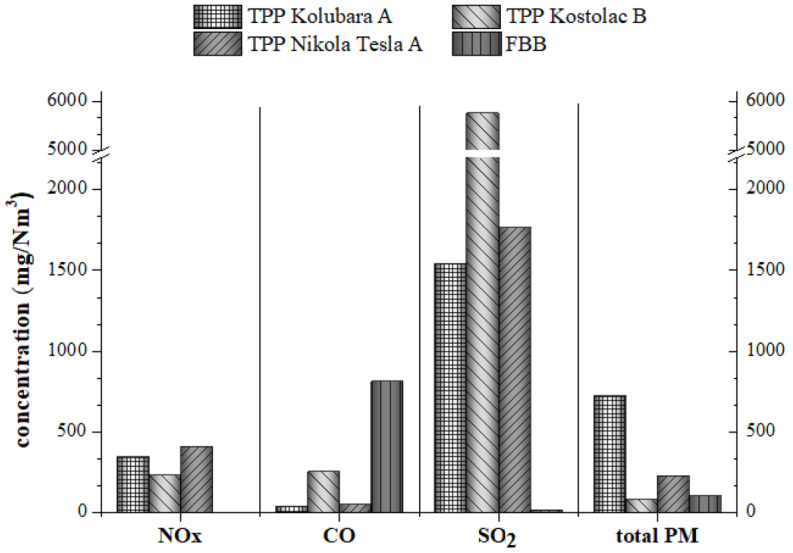
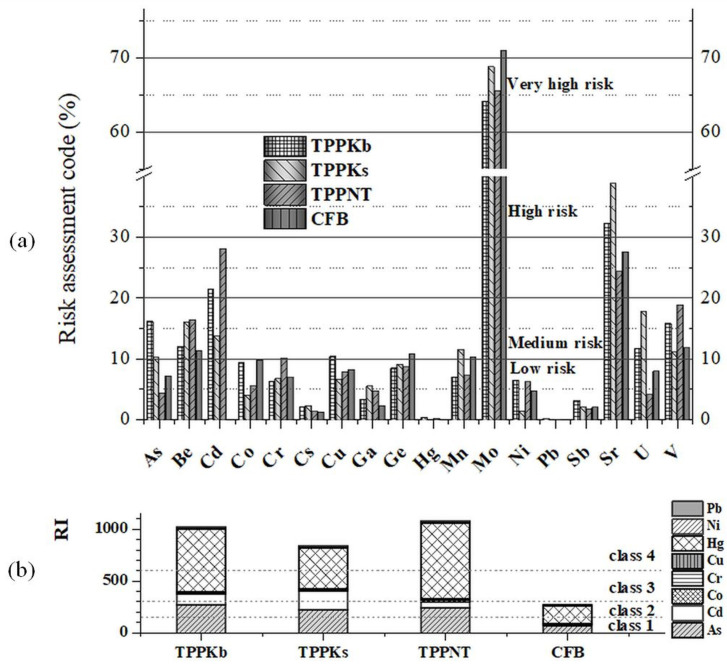
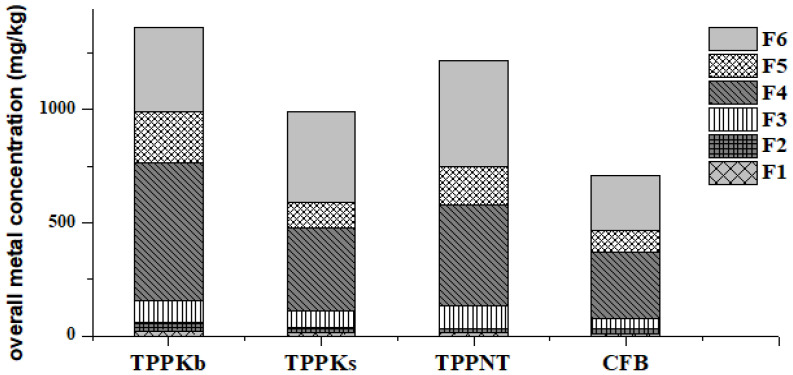
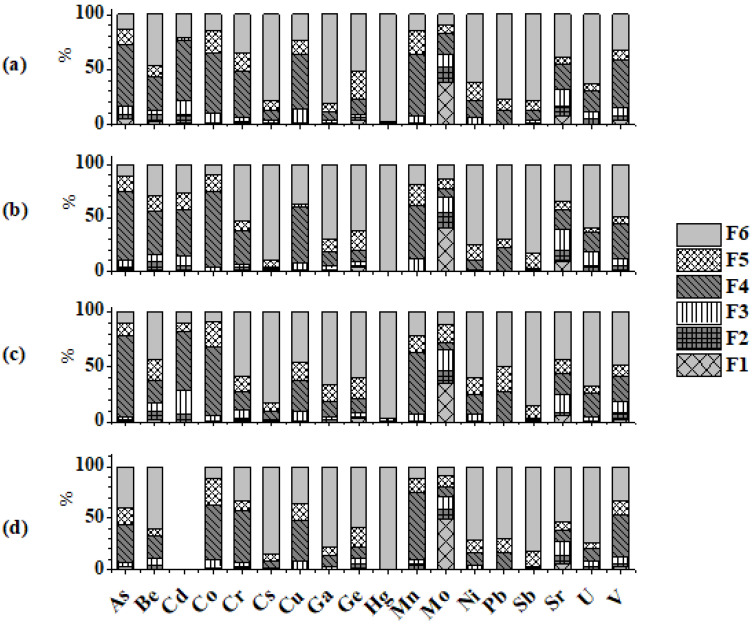
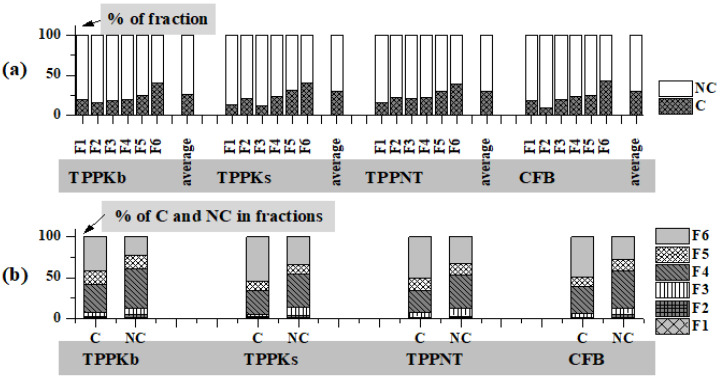
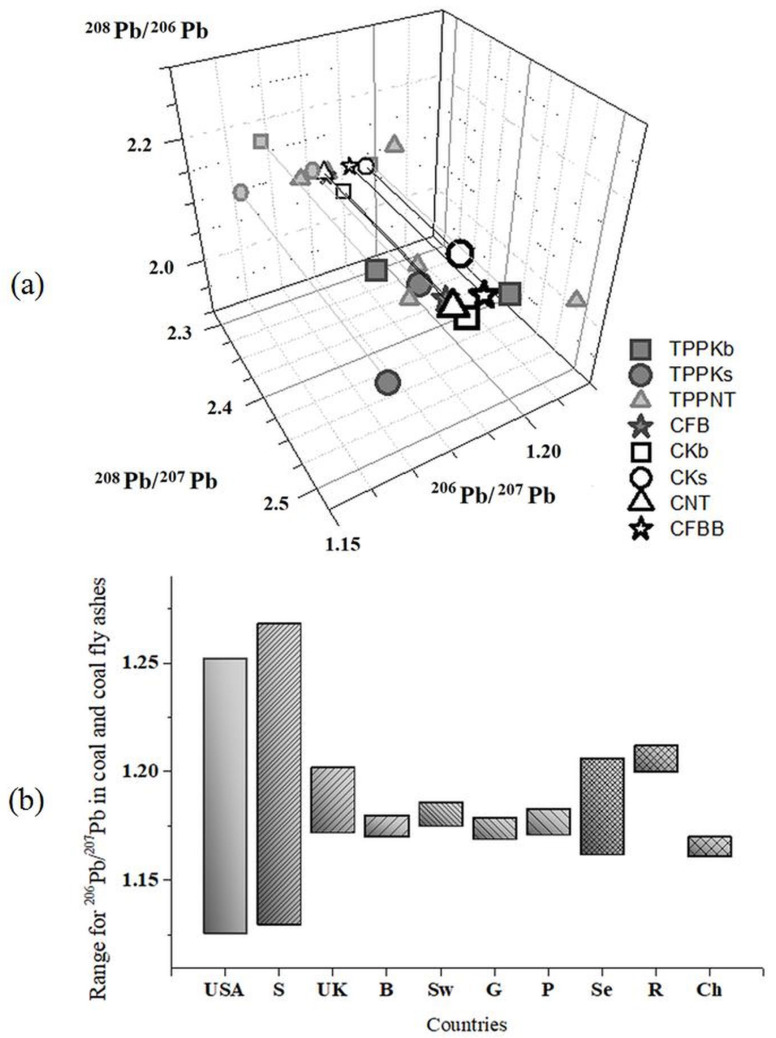
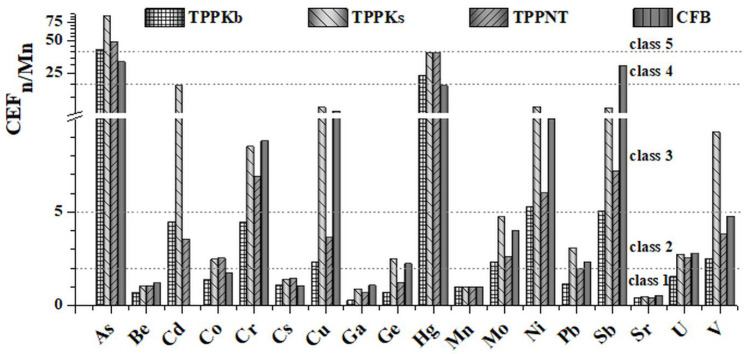
Emission factors (EFs) of gaseous pollutants, particulate matter, certain harmful trace elements, and polycyclic aromatic hydrocarbons (PAHs) from three thermal power plants (TPPs) and semi-industrial fluidized bed boiler (FBB) were compared. EFs of particulate matter, trace elements (except Cd and Pb), benzo[a]pyrene, and benzo[b]fluoranthene exceed the upper limits specified in the EMEP inventory guidebook for all combustion facilities. The comparison of trace elements and PAHs content in fly ashes (FAs) from lignite and coal waste combustion in TPPs and FBB, respectively, as well as the potential environmental impact of FAs disposal, was performed by employing a set of ecological indicators such as crustal enrichment factor, risk assessment code, risk indices for trace elements, and benzo[a]pyrene equivalent concentration for PAHs. Sequential analysis shows that the trace elements portion is the lowest for water-soluble and exchangeable fractions. The highest enrichment levels in FAs are noticed for As and Hg. Based on toxic trace elements content, FAs from TPPs represent a very high ecological risk, whereas fly ash from FBB poses a moderate ecological risk but has the highest benzo[a]pyrene equivalent concentration, indicating its increased carcinogenic potential. Lead isotope ratios for Serbian coals and FAs can contribute to a lead pollution global database.
比较了三个热电厂(TPP)和半工业流化床锅炉(FBB)气态污染物、颗粒物、某些有害微量元素和多环芳烃(PAH)的排放因子(EF)。颗粒物、微量元素(除镉和铅外)、苯并[a]芘和苯并[b]荧蒽的排放因子超过了欧洲监测和评估计划(EMEP)清单指南中规定的所有燃烧设施的上限。分别采用地壳富集因子、风险评估代码、微量元素风险指数和多环芳烃苯并[a]芘当量浓度等一系列生态指标,对热电厂和流化床锅炉中褐煤和煤矸石燃烧产生的飞灰(FA)中的微量元素和多环芳烃含量进行了比较,以及飞灰处置的潜在环境影响。顺序分析表明,水溶性和可交换部分的微量元素含量最低。飞灰中砷和汞的富集水平最高。基于有毒微量元素含量,热电厂的飞灰具有很高的生态风险,而流化床锅炉的飞灰具有中等生态风险,但苯并[a]芘当量浓度最高,表明其致癌潜力增加。塞尔维亚煤炭和飞灰的铅同位素比值有助于建立全球铅污染数据库。