Johns Nicole E, Cata-Preta Bianca O, Kirkby Katherine, Arroyave Luisa, Bergen Nicole, Danovaro-Holliday M Carolina, Santos Thiago M, Yusuf Nasir, Barros Aluísio J D, Hosseinpoor Ahmad Reza
Department of Data and Analytics, World Health Organization, 20 Avenue Appia, 1211 Geneva, Switzerland.
International Center for Equity in Health, Federal University of Pelotas, Rua Mal Deodoro 1160, Pelotas 96020-220, Brazil.
Vaccines (Basel). 2023 Mar 29;11(4):752. doi: 10.3390/vaccines11040752.
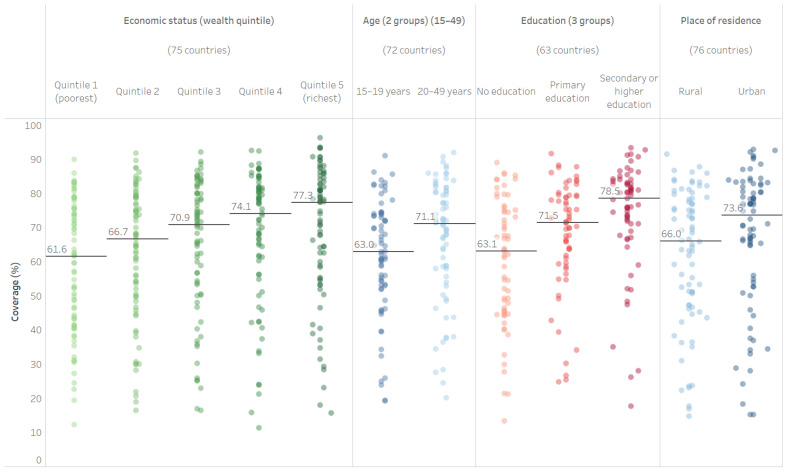
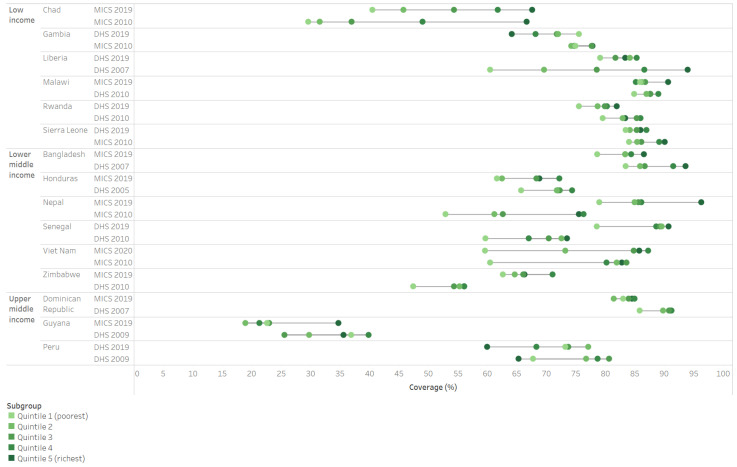
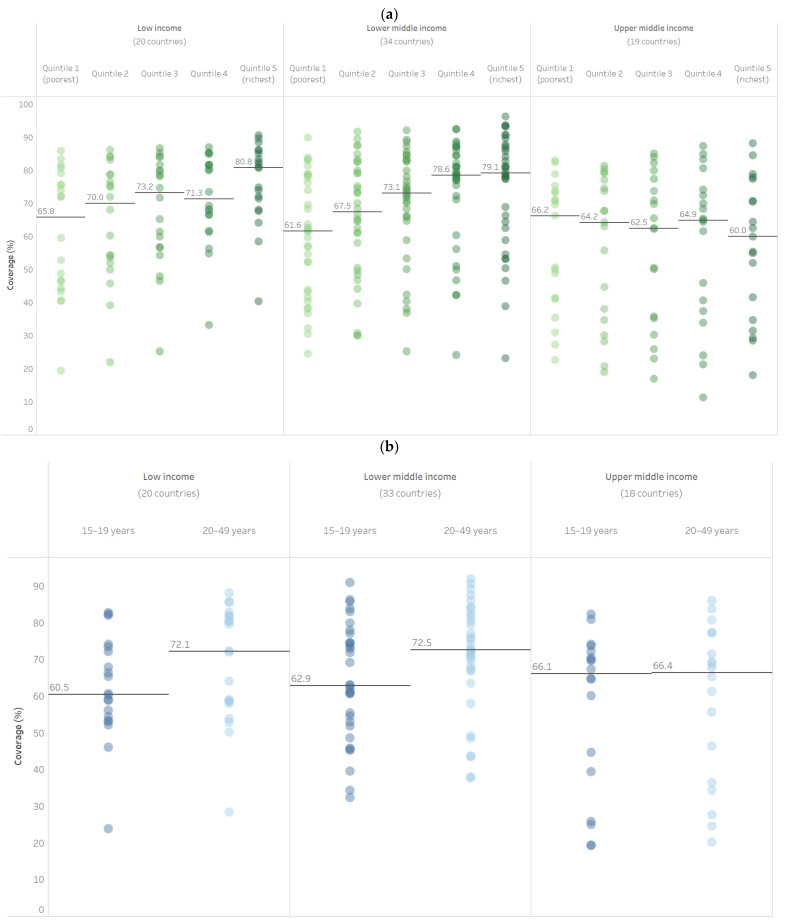
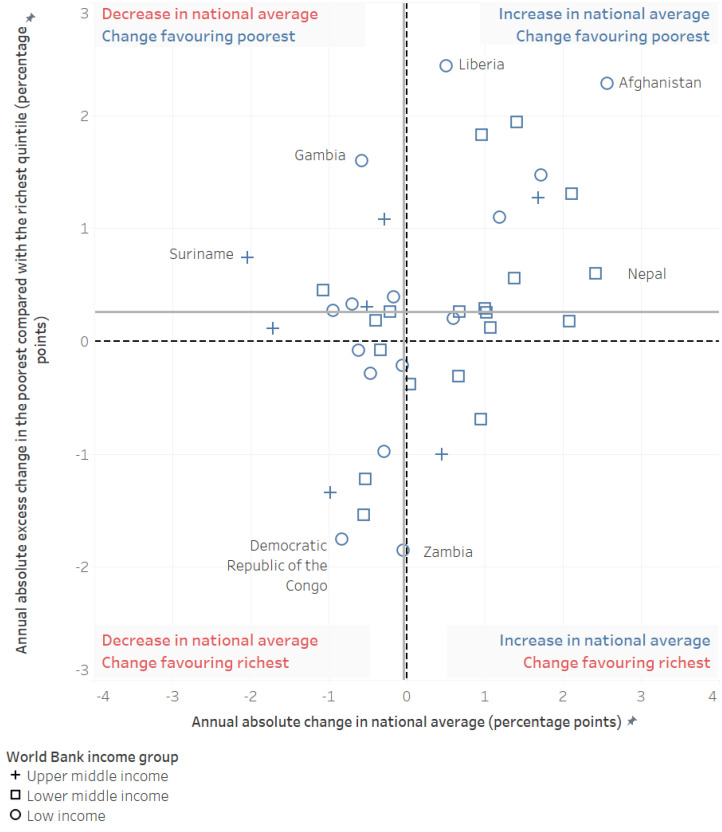
Substantial progress in maternal and neonatal tetanus elimination has been made in the past 40 years, with dramatic reductions in neonatal tetanus incidence and mortality. However, twelve countries have still not achieved maternal and neonatal tetanus elimination, and many countries that have achieved elimination do not meet key sustainability thresholds to ensure long-lasting elimination. As maternal and neonatal tetanus is a vaccine-preventable disease (with coverage of the infant conferred by maternal immunization during and prior to pregnancy), maternal tetanus immunization coverage is a key metric for monitoring progress towards, equity in, and sustainability of tetanus elimination. In this study, we examine inequalities in tetanus protection at birth, a measure of maternal immunization coverage, across 76 countries and four dimensions of inequality via disaggregated data and summary measures of inequality. We find that substantial inequalities in coverage exist for wealth (with lower coverage among poorer wealth quintiles), maternal age (with lower coverage among younger mothers), maternal education (with lower coverage among less educated mothers), and place of residence (with lower coverage in rural areas). Inequalities existed for all dimensions across low- and lower-middle-income countries, and across maternal education and place of residence across upper-middle-income countries. Though global coverage changed little over the time period 2001-2020, this obscured substantial heterogeneity across countries. Notably, several countries had substantial increases in coverage accompanied by decreases in inequality, highlighting the need for equity considerations in maternal and neonatal tetanus elimination and sustainability efforts.
在过去40年里,在消除孕产妇和新生儿破伤风方面取得了重大进展,新生儿破伤风发病率和死亡率大幅下降。然而,仍有12个国家尚未实现消除孕产妇和新生儿破伤风的目标,许多已实现消除目标的国家未达到确保长期消除的关键可持续性门槛。由于孕产妇和新生儿破伤风是一种可通过疫苗预防的疾病(通过孕期及孕前母体免疫为婴儿提供保护),孕产妇破伤风免疫覆盖率是监测破伤风消除进展、公平性和可持续性的关键指标。在本研究中,我们通过分类数据和不平等汇总指标,考察了76个国家出生时破伤风保护方面的不平等情况,这是衡量孕产妇免疫覆盖率的一个指标,以及不平等的四个维度。我们发现,在财富(较贫困财富五分位数的覆盖率较低)、孕产妇年龄(较年轻母亲的覆盖率较低)、孕产妇教育程度(受教育程度较低的母亲的覆盖率较低)和居住地(农村地区的覆盖率较低)方面存在显著的覆盖率不平等。低收入和中低收入国家在所有维度上都存在不平等,中高收入国家在孕产妇教育程度和居住地方面也存在不平等。尽管在2001年至2020年期间全球覆盖率变化不大,但这掩盖了各国之间的巨大异质性。值得注意的是,一些国家的覆盖率大幅提高,同时不平等程度下降,这凸显了在消除孕产妇和新生儿破伤风及可持续性努力中考虑公平性的必要性。