Diabetes Research Centre, Leicester General Hospital, University of Leicester, Gwendolen Road, Leicester, LE5 4WP, UK.
Institute of Clinical Medicine, Department of Medicine, University of Eastern Finland, Kuopio, Finland.
Geroscience. 2023 Aug;45(4):2727-2741. doi: 10.1007/s11357-023-00801-w. Epub 2023 Apr 28.
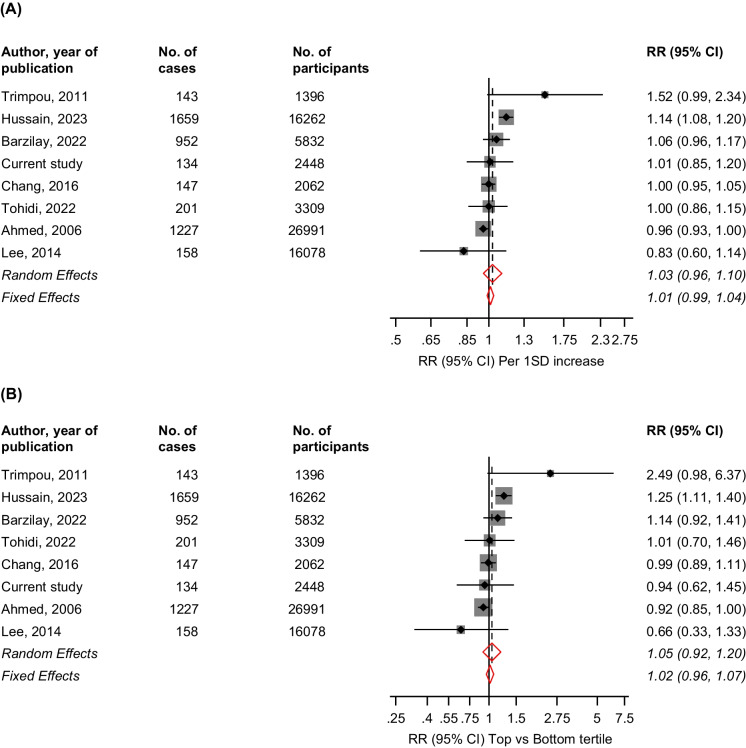
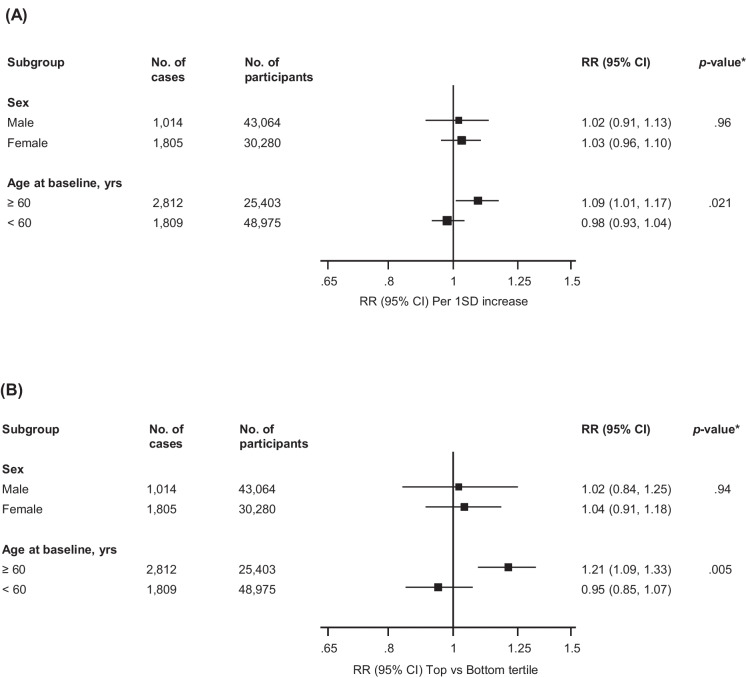
Previous findings on the association between high-density lipoprotein cholesterol (HDL-C) and fracture have yielded inconsistent results and it is unclear if the association varies with age and sex. We sought to evaluate the prospective association between HDL-C levels and fracture risk and assess if the association is modified by age and sex. Circulating HDL-C levels were measured at baseline in a population-based sample of 2,448 men aged 42-61 years. Cox regression was used to estimate hazard ratios (HRs) and 95% CIs. Incident fractures (n = 134) occurred during a median follow-up of 25.7 years. In analysis adjusted for several risk factors, the HR (95% CI) for fractures was 1.00 (0.85-1.20) per 1 standard deviation (SD) increase in HDL-C levels. Comparing the extreme tertiles of HDL-C levels, the corresponding adjusted HR (95% CI) was 0.94 (0.62-1.45). In a meta-analysis of eight cohort studies (including the current study) comprising 74,378 participants and 4,621 fracture cases, the fully-adjusted risk estimate (95% CI) for fracture was 1.03 (0.96-1.10) per 1SD increase in HDL-C levels and 1.05 (0.92-1.20) comparing extreme tertiles of HDL-C. The pooled risk estimate (95% CIs) for fracture per 1SD increase were 1.09 (1.01-1.17) and 0.98 (0.93-1.04) for age groups ≥ 60 and < 60 years, respectively, and the corresponding risks comparing the extreme tertiles of HDL-C levels were 1.21 (1.09-1.33) and 0.95 (0.85-1.07) (p-value for interaction < 0.05). Age may modify the association between HDL-C levels and fracture risk - an increased fracture risk associated with increased HDL-C levels is only evident in older age (≥ 60 years).
先前关于高密度脂蛋白胆固醇(HDL-C)与骨折之间关联的研究结果并不一致,目前尚不清楚这种关联是否因年龄和性别而异。我们旨在评估 HDL-C 水平与骨折风险的前瞻性关联,并评估这种关联是否因年龄和性别而改变。在一项基于人群的样本中,对 2448 名年龄在 42-61 岁的男性在基线时测量了循环 HDL-C 水平。使用 Cox 回归估计危险比(HR)和 95%置信区间(CI)。在中位随访 25.7 年后发生了 134 例骨折事件。在调整了几个危险因素后,HDL-C 水平每增加 1 个标准差(SD),骨折的 HR(95%CI)为 1.00(0.85-1.20)。在比较 HDL-C 水平的极端三分位数时,相应的调整后 HR(95%CI)为 0.94(0.62-1.45)。在包括本研究在内的八项队列研究的荟萃分析中,共纳入了 74378 名参与者和 4621 例骨折病例,HDL-C 水平每增加 1SD,骨折的全调整风险估计值(95%CI)为 1.03(0.96-1.10),而比较 HDL-C 的极端三分位数时为 1.05(0.92-1.20)。HDL-C 水平每增加 1SD,年龄组 ≥ 60 岁和 < 60 岁的骨折风险估计值(95%CI)分别为 1.09(1.01-1.17)和 0.98(0.93-1.04),比较 HDL-C 水平极端三分位数时的相应风险分别为 1.21(1.09-1.33)和 0.95(0.85-1.07)(交互检验的 p 值<0.05)。年龄可能会改变 HDL-C 水平与骨折风险之间的关联-与 HDL-C 水平升高相关的骨折风险仅在年龄较大(≥60 岁)时才明显。