Department of Scienze Dell'Emergenza, Anestesiologiche e Della Rianimazione, IRCCS Fondazione Policlinico A. Gemelli, Rome, Italy.
Department of Critical Care and Perinatal Medicine, Istituto Di Ricovero e Cura a Carattere Scientifico (IRCCS) Istituto Giannina Gaslini, Genova, Italy.
J Clin Monit Comput. 2023 Aug;37(4):1081-1093. doi: 10.1007/s10877-023-01017-1. Epub 2023 Apr 29.
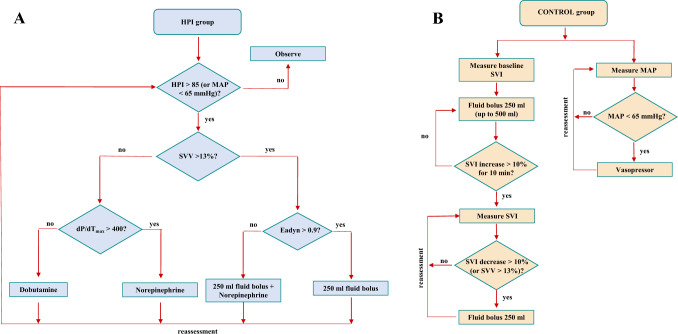
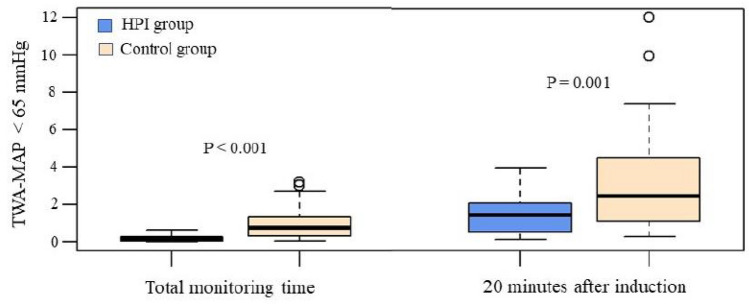
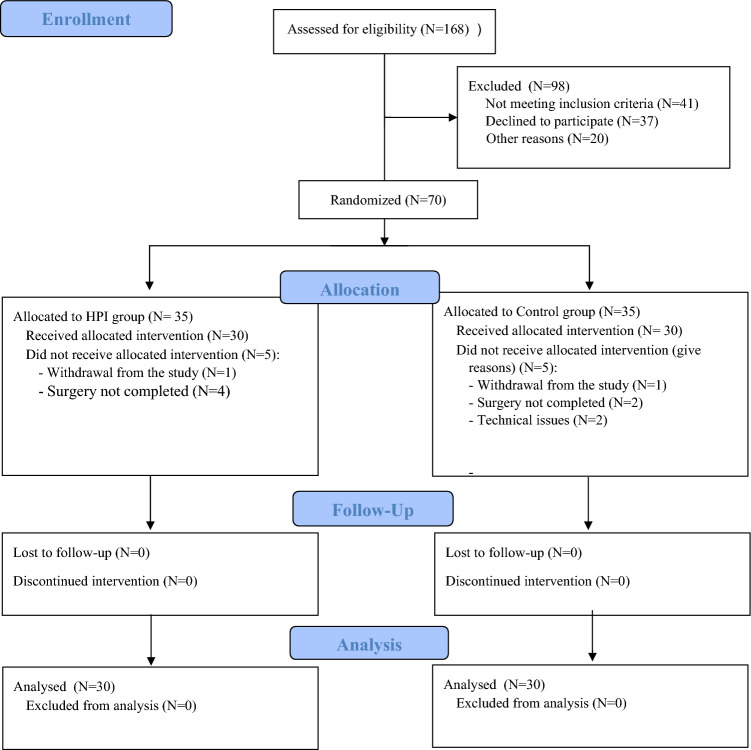
Intraoperative hypotension (IOH) is associated with increased morbidity and mortality. Hypotension Prediction Index (HPI) is a machine learning derived algorithm that predicts IOH shortly before it occurs. We tested the hypothesis that the application of the HPI in combination with a pre-defined Goal Directed Therapy (GDT) hemodynamic protocol reduces IOH during major gynaecologic oncologic surgery. We enrolled women scheduled for major gynaecologic oncologic surgery under general anesthesia with invasive arterial pressure monitoring. Patients were randomized to a GDT protocol aimed at optimizing stroke volume index (SVI) or hemodynamic management based on HPI guidance in addition to GDT. The primary outcome was the amount of IOH, defined as the timeweighted average (TWA) mean arterial pressure (MAP) < 65 mmHg. Secondary outcome was the TWA-MAP < 65 mmHg during the first 20 min after induction of GA. After exclusion of 10 patients the final analysis included 60 patients (30 in each group). The median (25-75th IQR) TWA-MAP < 65 mmHg was 0.14 (0.04-0.66) mmHg in HPI group versus 0.77 (0.36-1.30) mmHg in Control group, P < 0.001. During the first 20 min after induction of GA, the median TWA-MAP < 65 mmHg was 0.53 (0.06-1.8) mmHg in the HPI group and 2.15 (0.65-4.2) mmHg in the Control group, P = 0.001. Compared to a GDT protocol aimed to SVI optimization, a machine learning-derived algorithm for prediction of IOH combined with a GDT hemodynamic protocol, reduced IOH and hypotension after induction of general anesthesia in patients undergoing major gynaecologic oncologic surgery.Trial registration number: NCT04547491. Date of registration: 10/09/2020.
术中低血压(IOH)与发病率和死亡率增加有关。低血压预测指数(HPI)是一种基于机器学习的算法,可在发生 IOH 之前不久预测其发生。我们检验了以下假设,即在常规定向治疗(GDT)血流动力学方案中应用 HPI 可以减少妇科肿瘤学大手术中的 IOH。我们招募了接受全身麻醉和有创动脉血压监测的妇科肿瘤学大手术患者。患者随机分为 GDT 方案组,旨在优化每搏量指数(SVI),或根据 HPI 指导的血流动力学管理。主要结局是 IOH 的量,定义为时间加权平均(TWA)平均动脉压(MAP)<65mmHg。次要结局是诱导 GA 后 20 分钟内的 TWA-MAP<65mmHg。排除 10 例患者后,最终分析包括 60 例患者(每组 30 例)。HPI 组 TWA-MAP<65mmHg 的中位数(25-75% IQR)为 0.14(0.04-0.66)mmHg,对照组为 0.77(0.36-1.30)mmHg,P<0.001。在诱导 GA 后 20 分钟内,HPI 组的 TWA-MAP<65mmHg 的中位数为 0.53(0.06-1.8)mmHg,对照组为 2.15(0.65-4.2)mmHg,P=0.001。与旨在优化 SVI 的 GDT 方案相比,基于机器学习的 IOH 预测算法与 GDT 血流动力学方案相结合,可减少妇科肿瘤学大手术患者全身麻醉诱导后发生的 IOH 和低血压。试验注册号:NCT04547491。登记日期:2020 年 9 月 10 日。