Department of Breast Surgery, Takamatsu Heiwa Hospital, Takamatsu, Japan.
Department of Ultrasound/IVR Diagnostic Imaging Center, The Cancer Institute Hospital of Japanese Foundation for Cancer Research, Tokyo, Japan.
J Med Ultrason (2001). 2023 Jul;50(3):351-360. doi: 10.1007/s10396-023-01306-x. Epub 2023 Apr 29.
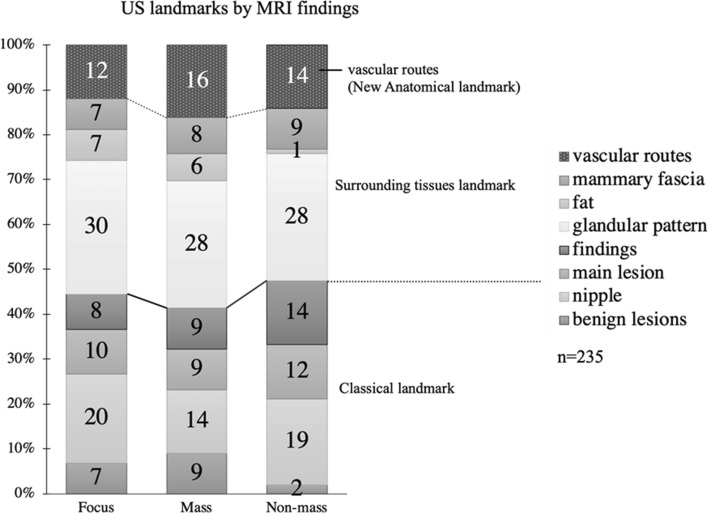
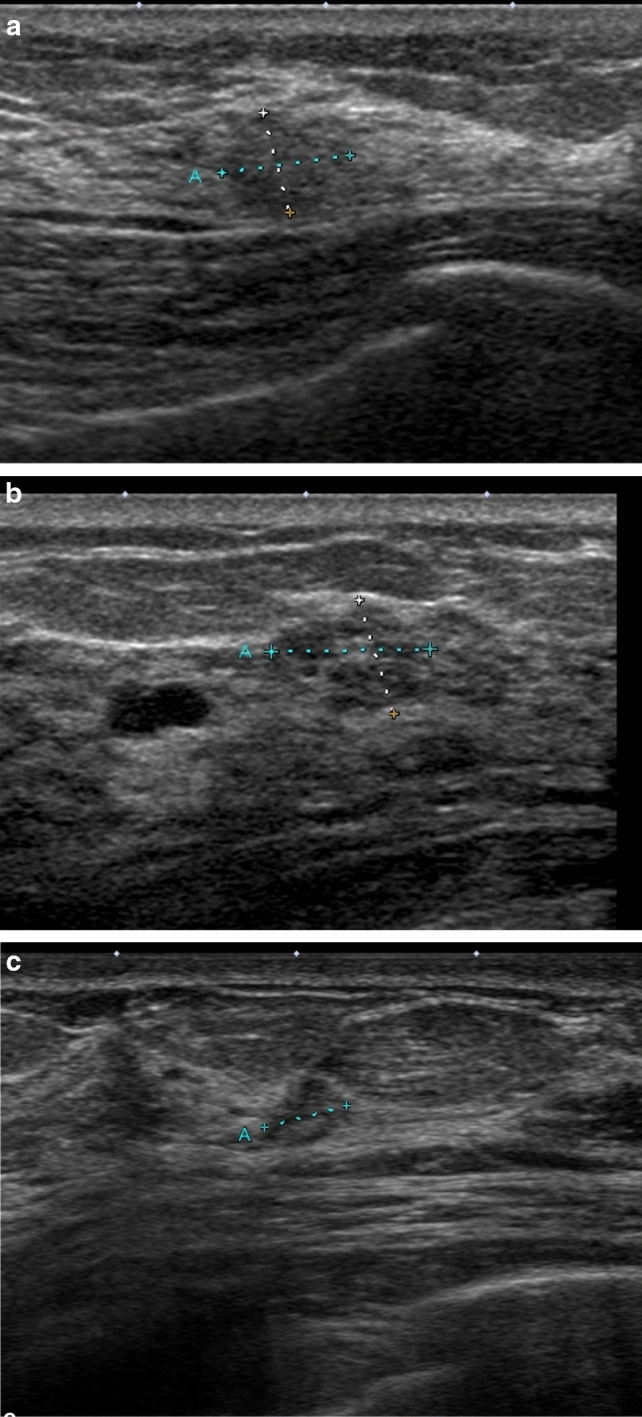
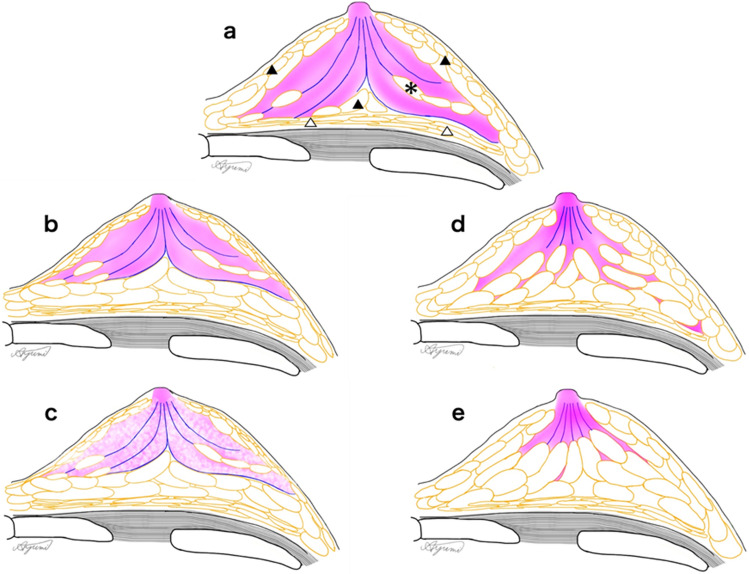
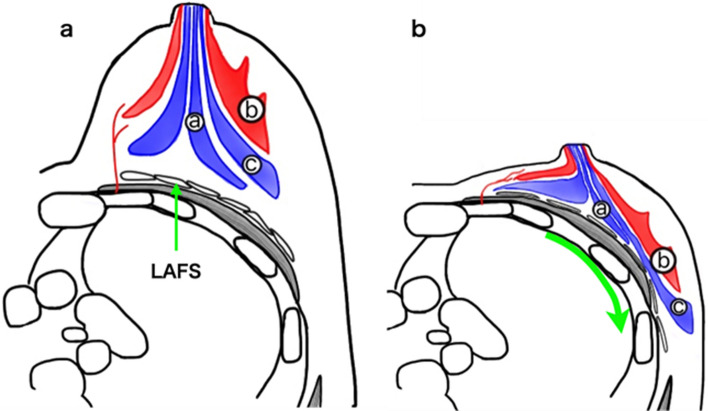
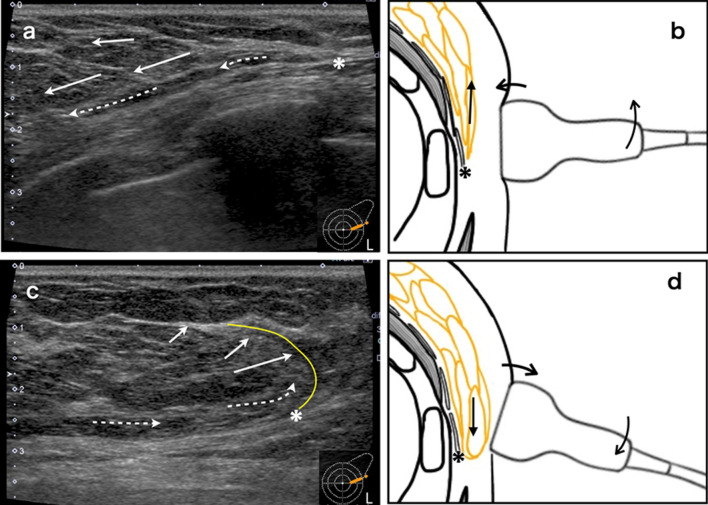
Magnetic resonance imaging (MRI)-detected lesions are often category 2 or 3 lesions on initial ultrasound examination. In addition, in the case of new non-mass lesions detected on MRI, one would expect to find lesions with ductal dilatation with minimal secretory accumulation, single short lesions with ductal dilatation, cyst-like lesions less than 5 mm in size, mammary gland-like lesions less than 8 mm in size, and very indistinct lesions. Detection is expected to be even more difficult. Currently, there are no clear uniform criteria for the indication of second-look ultrasonography (US) for MRI-detected lesions, so it is not possible to make a general comparison, but recent studies have indicated that the ratio of mass to non-mass MRI-detected lesions is 7:3. And it has been pointed out that the percentage of malignancy is about 30% for each. Before about 2012, the US detection rate was about 70%, and MRI-guided biopsies of undetected lesions showed a small percentage of malignant lesions. Therefore, some observers believe that lesions not detected on US should be followed up, while others believe that MRI-guided biopsy should be performed. Recently, however, the use of surrounding anatomical structures as landmarks for second-look US has increased the detection rate to as high as 87-99%, and the percentage of malignancy remains the same. In addition, recent surveillance of high-risk breast cancer requires careful management of MRI-detected lesions. In this review, we will discuss the literature on MRI-detected lesions and describe ultrasound techniques to accurately detect small lesions and reliably reveal pale lesions based on their structural differences from their surroundings.
磁共振成像(MRI)检测到的病变在初始超声检查时常为 2 类或 3 类病变。此外,在 MRI 检测到新的非肿块病变的情况下,人们预计会发现伴有导管扩张和最小分泌积聚的病变、伴有导管扩张的单个短病变、小于 5mm 的囊肿样病变、小于 8mm 的乳腺样病变以及非常不明显的病变。预计检测会更加困难。目前,对于 MRI 检测到的病变进行二次超声检查(US)的指征尚无明确的统一标准,因此无法进行一般比较,但最近的研究表明,MRI 检测到的肿块与非肿块病变的比例为 7:3,且每种病变的恶性比例约为 30%。在 2012 年之前,US 的检出率约为 70%,而对未检出病变进行 MRI 引导活检显示恶性病变的比例较小。因此,一些观察家认为,对于 US 未检出的病变应进行随访,而另一些则认为应进行 MRI 引导活检。然而,最近,将周围解剖结构用作二次 US 的标志物已将检出率提高到 87%-99%,且恶性比例保持不变。此外,最近对高危乳腺癌的监测需要对 MRI 检测到的病变进行仔细管理。在这篇综述中,我们将讨论有关 MRI 检测到的病变的文献,并描述基于其与周围结构的结构差异准确检测小病变和可靠显示苍白病变的超声技术。