Department of Clinical Neurobiology, University Hospital Heidelberg and German Cancer Research Center (DKFZ), Heidelberg, Germany.
Bayer Research & Innovation Center, Cambridge, MA, USA.
Cell Death Dis. 2023 Apr 29;14(4):296. doi: 10.1038/s41419-023-05813-0.
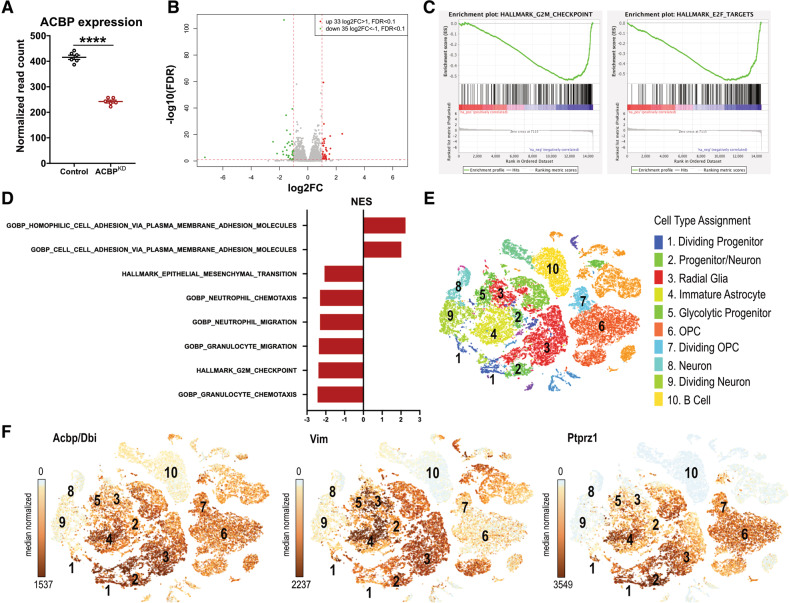
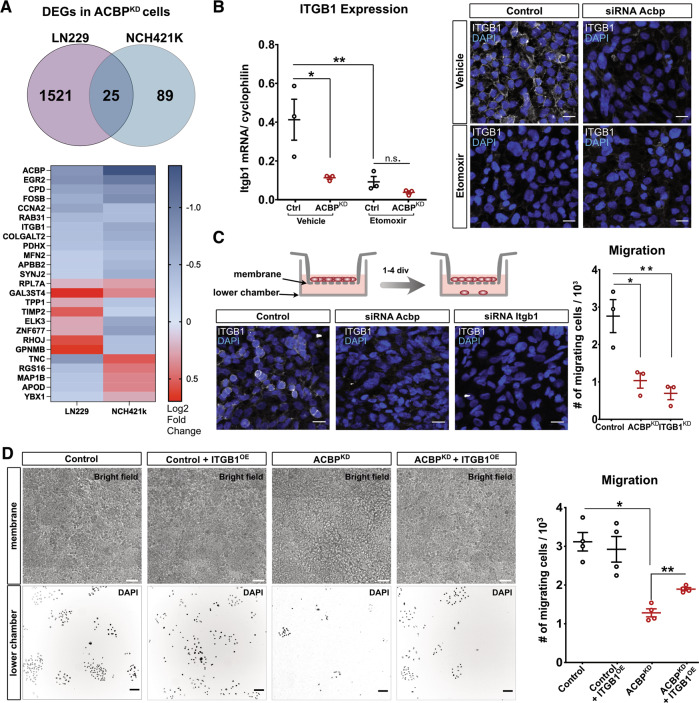
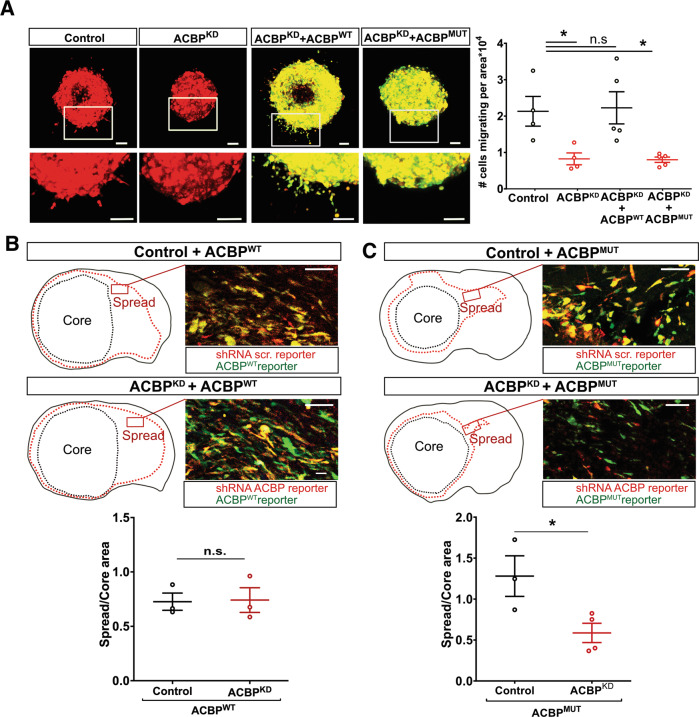
The diffuse nature of Glioblastoma (GBM) tumors poses a challenge to current therapeutic options. We have previously shown that Acyl-CoA Binding Protein (ACBP, also known as DBI) regulates lipid metabolism in GBM cells, favoring fatty acid oxidation (FAO). Here we show that ACBP downregulation results in wide transcriptional changes affecting invasion-related genes. In vivo experiments using patient-derived xenografts combined with in vitro models demonstrated that ACBP sustains GBM invasion via binding to fatty acyl-CoAs. Blocking FAO mimics ACBP-induced immobility, a cellular phenotype that can be rescued by increasing FAO rates. Further investigation into ACBP-downstream pathways served to identify Integrin beta-1, a gene downregulated upon inhibition of either ACBP expression or FAO rates, as a mediator for ACBP's role in GBM invasion. Altogether, our findings highlight a role for FAO in GBM invasion and reveal ACBP as a therapeutic vulnerability to stall FAO and subsequent cell invasion in GBM tumors.
胶质母细胞瘤(GBM)肿瘤的弥漫性特征对当前的治疗选择构成了挑战。我们之前已经表明,酰基辅酶 A 结合蛋白(ACBP,也称为 DBI)调节 GBM 细胞中的脂代谢,有利于脂肪酸氧化(FAO)。在这里,我们表明 ACBP 的下调会导致广泛的转录变化,影响与侵袭相关的基因。使用患者来源的异种移植物进行的体内实验与体外模型相结合表明,ACBP 通过与脂肪酸酰基辅酶 A 结合来维持 GBM 的侵袭。阻断 FAO 模拟了 ACBP 诱导的不活动,这是一种可以通过增加 FAO 率来挽救的细胞表型。对 ACBP 下游途径的进一步研究表明,整合素β-1是一种在抑制 ACBP 表达或 FAO 率后下调的基因,是 ACBP 在 GBM 侵袭中作用的介质。总的来说,我们的研究结果强调了 FAO 在 GBM 侵袭中的作用,并揭示了 ACBP 作为一种治疗靶点,可阻止 GBM 肿瘤中的 FAO 及其随后的细胞侵袭。