Wei Xinbo, Wang Li, Duan Cuimi, Chen Kai, Li Xia, Guo Ximin, Chen Peng, Liu Haifeng, Fan Yubo
Key Laboratory for Biomechanics and Mechanobiology (Beihang University) of Ministry of Education, Beijing Advanced Innovation Center for Biomedical Engineering, School of Biological Science and Medical Engineering, Beihang University, Beijing, 100083, PR China.
Department of Advanced Interdisciplinary Studies, Institute of Basic Medical Sciences, Beijing, 100850, PR China.
Bioact Mater. 2023 Apr 17;27:271-287. doi: 10.1016/j.bioactmat.2023.03.023. eCollection 2023 Sep.
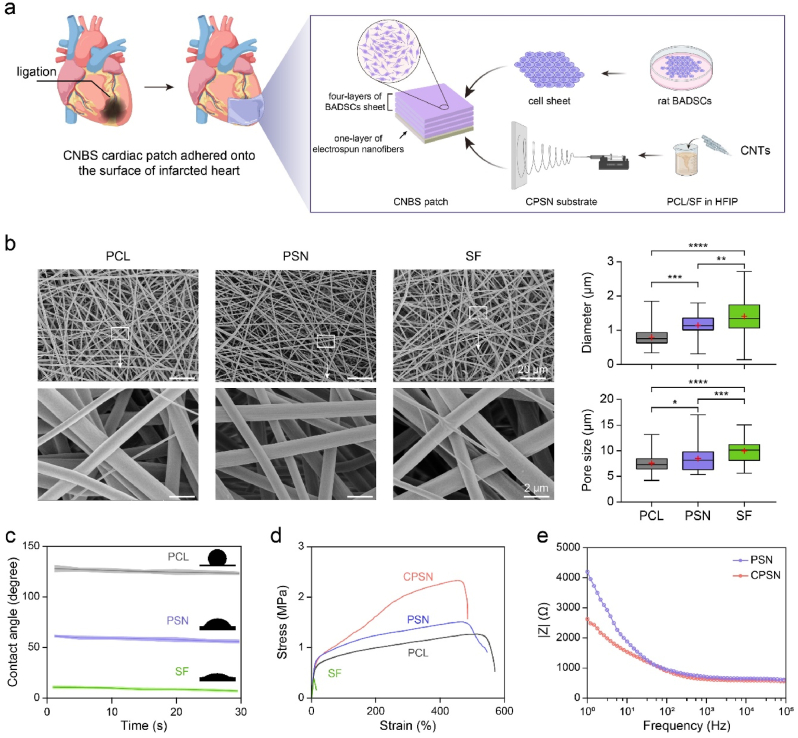
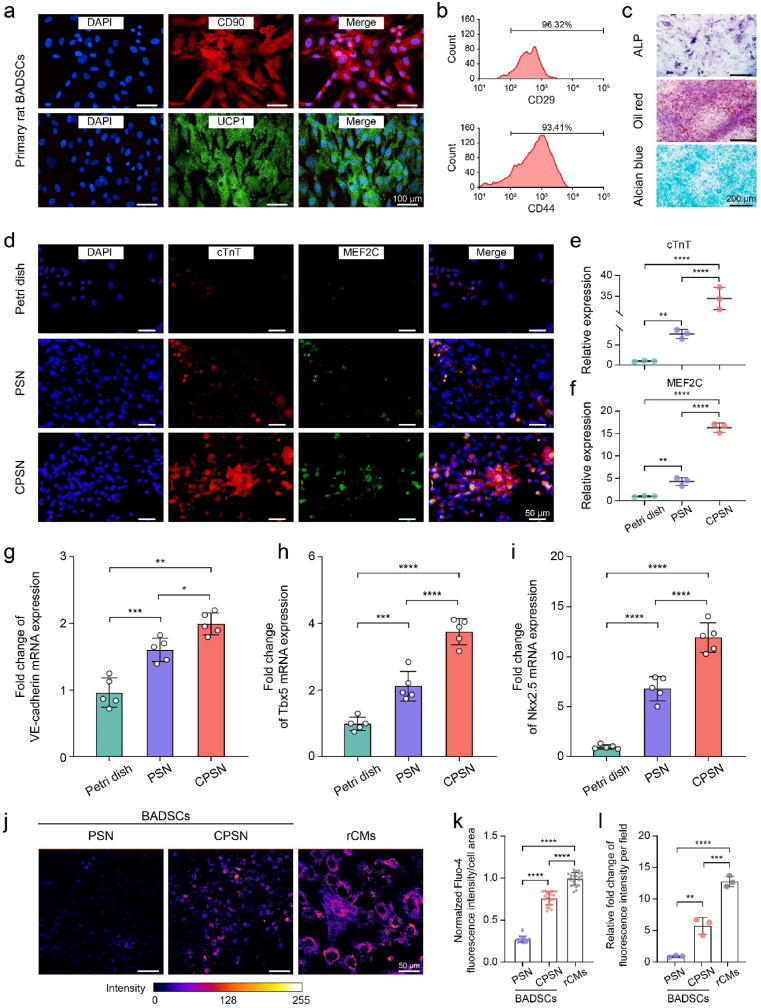
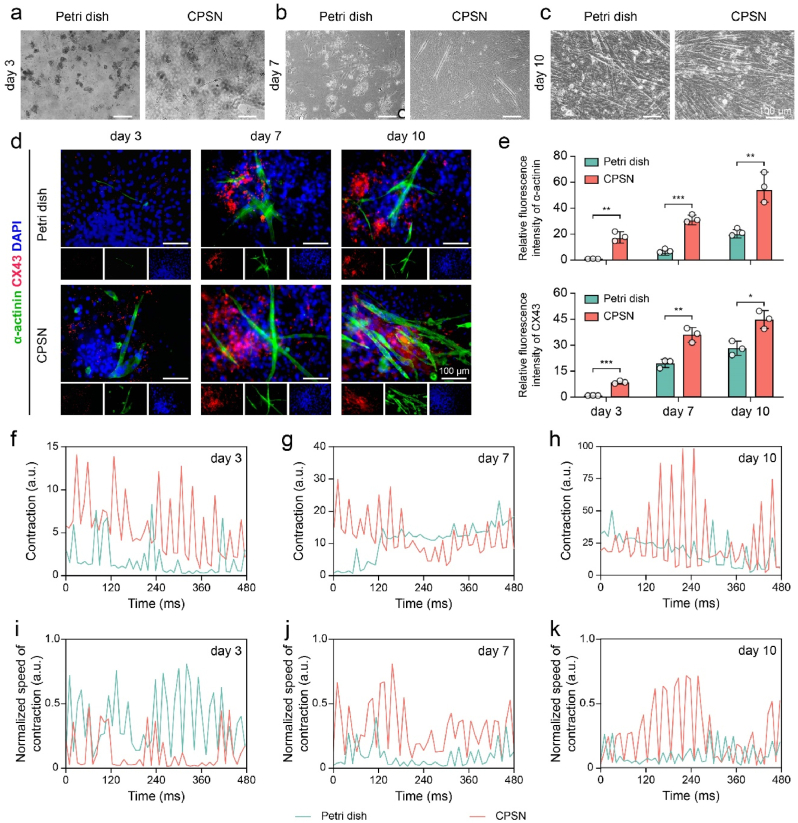
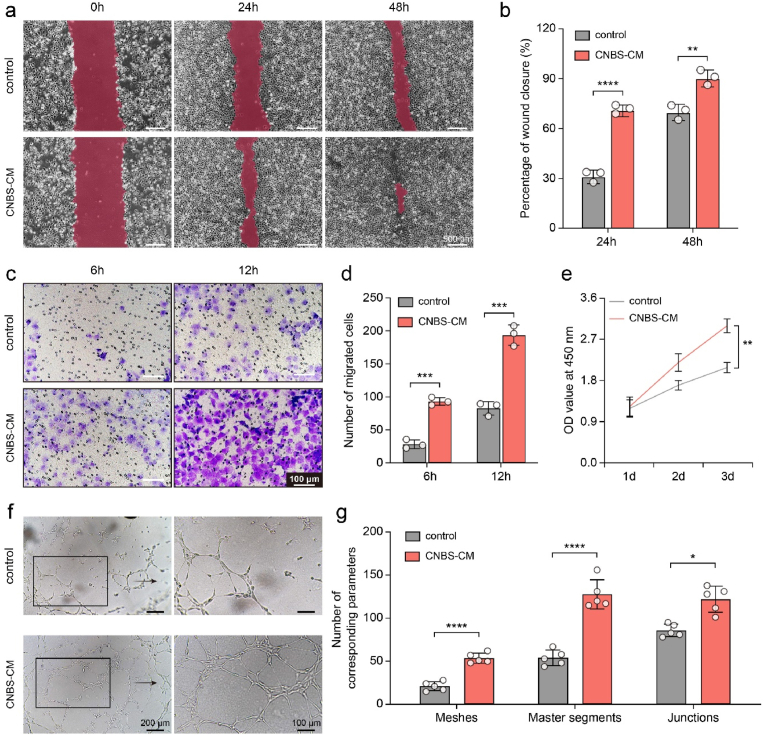
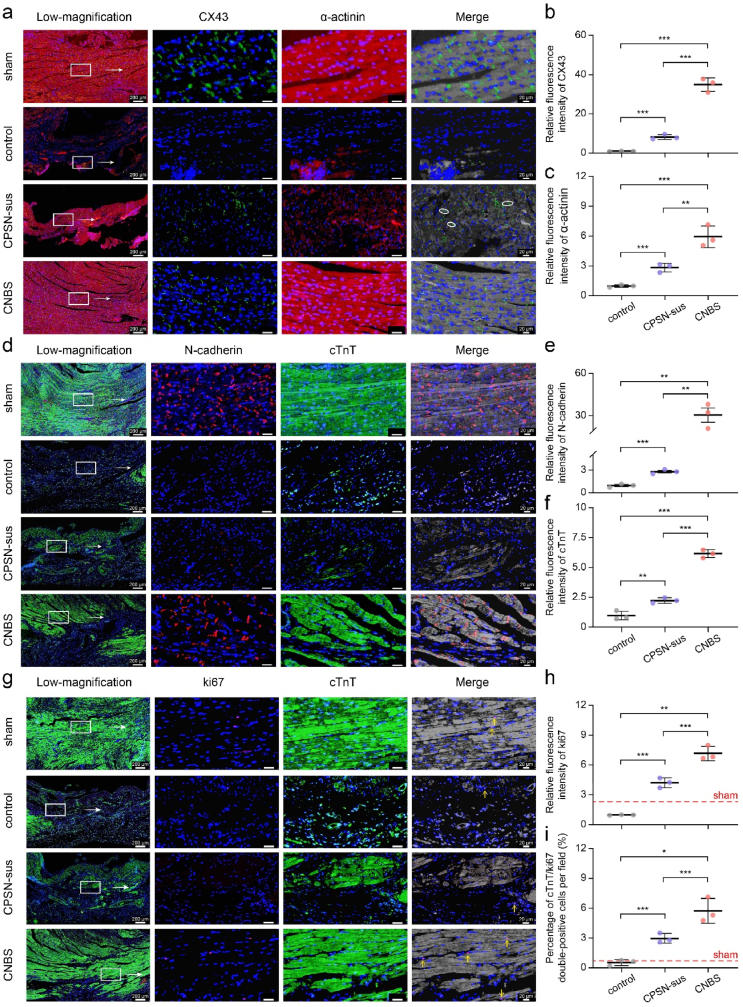
Cell sheet engineering has been proven to be a promising strategy for cardiac remodeling post-myocardial infarction. However, insufficient mechanical strength and low cell retention lead to limited therapeutic efficiency. The thickness and area of artificial cardiac patches also affect their therapeutic efficiency. Cardiac patches prepared by combining cell sheets with electrospun nanofibers, which can be transplanted and sutured to the surface of the infarcted heart, promise to solve this problem. Here, we fabricated a novel cardiac patch by stacking brown adipose-derived stem cells (BADSCs) sheet layer by layer, and then they were combined with multi-walled carbon nanotubes (CNTs)-containing electrospun polycaprolactone/silk fibroin nanofibers (CPSN). The results demonstrated that BADSCs tended to generate myocardium-like structures seeded on CPSN. Compared with BADSCs suspension-containing electrospun nanofibers, the transplantation of the CPSN-BADSCs sheets (CNBS) cardiac patches exhibited accelerated angiogenesis and decreased inflammation in a rat myocardial infarction model. In addition, the CNBS cardiac patches could regulate macrophage polarization and promote gap junction remodeling, thus restoring cardiac functions. Overall, the hybrid cardiac patches made of electrospun nanofibers and cell sheets provide a novel solution to cardiac remodeling after ischemic myocardial infarction.
细胞片工程已被证明是一种用于心肌梗死后心脏重塑的有前景的策略。然而,机械强度不足和细胞保留率低导致治疗效率有限。人工心脏补片的厚度和面积也会影响其治疗效率。通过将细胞片与电纺纳米纤维相结合制备的心脏补片有望解决这一问题,这种补片可以移植并缝合到梗死心脏的表面。在此,我们通过逐层堆叠棕色脂肪来源的干细胞(BADSCs)片层,然后将它们与含有多壁碳纳米管(CNTs)的电纺聚己内酯/丝素蛋白纳米纤维(CPSN)相结合,制备了一种新型心脏补片。结果表明,BADSCs倾向于在CPSN上形成心肌样结构。与含有BADSCs悬浮液的电纺纳米纤维相比,CPSN - BADSCs片层(CNBS)心脏补片在大鼠心肌梗死模型中移植后表现出加速血管生成和减轻炎症。此外,CNBS心脏补片可以调节巨噬细胞极化并促进缝隙连接重塑,从而恢复心脏功能。总体而言,由电纺纳米纤维和细胞片制成的混合心脏补片为缺血性心肌梗死后的心脏重塑提供了一种新的解决方案。