Wan Xingyi, Zhao Yunchao, Li Zhou, Li Linlin
Beijing Institute of Nanoenergy and Nanosystems Chinese Academy for Sciences Beijing P. R. China.
School of Nanoscience and Technology University of Chinese Academy of Sciences Beijing P. R. China.
Exploration (Beijing). 2022 Jan 28;2(1):20210029. doi: 10.1002/EXP.20210029. eCollection 2022 Feb.
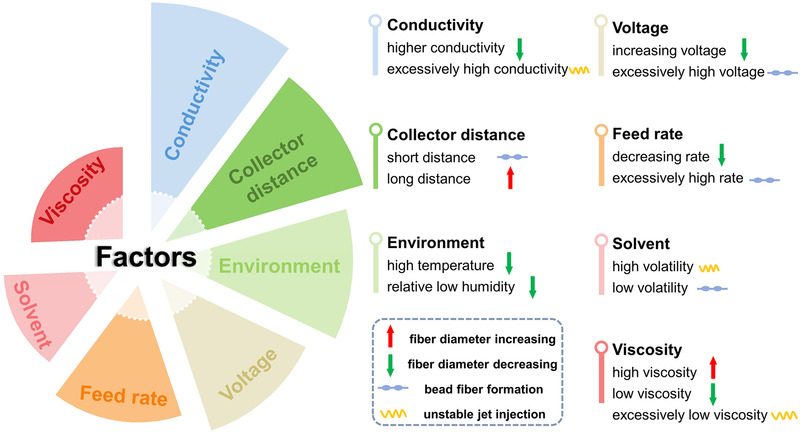
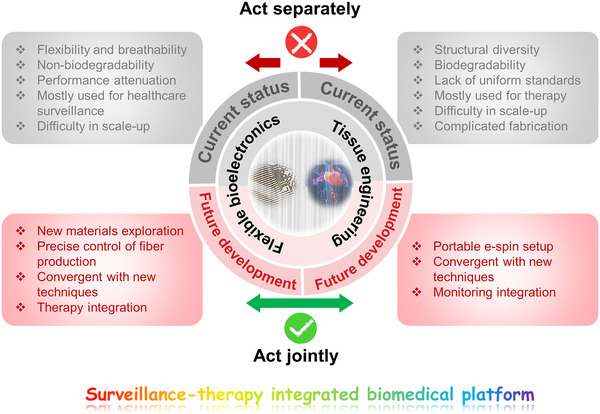
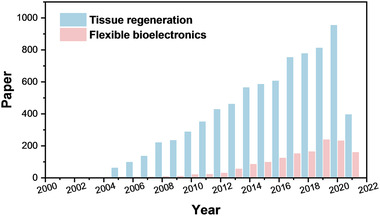
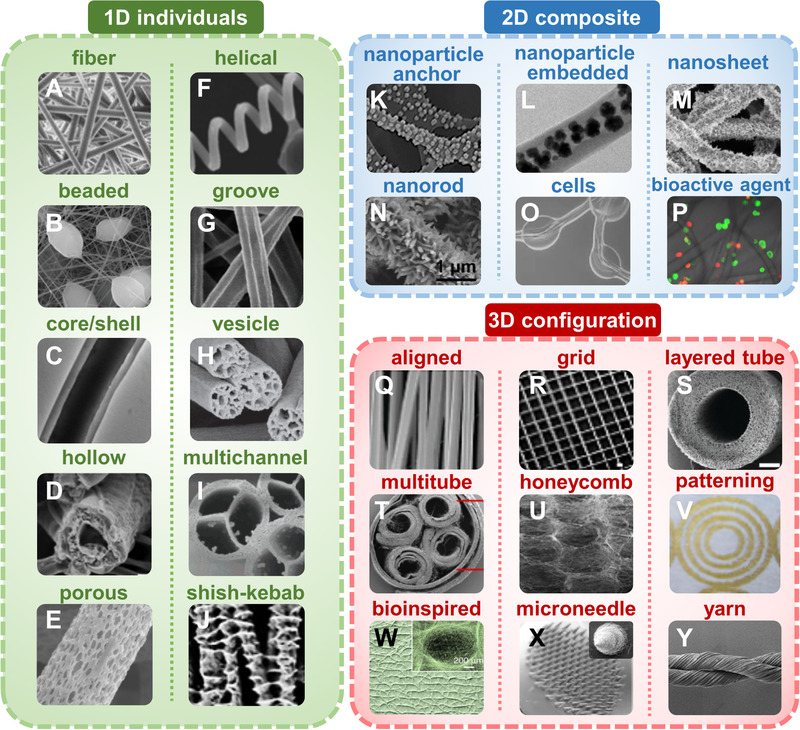
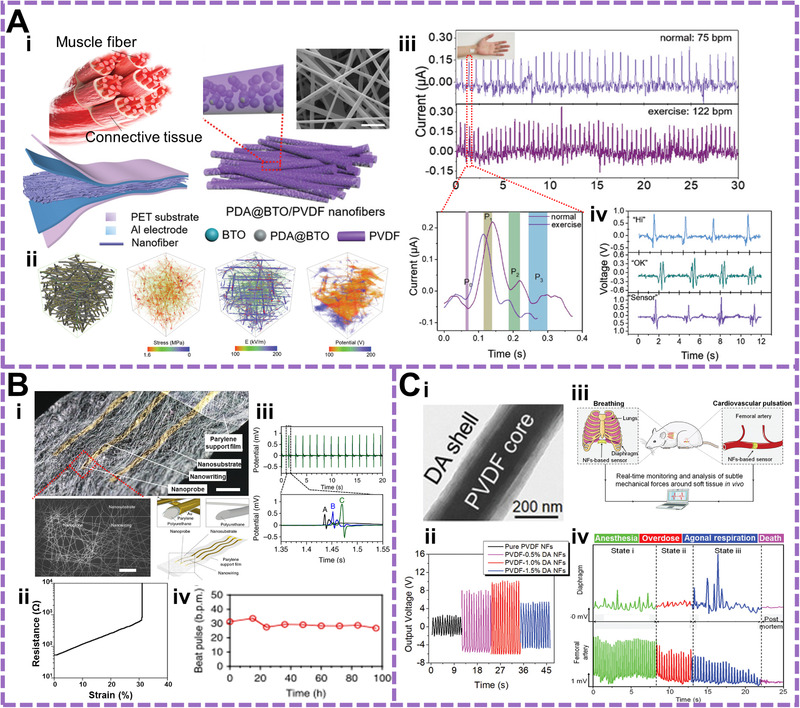
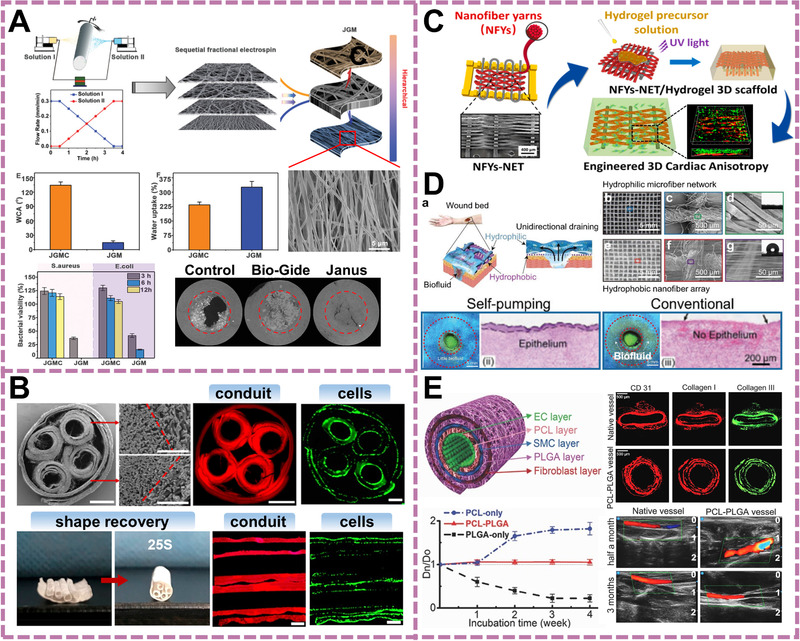
Electrospinning (e-spin) technique has emerged as a versatile and feasible pathway for constructing diverse polymeric fabric structures, which show potential applications in many biological and biomedical fields. Owing to the advantages of adjustable mechanics, designable structures, versatile surface multi-functionalization, and biomimetic capability to natural tissue, remarkable progress has been made in flexible bioelectronics and tissue engineering for the sensing and therapeutic purposes. In this perspective, we review recent works on design of the hierarchically structured e-spin fibers, as well as, the fabrication strategies from one-dimensional individual fiber (1D) to three-dimensional (3D) fiber arrangements adaptive to specific applications. Then, we focus on the most cutting-edge progress of their applications in flexible bioelectronics and tissue engineering. Finally, we propose future challenges and perspectives for promoting electrospun fiber-based products toward industrialized, intelligent, multifunctional, and safe applications.
静电纺丝(e-spin)技术已成为构建各种聚合物织物结构的一种通用且可行的途径,这些结构在许多生物和生物医学领域显示出潜在应用。由于具有可调节的力学性能、可设计的结构、多样的表面多功能化以及对天然组织的仿生能力等优点,在用于传感和治疗目的的柔性生物电子学和组织工程方面取得了显著进展。从这个角度出发,我们综述了关于分层结构静电纺丝纤维设计的近期工作,以及从一维单根纤维(1D)到适应特定应用的三维(3D)纤维排列的制造策略。然后,我们关注其在柔性生物电子学和组织工程应用方面的最前沿进展。最后,我们提出了未来的挑战和展望,以推动基于静电纺丝纤维的产品走向工业化、智能化、多功能化和安全应用。