Department of Nutrition & Integrative Physiology, Florida State University, Tallahassee, FL, USA.
Pennington Biomedical Research Center, Baton Rouge, LA, USA.
J Nutr Sci. 2023 Apr 14;12:e49. doi: 10.1017/jns.2023.37. eCollection 2023.
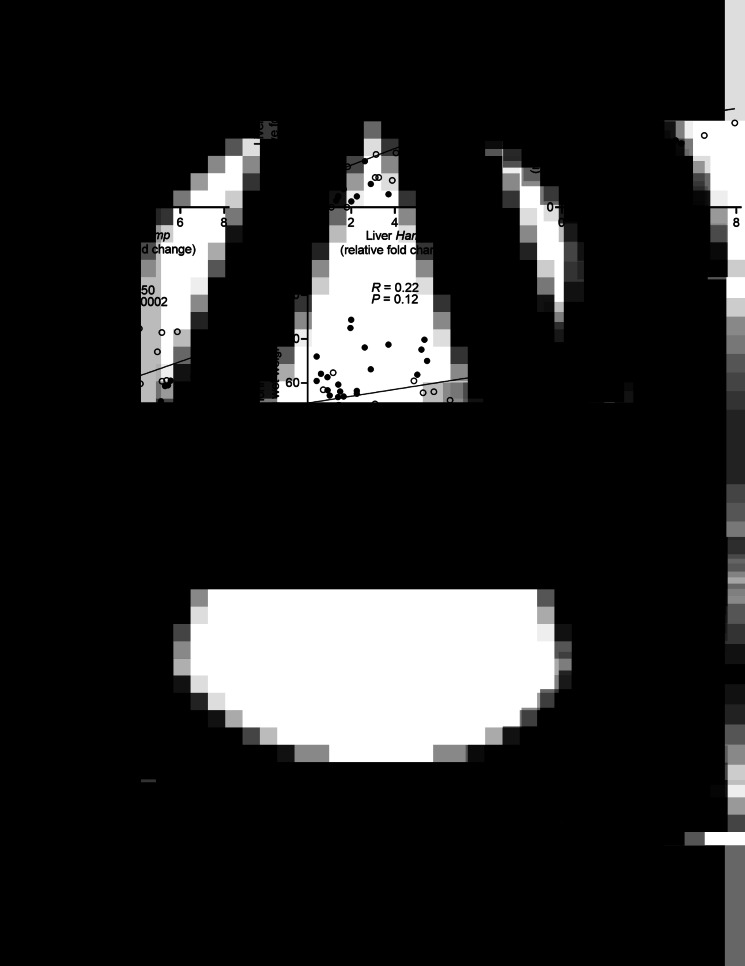
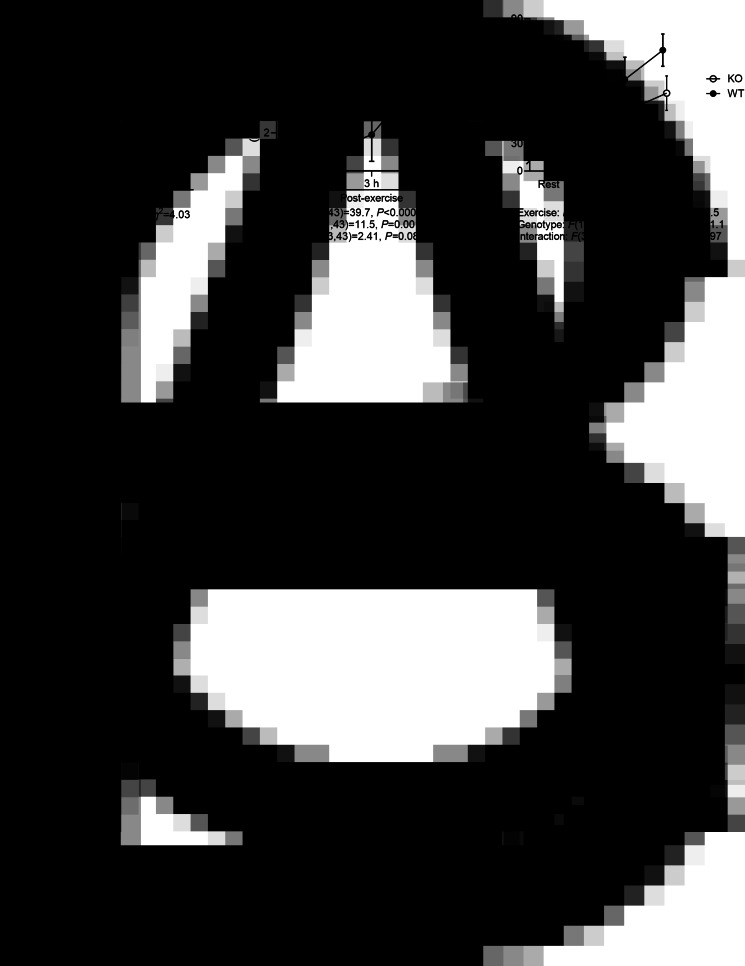
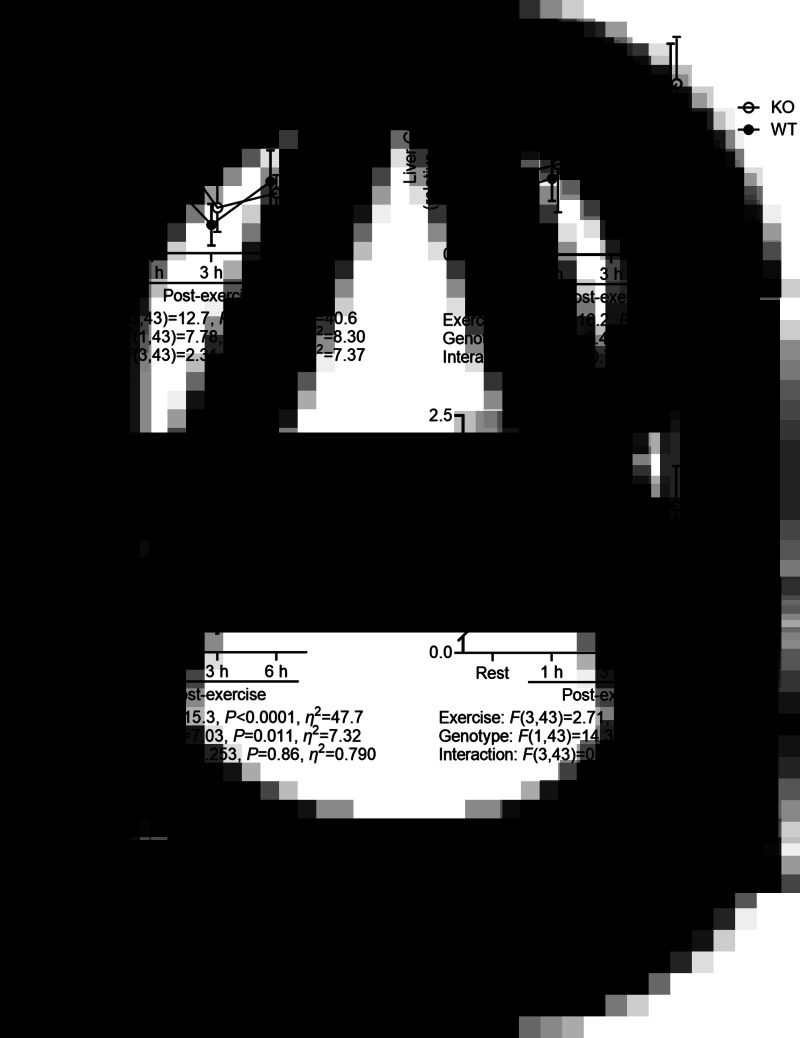
The iron-regulatory hormone hepcidin is transcriptionally up-regulated by gluconeogenic signals. Recent evidence suggeststhat increases in circulating hepcidin may decrease dietary iron absorption following prolonged exercise, however evidence is limited on whether gluconeogenic signals contribute to post-exercise increases in hepcidin. Mice with genetic knockout of regulated in development and DNA response-1 (REDD1) display greater glycogen depletion following exercise, possibly indicating greater gluconeogenesis. The objective of the present study was to determine liver hepcidin, markers of gluconeogenesis and iron metabolism in REDD1 knockout and wild-type mice following prolonged exercise. Twelve-week-old male REDD1 knockout and wild-type mice were randomised to rest or 60 min treadmill running with 1, 3 or 6 h recovery ( 5-8/genotype/group). Liver gene expression of hepcidin () and gluconeogenic enzymes (, , , ) were determined by qRT-PCR. Effects of genotype, exercise and their interaction were assessed by two-way ANOVAs with Tukey's tests, and Pearson correlations were used to assess the relationships between and study outcomes. Liver increased 1- and 4-fold at 3 and 6 h post-exercise, compared to rest (-adjusted < 0⋅009 for all), and was 50% greater in REDD1 knockout compared to wild-type mice ( = 0⋅0015). Liver , and increased with treadmill running ( < 0⋅0001 for all), and liver , and were greater with REDD1 deletion ( < 0⋅02 for all). Liver was positively correlated with liver ( = 0⋅62, < 0⋅0001) and ( = 0⋅44, = 0⋅0014). In conclusion, REDD1 deletion and prolonged treadmill running increased liver and gluconeogenic regulators of , suggesting gluconeogenic signalling of hepcidin with prolonged exercise.
铁调节激素铁调素受糖异生信号的转录调控。最近的证据表明,长时间运动后循环铁调素的增加可能会降低膳食铁的吸收,但关于糖异生信号是否有助于运动后铁调素的增加,证据有限。在运动后,具有发育调节和 DNA 反应-1(REDD1)基因敲除的小鼠表现出更大的糖原耗竭,这可能表明有更大的糖异生作用。本研究的目的是确定 REDD1 敲除和野生型小鼠在长时间运动后肝脏铁调素、糖异生和铁代谢标志物的变化。将 12 周龄雄性 REDD1 敲除和野生型小鼠随机分为休息或 60 分钟跑步机跑步,恢复 1、3 或 6 小时(每组 5-8 只/基因型)。通过 qRT-PCR 测定肝脏铁调素()和糖异生酶(、、、)的基因表达。采用双因素方差分析和 Tukey 检验评估基因型、运动及其相互作用的影响,采用 Pearson 相关分析评估与研究结果的关系。与休息相比,运动后 3 和 6 小时肝脏增加了 1 倍和 4 倍(-调整后 < 0.009),与野生型小鼠相比,REDD1 敲除小鼠增加了 50%(=0.0015)。肝脏、和随着跑步机跑步而增加(<0.0001),肝脏、和随着 REDD1 缺失而增加(<0.02)。肝脏与肝脏(=0.62,<0.0001)和(=0.44,=0.0014)呈正相关。总之,REDD1 缺失和长时间跑步机跑步增加了肝脏和糖异生调节因子,提示铁调素与长时间运动有关的糖异生信号。