Metabolism and Nutrition Research Group, Louvain Drug Research Institute, UCLouvain, Université catholique de Louvain, Brussels, Belgium.
Cancer Metabolism Research Group, Department of Surgery, LIM26 HC-USP, University of São Paulo, São Paulo, Brazil.
J Cachexia Sarcopenia Muscle. 2023 Jun;14(3):1569-1582. doi: 10.1002/jcsm.13246. Epub 2023 May 1.
The aryl hydrocarbon receptor (AHR) is expressed in the intestine and liver, where it has pleiotropic functions and target genes. This study aims to explore the potential implication of AHR in cancer cachexia, an inflammatory and metabolic syndrome contributing to cancer death. Specifically, we tested the hypothesis that targeting AHR can alleviate cachectic features, particularly through the gut-liver axis.
AHR pathways were explored in multiple tissues from four experimental mouse models of cancer cachexia (C26, BaF3, MC38 and APC ) and from non-cachectic mice (sham-injected mice and non-cachexia-inducing [NC26] tumour-bearing mice), as well as in liver biopsies from cancer patients. Cachectic mice were treated with an AHR agonist (6-formylindolo(3,2-b)carbazole [FICZ]) or an antibody neutralizing interleukin-6 (IL-6). Key mechanisms were validated in vitro on HepG2 cells.
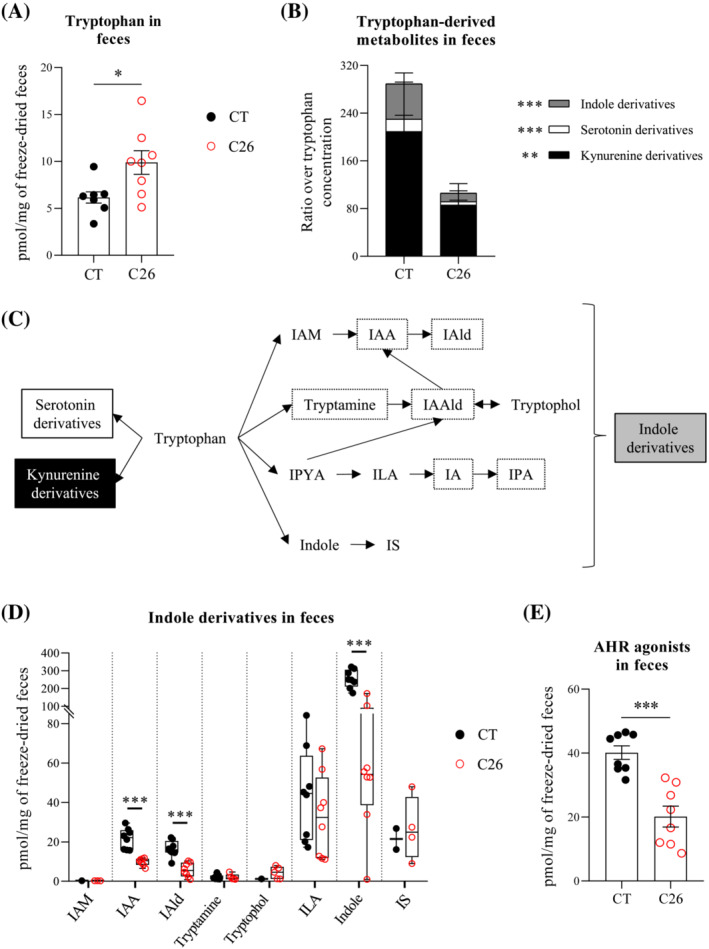
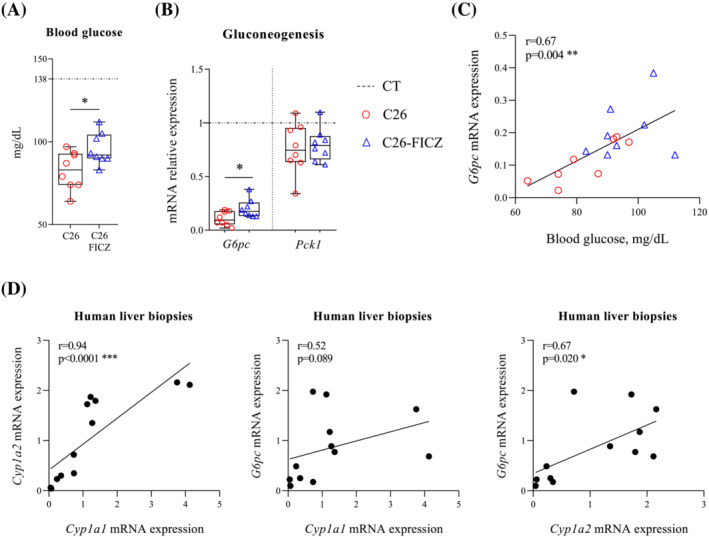
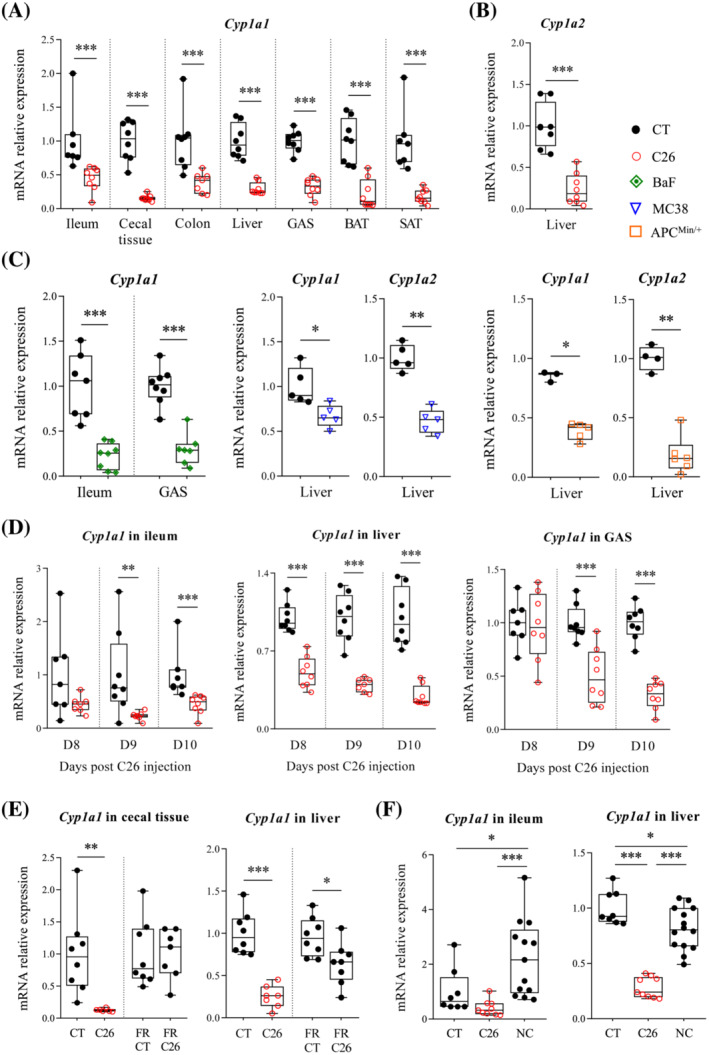
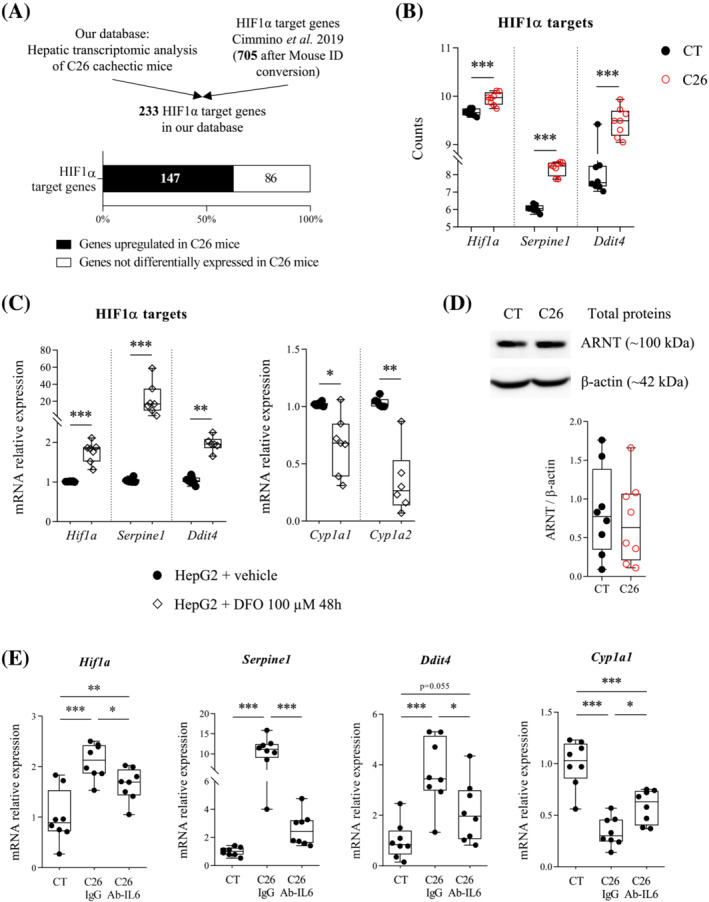
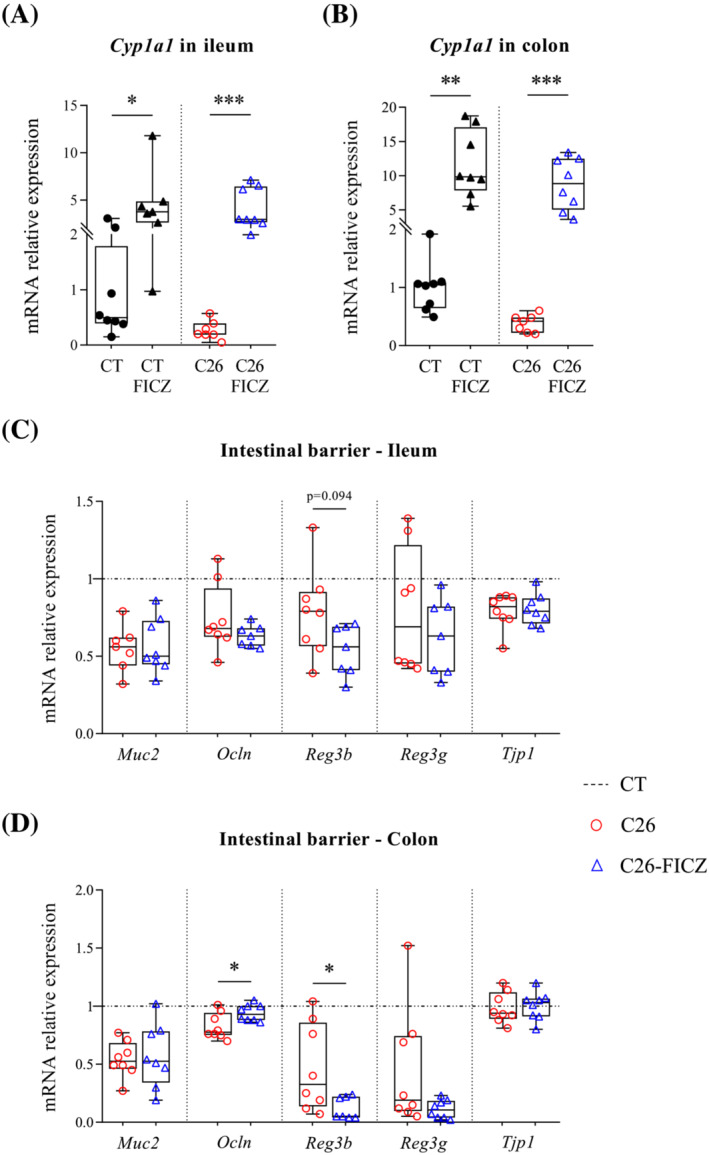
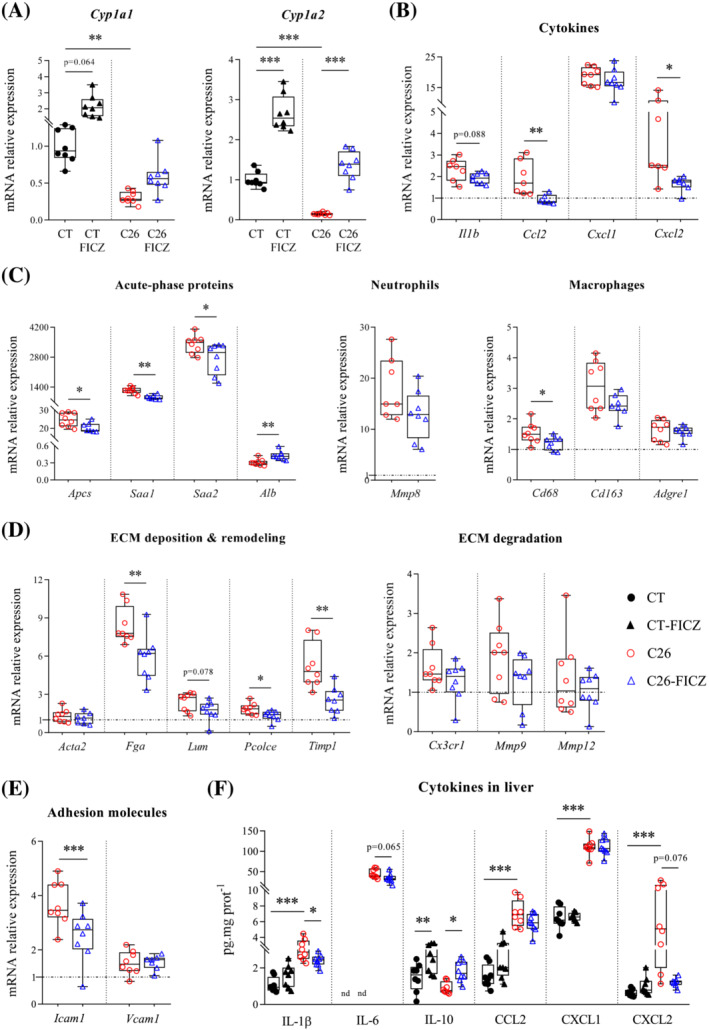
AHR activation, reflected by the expression of Cyp1a1 and Cyp1a2, two major AHR target genes, was deeply reduced in all models (C26 and BaF3, P < 0.001; MC38 and APC , P < 0.05) independently of anorexia. This reduction occurred early in the liver (P < 0.001; before the onset of cachexia), compared to the ileum and skeletal muscle (P < 0.01; pre-cachexia stage), and was intrinsically related to cachexia (C26 vs. NC26, P < 0.001). We demonstrate a differential modulation of AHR activation in the liver (through the IL-6/hypoxia-inducing factor 1α pathway) compared to the ileum (attributed to the decreased levels of indolic AHR ligands, P < 0.001), and the muscle. In cachectic mice, FICZ treatment reduced hepatic inflammation: expression of cytokines (Ccl2, P = 0.005; Cxcl2, P = 0.018; Il1b, P = 0.088) with similar trends at the protein levels, expression of genes involved in the acute-phase response (Apcs, P = 0.040; Saa1, P = 0.002; Saa2, P = 0.039; Alb, P = 0.003), macrophage activation (Cd68, P = 0.038) and extracellular matrix remodelling (Fga, P = 0.008; Pcolce, P = 0.025; Timp1, P = 0.003). We observed a decrease in blood glucose in cachectic mice (P < 0.0001), which was also improved by FICZ treatment (P = 0.026) through hepatic transcriptional promotion of a key marker of gluconeogenesis, namely, G6pc (C26 vs. C26 + FICZ, P = 0.029). Strikingly, these benefits on glycaemic disorders occurred independently of an amelioration of the gut barrier dysfunction. In cancer patients, the hepatic expression of G6pc was correlated to Cyp1a1 (Spearman's ρ = 0.52, P = 0.089) and Cyp1a2 (Spearman's ρ = 0.67, P = 0.020).
With this set of studies, we demonstrate that impairment of AHR signalling contributes to hepatic inflammatory and metabolic disorders characterizing cancer cachexia, paving the way for innovative therapeutic strategies in this context.
芳香烃受体 (AHR) 在肠道和肝脏中表达,在这些组织中具有多种功能和靶基因。本研究旨在探讨 AHR 在癌症恶病质中的潜在作用,癌症恶病质是一种导致癌症死亡的炎症和代谢综合征。具体来说,我们测试了以下假说,即靶向 AHR 可以缓解恶病质特征,特别是通过肠道-肝脏轴。
在四种实验性癌症恶病质模型(C26、BaF3、MC38 和 APC)和非恶病质小鼠(假注射小鼠和非致恶病质[NC26]肿瘤荷瘤小鼠)的多个组织中以及癌症患者的肝活检中,探索了 AHR 途径。用 AHR 激动剂(6-甲氧基苯并咪唑[3,2-b]咔唑[FICZ])或中和白细胞介素-6(IL-6)的抗体治疗恶病质小鼠。在 HepG2 细胞中验证了关键机制。
所有模型(C26 和 BaF3,P < 0.001;MC38 和 APC,P < 0.05)中 AHR 激活(反映为 Cyp1a1 和 Cyp1a2 两种主要 AHR 靶基因的表达)均深度降低,与厌食症无关。这种减少发生在肝脏中(P < 0.001;在恶病质发生之前),与回肠和骨骼肌相比(P < 0.01;在恶病质前期),并且与恶病质内在相关(C26 与 NC26,P < 0.001)。我们证明了 AHR 激活在肝脏中的差异调节(通过 IL-6/缺氧诱导因子 1α 途径)与回肠中的调节不同(归因于吲哚 AHR 配体水平降低,P < 0.001)和肌肉。在恶病质小鼠中,FICZ 治疗可减轻肝脏炎症:细胞因子的表达(Ccl2,P = 0.005;Cxcl2,P = 0.018;Il1b,P = 0.088)在蛋白质水平上具有相似的趋势,参与急性期反应的基因的表达(Apcs,P = 0.040;Saa1,P = 0.002;Saa2,P = 0.039;Alb,P = 0.003)、巨噬细胞激活(Cd68,P = 0.038)和细胞外基质重塑(Fga,P = 0.008;Pcolce,P = 0.025;Timp1,P = 0.003)。我们观察到恶病质小鼠的血糖降低(P < 0.0001),FICZ 治疗也改善了血糖(P = 0.026),通过促进肝脏中糖异生的关键标志物 G6pc 的转录。引人注目的是,这些对血糖紊乱的益处发生在改善肠道屏障功能障碍之外。在癌症患者中,G6pc 的肝表达与 Cyp1a1(Spearman's ρ = 0.52,P = 0.089)和 Cyp1a2(Spearman's ρ = 0.67,P = 0.020)相关。
通过这一系列研究,我们证明了 AHR 信号转导的损伤导致了癌症恶病质的肝脏炎症和代谢紊乱,为这一背景下的创新治疗策略铺平了道路。