The Department of Pharmacology and Toxicology, Faculty of Pharmacy in Hradec Králové, Charles University, 50005, Hradec Králové, Czechia.
The Department of Pharmacognosy and Pharmaceutical Botany, Faculty of Pharmacy in Hradec Králové, Charles University, 50005, Hradec Králové, Czechia.
Cardiovasc Drugs Ther. 2024 Oct;38(5):959-970. doi: 10.1007/s10557-023-07455-y. Epub 2023 May 2.
It is well known that elevated cholesterol is associated with enhanced platelet aggregation and patients suffering from familial hypercholesterolemia (FH) have a high risk of thrombotic cardiovascular events. Although decreasing cholesterol level is associated with attenuation of platelet hyperactivity, there are currently no data on the effect of convertase subtilisin/kexin type 9 monoclonal antibodies (PCSK9ab) on platelet reactivity in FH. The aim of the study was to analyse the impact of different therapies including PCSK9ab on platelet aggregation in FH.
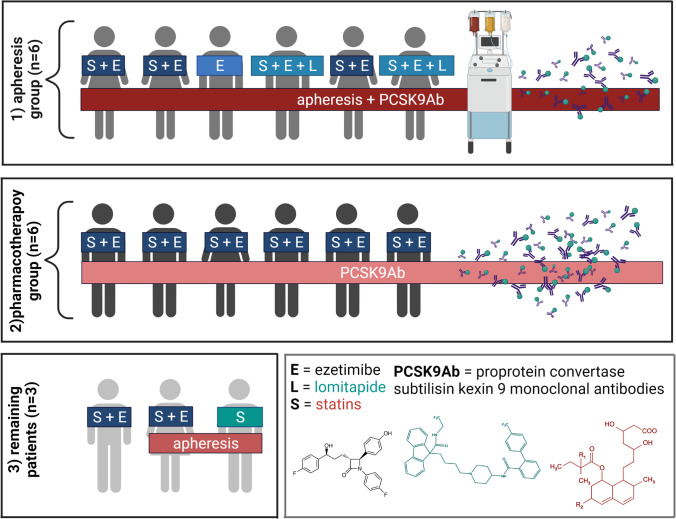
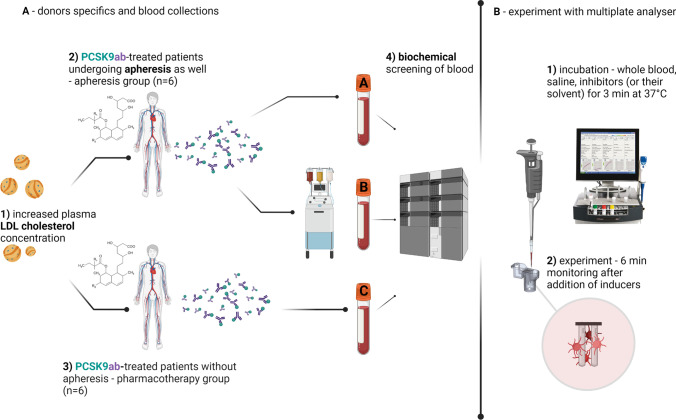
This study enrolled all 15 patients treated in the University Hospital Hradec Králové for FH. PCSK9ab have been administered in 12 of 15 patients while 8 patients were also undergoing lipid apheresis. Blood samples from all patients including pre- and post-apheresis period were tested for platelet aggregation triggered by 7 inducers, and the effect of 3 clinically used drugs (acetylsalicylic acid, ticagrelor and vorapaxar) was compared as well.
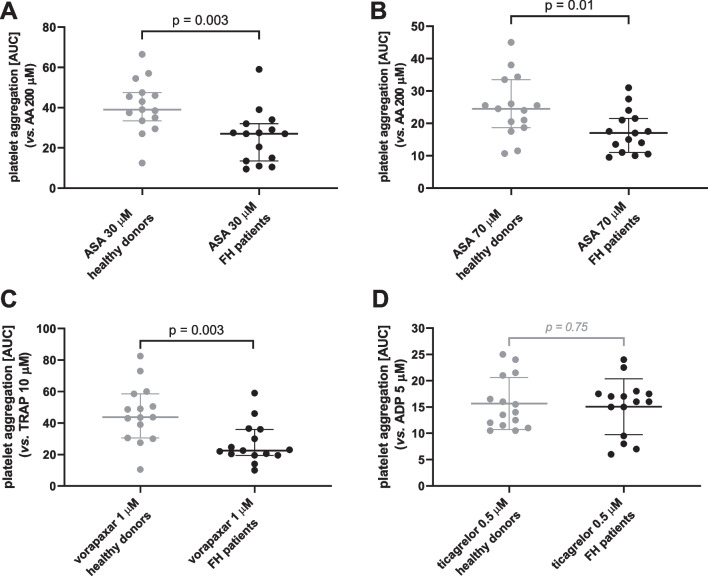
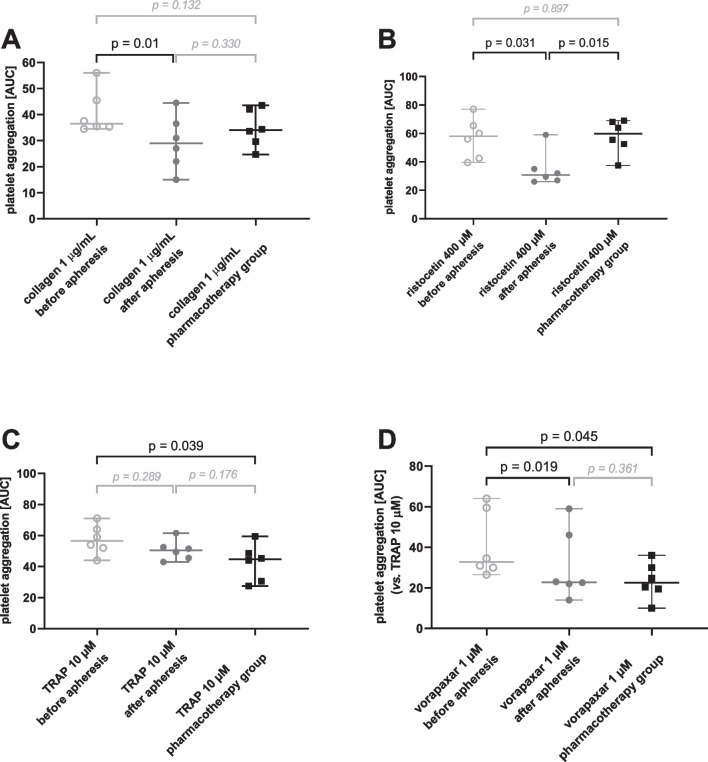
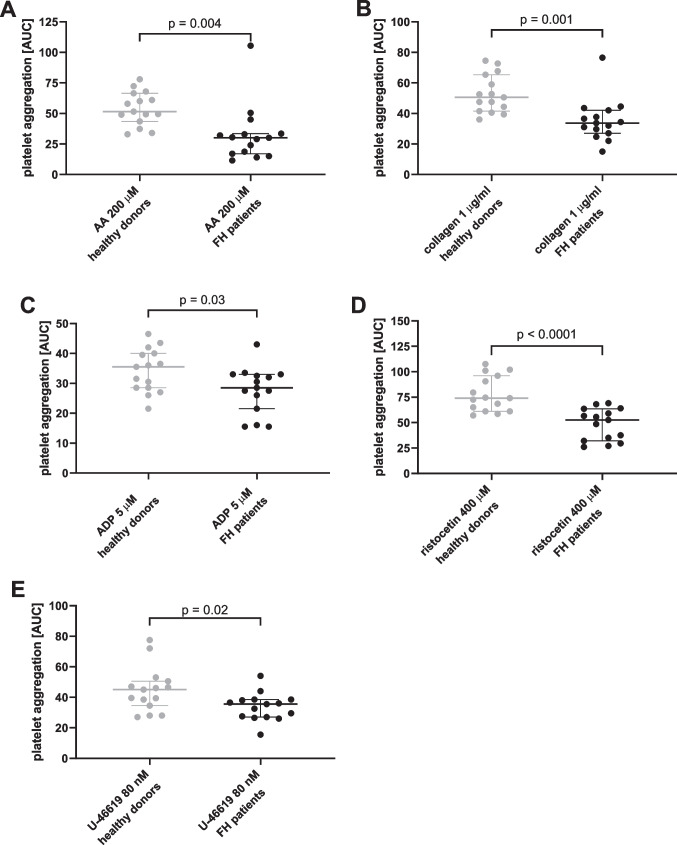
Although apheresis decreased the reactivity of platelets in general, platelet responses were not different between non-apheresis patients treated with PCSK9ab and apheresis patients (post-apheresis values) with the exception of ristocetin. However, when compared to age-matched healthy population, FH patients had significantly lower platelet aggregation responses to 4 out of 7 used inducers and higher profit from 2 out of 3 used antiplatelet drugs even after exclusion of FH patients regularly receiving conventional antiplatelet treatment.
This study showed for the first time the suitability of PCSK9ab treatment for reduction of platelet reactivity in FH patients.
众所周知,胆固醇升高与血小板聚集增强有关,患有家族性高胆固醇血症(FH)的患者发生血栓性心血管事件的风险很高。尽管降低胆固醇水平与减弱血小板活性亢进有关,但目前尚无关于 FH 患者中转化酶枯草溶菌素/激肽释放酶 9 单克隆抗体(PCSK9ab)对血小板反应性影响的数据。本研究旨在分析包括 PCSK9ab 在内的不同治疗方法对 FH 患者血小板聚集的影响。
本研究纳入了在赫拉德茨-克拉洛韦大学医院接受 FH 治疗的所有 15 名患者。15 名患者中有 12 名接受了 PCSK9ab 治疗,8 名患者同时接受了血脂吸附治疗。对所有患者的血液样本进行了 7 种诱导剂触发的血小板聚集检测,比较了 3 种临床使用药物(乙酰水杨酸、替格瑞洛和沃拉帕沙)的效果。
尽管吸附治疗普遍降低了血小板的反应性,但与接受吸附治疗的非吸附治疗患者(吸附后值)相比,接受 PCSK9ab 治疗的非吸附患者的血小板反应性没有差异,除了瑞斯托菌素。然而,与年龄匹配的健康人群相比,FH 患者对 7 种诱导剂中的 4 种的血小板聚集反应明显较低,即使排除了经常接受常规抗血小板治疗的 FH 患者,他们从 3 种抗血小板药物中的 2 种获益更多。
本研究首次表明 PCSK9ab 治疗适合降低 FH 患者的血小板反应性。