Department of Pediatrics, University of Washington, Seattle, Washington, USA.
New Harmony Statistical Consulting, Clinton, Washington, USA.
Microbiol Spectr. 2023 Jun 15;11(3):e0036123. doi: 10.1128/spectrum.00361-23. Epub 2023 May 4.
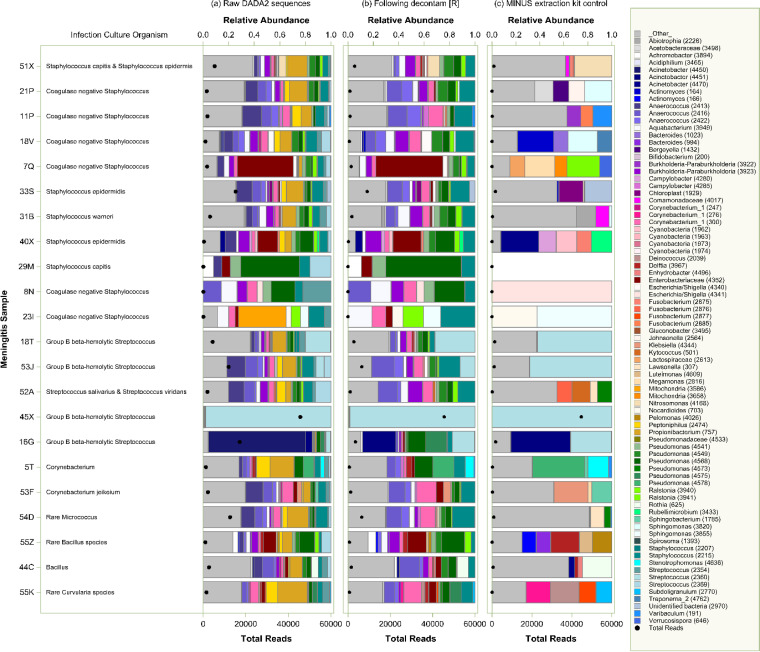
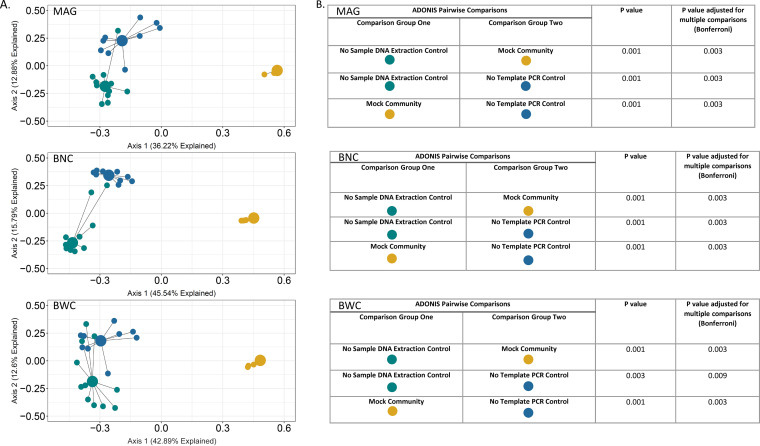
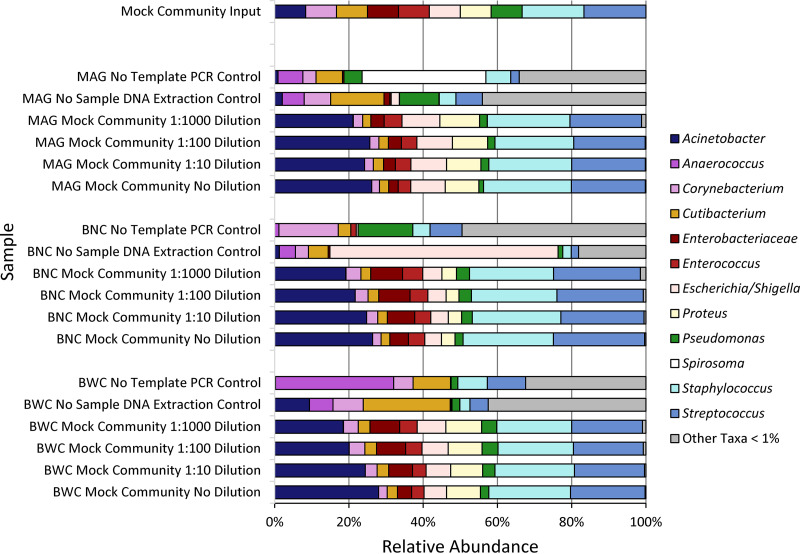
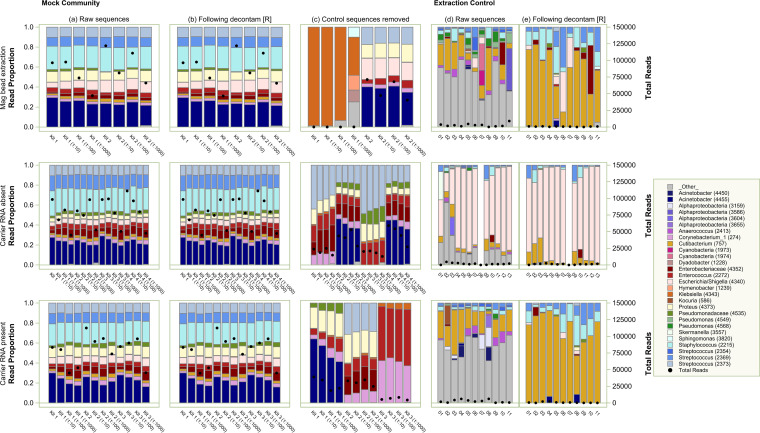
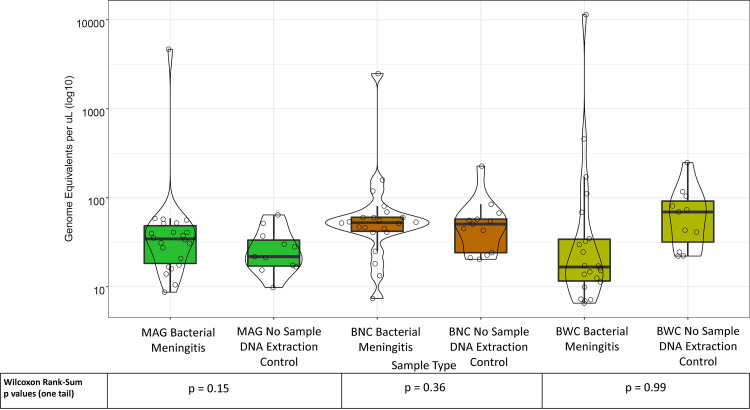
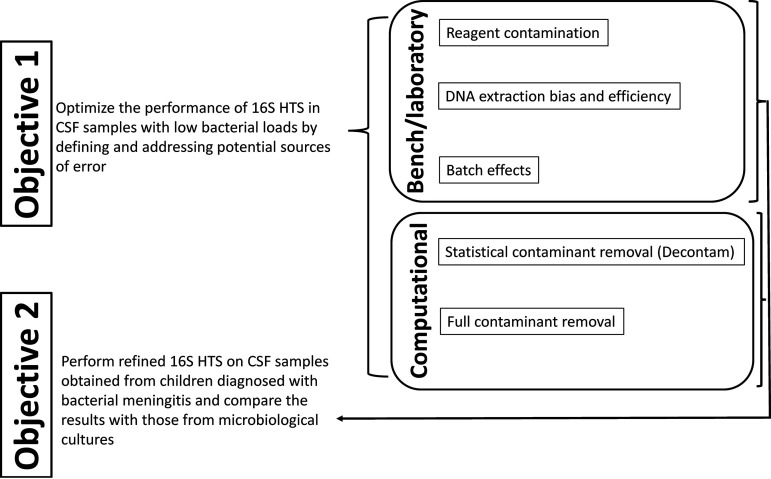
Advances in both laboratory and computational components of high-throughput 16S amplicon sequencing (16S HTS) have markedly increased its sensitivity and specificity. Additionally, these refinements have better delineated the limits of sensitivity, and contributions of contamination to these limits, for 16S HTS that are particularly relevant for samples with low bacterial loads, such as human cerebrospinal fluid (CSF). The objectives of this work were to (i) optimize the performance of 16S HTS in CSF samples with low bacterial loads by defining and addressing potential sources of error, and (ii) perform refined 16S HTS on CSF samples from children diagnosed with bacterial meningitis and compare results with those from microbiological cultures. Several bench and computational approaches were taken to address potential sources of error for low bacterial load samples. We compared DNA yields and sequencing results after applying three different DNA extraction approaches to an artificially constructed mock-bacterial community. We also compared two postsequencing computational contaminant removal strategies, decontam R and full contaminant sequence removal. All three extraction techniques followed by decontam R yielded similar results for the mock community. We then applied these methods to 22 CSF samples from children diagnosed with meningitis, which has low bacterial loads relative to other clinical infection samples. The refined 16S HTS pipelines identified the cultured bacterial genus as the dominant organism for only 3 of these samples. We found that all three DNA extraction techniques followed by decontam R generated similar DNA yields for mock communities at the low bacterial loads representative of CSF samples. However, the limits of detection imposed by reagent contaminants and methodologic bias precluded the accurate detection of bacteria in CSF from children with culture-confirmed meningitis using these approaches, despite rigorous controls and sophisticated computational approaches. Although we did not find current DNA-based diagnostics to be useful for pediatric meningitis samples, the utility of these methods for CSF shunt infection remains undefined. Future advances in sample processing methods to minimize or eliminate contamination will be required to improve the sensitivity and specificity of these methods for pediatric meningitis. Advances in both laboratory and computational components of high-throughput 16S amplicon sequencing (16S HTS) have markedly increased its sensitivity and specificity. These refinements have better delineated the limits of sensitivity, and contributions of contamination to these limits, for 16S HTS that are particularly relevant for samples with low bacterial loads such as human cerebrospinal fluid (CSF). The objectives of this work were to (i) optimize the performance of 16S HTS in CSF samples by defining and addressing potential sources of error, and (ii) perform refined 16S HTS on CSF samples from children diagnosed with bacterial meningitis and compare results with those from microbiological cultures. We found that the limits of detection imposed by reagent contaminants and methodologic bias precluded the accurate detection of bacteria in CSF from children with culture-confirmed meningitis using these approaches, despite rigorous controls and sophisticated computational approaches.
高通量 16S 扩增子测序(16S HTS)在实验室和计算组件方面的进展显著提高了其灵敏度和特异性。此外,这些改进更好地描绘了 16S HTS 的灵敏度限制以及污染对这些限制的贡献,这对于细菌负荷较低的样本(如人类脑脊液(CSF))特别相关。这项工作的目的是:(i)通过定义和解决潜在的误差源,优化 16S HTS 在低细菌负荷 CSF 样本中的性能;(ii)对诊断为细菌性脑膜炎的儿童的 CSF 样本进行精细化的 16S HTS,并将结果与微生物培养物进行比较。
我们采取了几种实验室和计算方法来解决低细菌负荷样本的潜在误差源问题。我们比较了三种不同 DNA 提取方法在人工构建的模拟细菌群落中的 DNA 产量和测序结果。我们还比较了两种测序后计算污染物去除策略,即 decontam R 和全污染物序列去除。三种提取技术后采用 decontam R 对模拟群落产生了相似的结果。然后,我们将这些方法应用于 22 例诊断为脑膜炎的儿童的 CSF 样本,这些样本的细菌负荷相对较低,与其他临床感染样本相比。经过精细化的 16S HTS 分析管道仅能确定培养细菌属为这些样本中的主要生物体。
我们发现,所有三种 DNA 提取技术后采用 decontam R 均可在代表 CSF 样本的低细菌负荷下产生类似的模拟群落 DNA 产量。然而,试剂污染物和方法学偏差的检测极限排除了使用这些方法在经过培养证实患有脑膜炎的儿童 CSF 中准确检测细菌的可能性,尽管采用了严格的控制和复杂的计算方法。尽管我们发现目前的基于 DNA 的诊断方法对儿科脑膜炎样本没有帮助,但这些方法对 CSF 分流感染的应用仍然不明确。未来需要在样本处理方法方面取得进展,以最小化或消除污染,从而提高这些方法对儿科脑膜炎的灵敏度和特异性。