Graduate School, Beijing University of Chinese Medicine, Beijing, China.
Department of Pediatrics, China-Japan Friendship Hospital, Beijing, China.
Biol Trace Elem Res. 2024 Feb;202(2):442-453. doi: 10.1007/s12011-023-03690-4. Epub 2023 May 5.
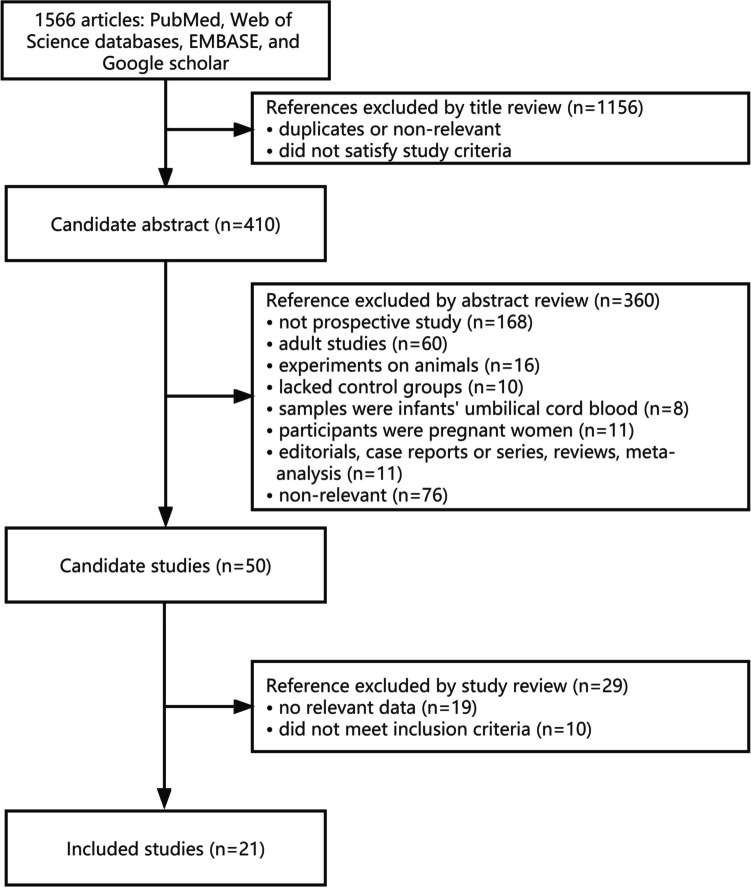
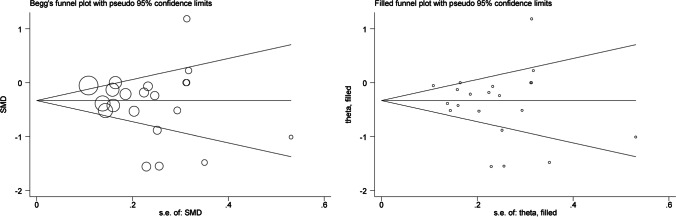
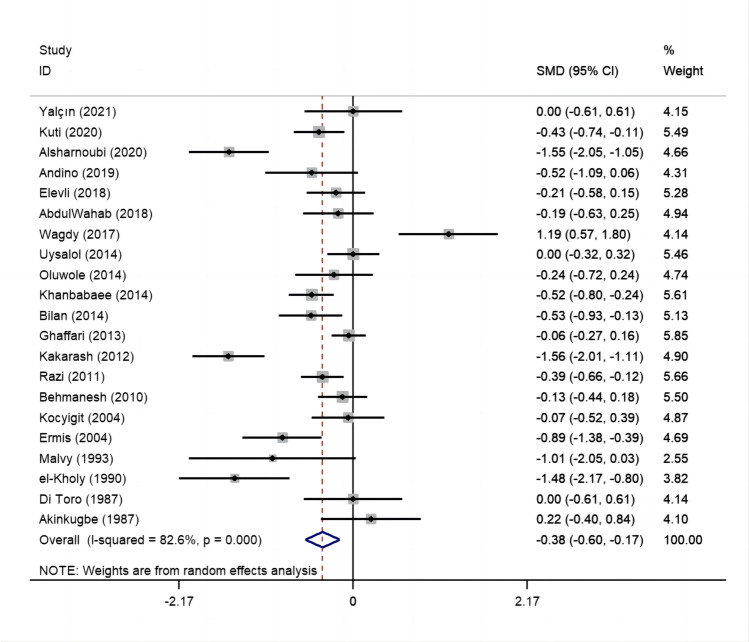
Asthma is one of the most frequent chronic diseases in children, and growing focus is placed on the exploration of attributable risk factors. Currently, no consensus has been reached on the implication of circulating zinc in the development of asthma. We aimed to conduct a meta-analysis to examine the association between circulating zinc and risk for childhood asthma and wheezing. We searched PubMed, Web of Science, EMBASE, and Google Scholar from inception until December 1, 2022. All procedures were performed independently and in duplicate. Random-effects model was adopted to derive standardized mean difference (SMD) and 95% confidence interval (95% CI). Statistical analyses were completed using the STATA software. Twenty-one articles and 2205 children were meta-analyzed. Overall, there was a statistically significant association between circulating zinc and risk for childhood asthma and wheezing (SMD: -0.38; 95% CI: -0.60 to -0.17; I=82.6%, p<0.001), without evidence of publication bias as revealed by Begg's (p=0.608) and Egger (p=0.408) tests. Subgroup analyses showed that children with asthma or wheezing in Middle Eastern countries had significantly lower circulating zinc levels than controls (SMD: -0.42; 95% CI: -0.69 to -0.14; p<0.001; I=87.1%). Additionally, average circulating zinc levels in asthma children were 0.41 μg/dl lower than that in controls, and the difference was statistically significant (SMD: -0.41; 95% CI: -0.65 to -0.16; p<0.001; I=83.7%). By contrast, children with wheezing were 0.20 μg/dl lower than that in controls, and no between-group difference was noted (SMD=-0.20; 95% CI: -0.58 to 0.17; p=0.072; I=69.1%). Our findings indicated that circulating zinc was associated with a significant risk for childhood asthma and its related symptom wheezing.
哮喘是儿童最常见的慢性疾病之一,目前越来越关注可归因的风险因素的探索。目前,关于循环锌在哮喘发展中的意义尚未达成共识。我们旨在进行一项荟萃分析,以研究循环锌与儿童哮喘和喘息风险之间的关系。我们检索了 PubMed、Web of Science、EMBASE 和 Google Scholar,检索时间截至 2022 年 12 月 1 日。所有程序均独立重复进行。采用随机效应模型得出标准化均数差(SMD)和 95%置信区间(95%CI)。统计分析使用 STATA 软件完成。荟萃分析了 21 篇文章和 2205 名儿童。总体而言,循环锌与儿童哮喘和喘息风险之间存在统计学显著关联(SMD:-0.38;95%CI:-0.60 至 -0.17;I=82.6%,p<0.001),Begg 检验(p=0.608)和 Egger 检验(p=0.408)均未发现发表偏倚的证据。亚组分析显示,来自中东国家的哮喘或喘息儿童的循环锌水平明显低于对照组(SMD:-0.42;95%CI:-0.69 至 -0.14;p<0.001;I=87.1%)。此外,哮喘儿童的平均循环锌水平比对照组低 0.41μg/dl,差异具有统计学意义(SMD:-0.41;95%CI:-0.65 至 -0.16;p<0.001;I=83.7%)。相比之下,喘息儿童比对照组低 0.20μg/dl,但组间无差异(SMD=-0.20;95%CI:-0.58 至 0.17;p=0.072;I=69.1%)。我们的研究结果表明,循环锌与儿童哮喘及其相关症状喘息的发生风险显著相关。