Department of Neurobiology, Duke University Medical Center, Durham, NC 27710, USA.
Department of Neurobiology, Duke University Medical Center, Durham, NC 27710, USA; Department of Pediatrics, Division of Neurology, Duke University Medical Center, Durham, NC 27710, USA.
Curr Opin Neurobiol. 2023 Aug;81:102726. doi: 10.1016/j.conb.2023.102726. Epub 2023 May 4.
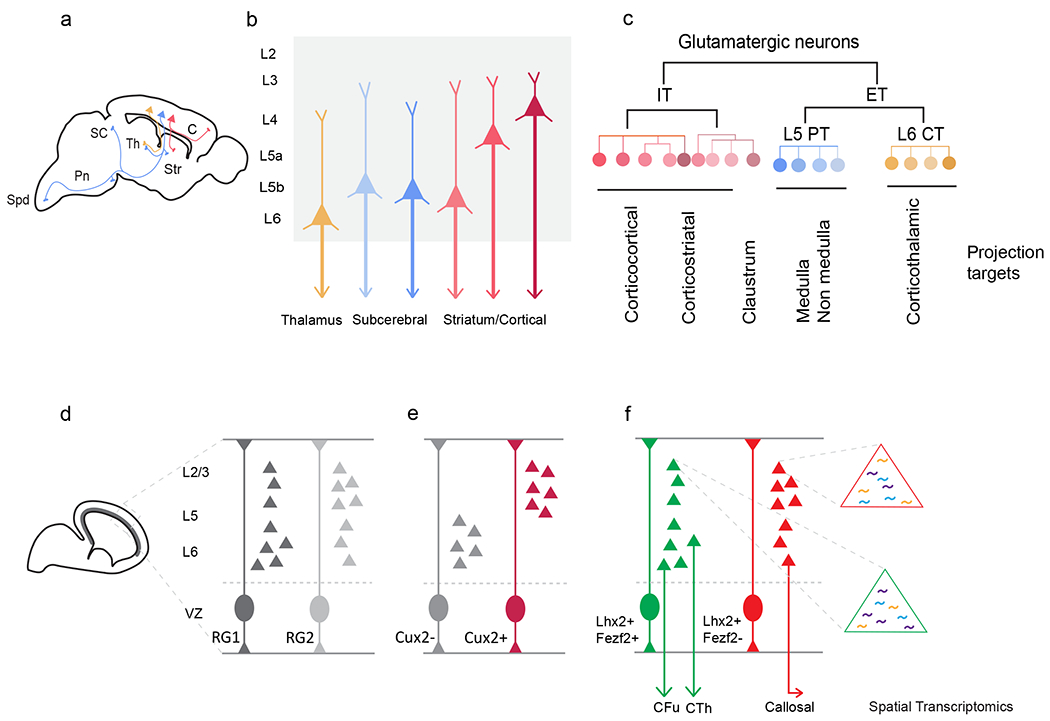
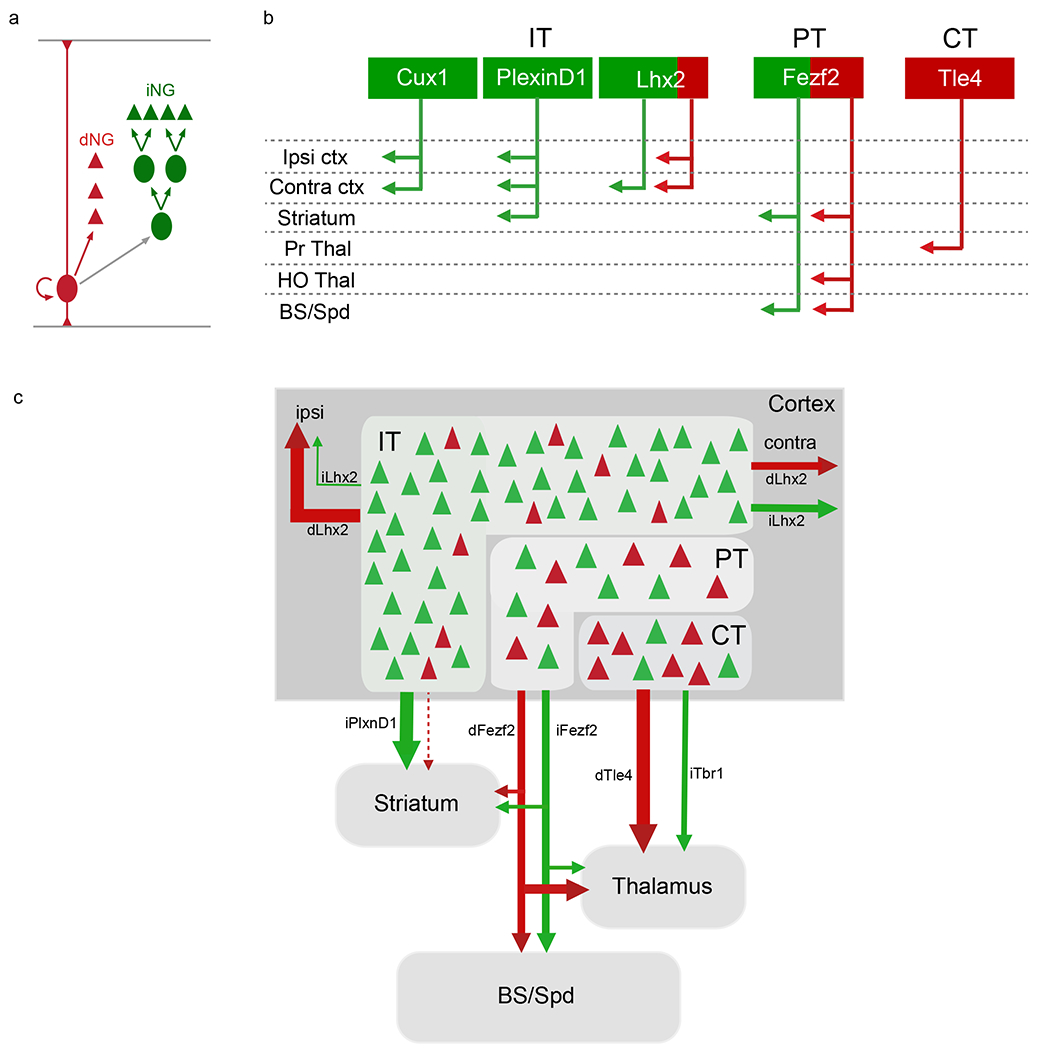
Diverse glutamatergic projection neurons (PNs) mediate myriad processing streams and output channels of the cerebral cortex. Yet, how different types of neural progenitors, such as radial glia (RGs) and intermediate progenitors (IPs), produce PN diversity, and hierarchical organization remains unclear. A fundamental issue is whether RGs constitute a homogeneous, multipotent lineage capable of generating all major PN types through a temporally regulated developmental program, or whether RGs comprise multiple transcriptionally heterogenous pools, each fated to generate a subset of PNs. Beyond RGs, the role of IPs in PN diversification remains underexplored. Addressing these questions requires tracking PN developmental trajectories with cell-type resolution - from transcription factor-defined RGs and IPs to their PN progeny, which are defined not only by laminar location but also by projection patterns and gene expression. Advances in cell-type resolution genetic fate mapping, axon tracing, and spatial transcriptomics may provide the technical capability for answering these fundamental questions.
不同的谷氨酸能投射神经元(PNs)介导大脑皮层的多种处理流和输出通道。然而,不同类型的神经祖细胞,如放射状胶质(RGs)和中间祖细胞(IPs),如何产生 PN 多样性和层次组织仍然不清楚。一个基本问题是 RG 是否构成一个同质的、多能性谱系,能够通过时间调节的发育程序产生所有主要的 PN 类型,还是 RG 包含多个转录异质性池,每个池都注定产生一部分 PN。除了 RG 之外,IP 在 PN 多样化中的作用仍未得到充分探索。要回答这些问题,需要以细胞类型分辨率来追踪 PN 的发育轨迹——从转录因子定义的 RG 和 IP 到它们的 PN 后代,这些后代不仅由层位置定义,还由投射模式和基因表达定义。细胞类型分辨率遗传命运图谱、轴突追踪和空间转录组学的进步可能为回答这些基本问题提供技术能力。