Department of Integrated Chinese and Western Medicine, The Cancer Hospital of the University of Chinese Academy of Sciences (Zhejiang Cancer Hospital), Institute of Basic Medicine and Cancer (IBMC), Chinese Academy of Sciences, Hangzhou, Zhejiang 310022, China.
Integrated Traditional Chinese and Western Medicine Oncology Laboratory, Key Laboratory of Traditional Chinese Medicine of Zhejiang Province, Hangzhou, Zhejiang, 310022, China.
Int J Biol Sci. 2023 Apr 9;19(7):2097-2113. doi: 10.7150/ijbs.81824. eCollection 2023.
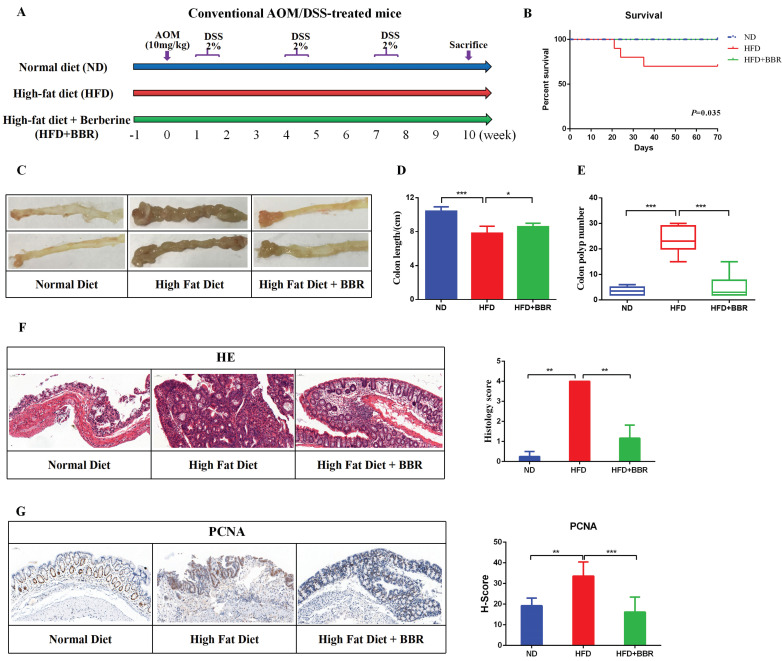
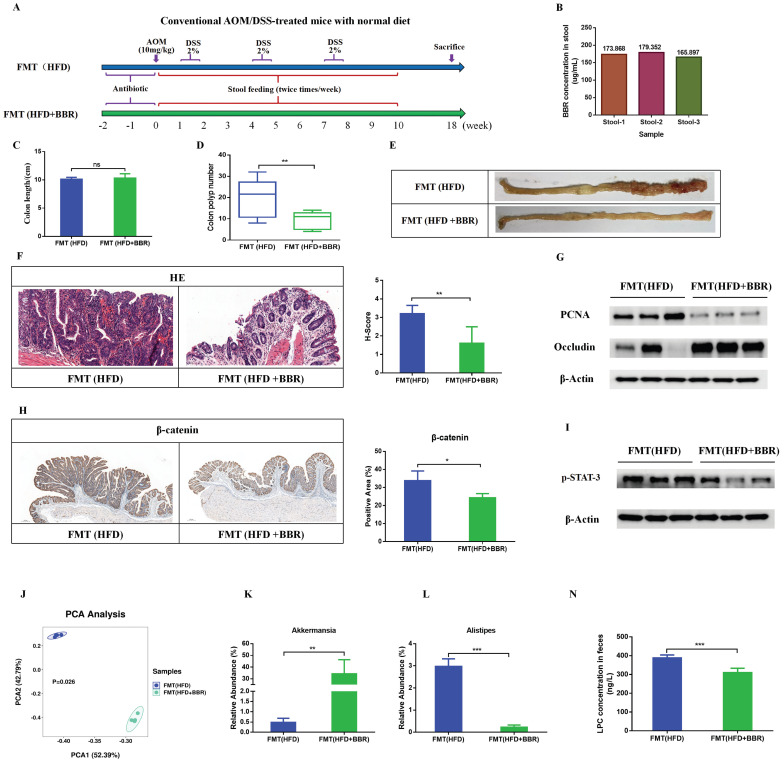
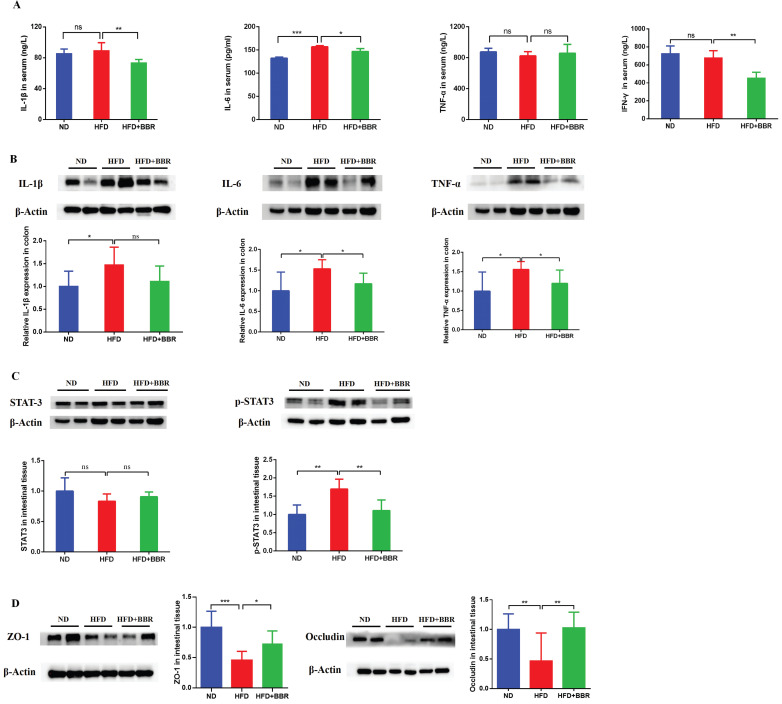
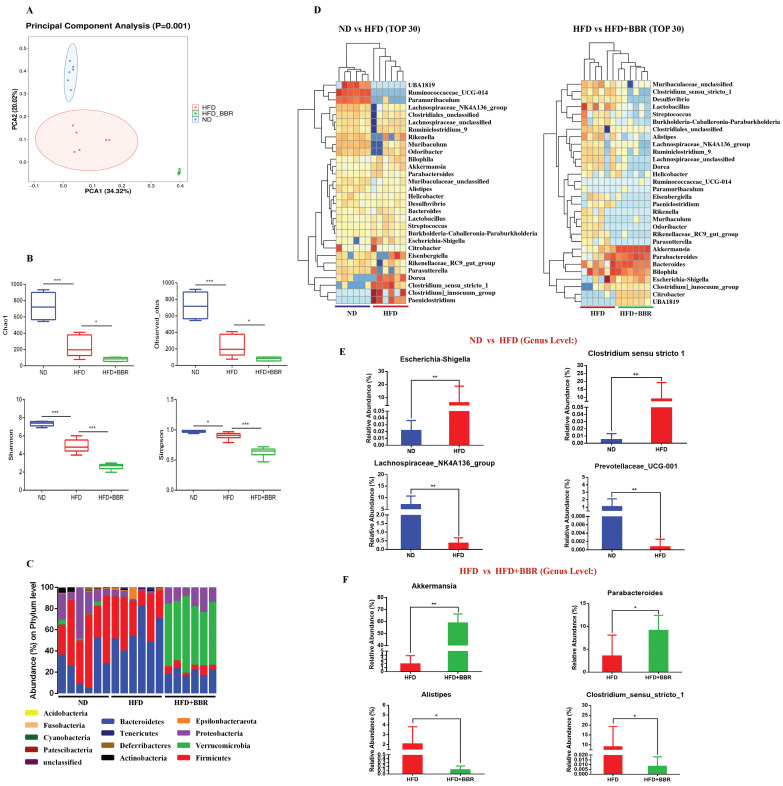
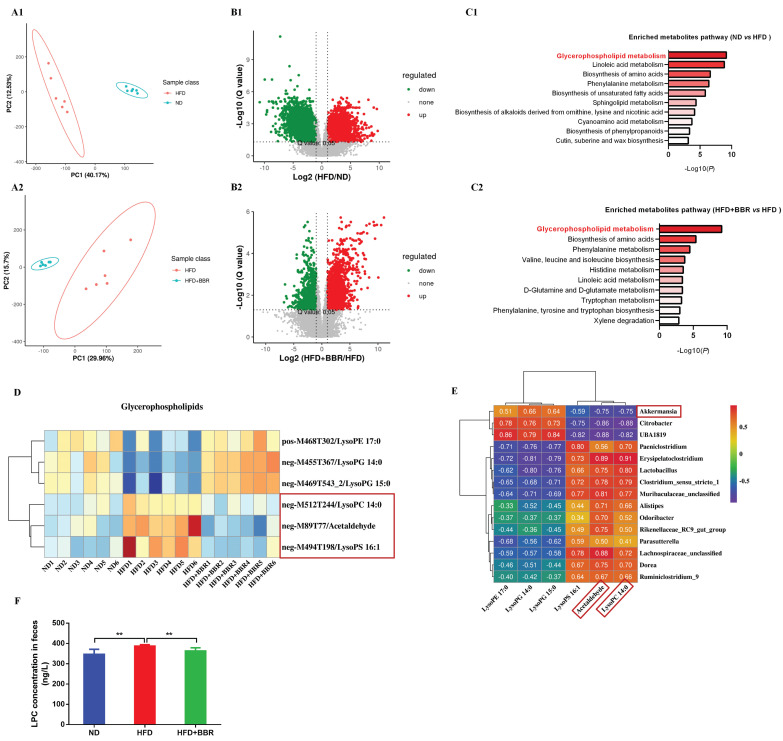
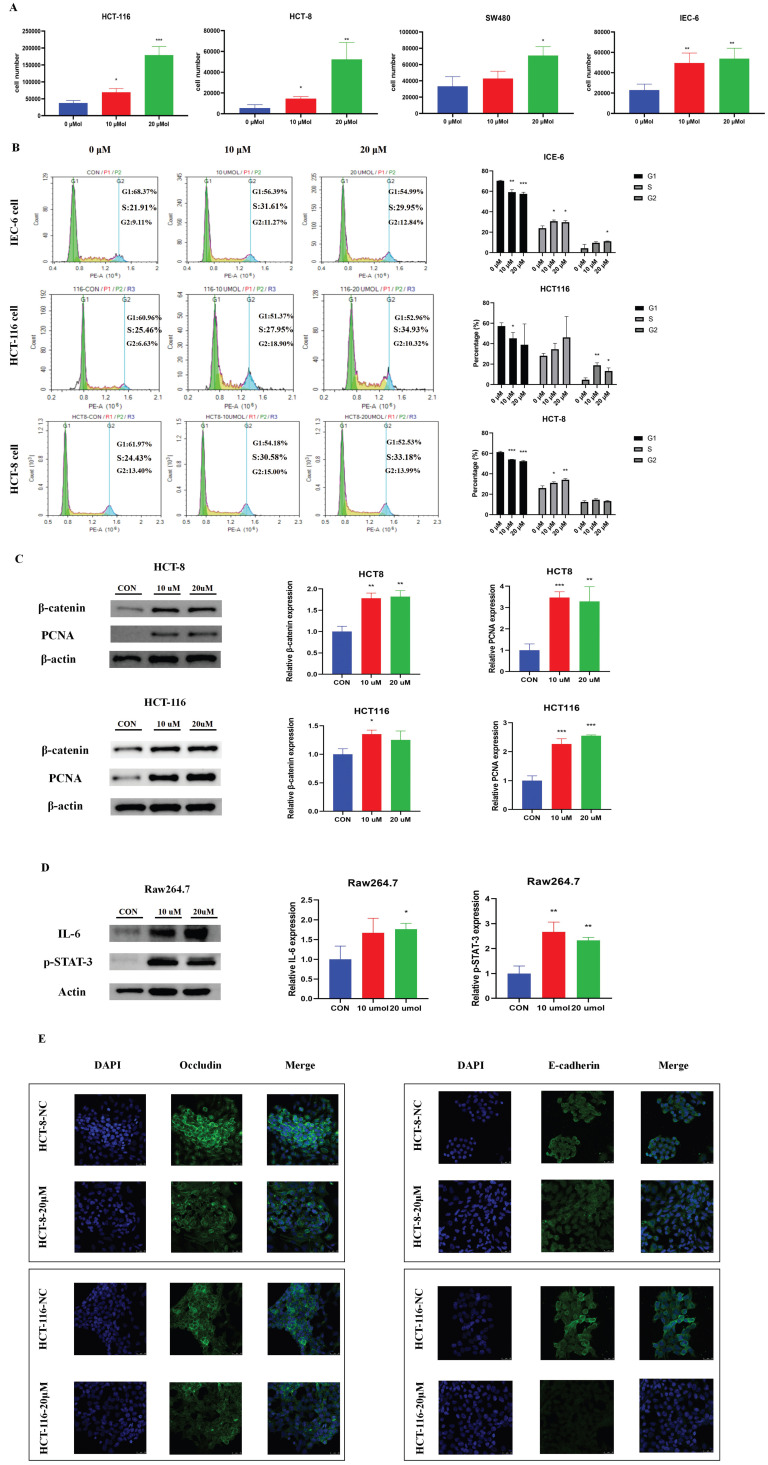
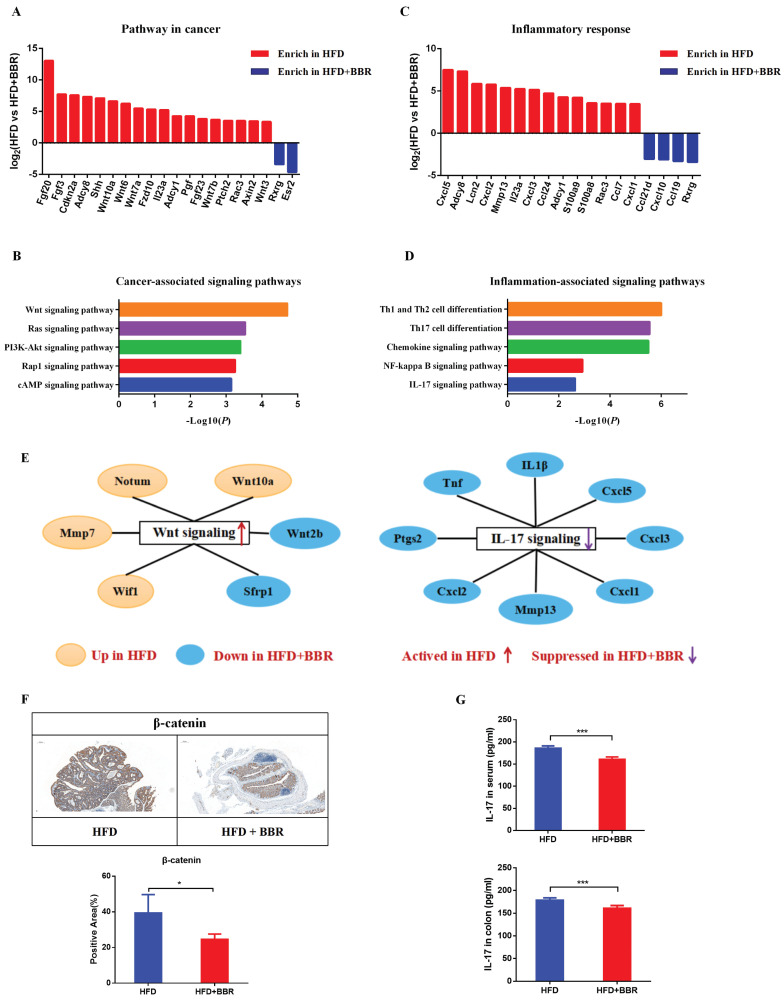
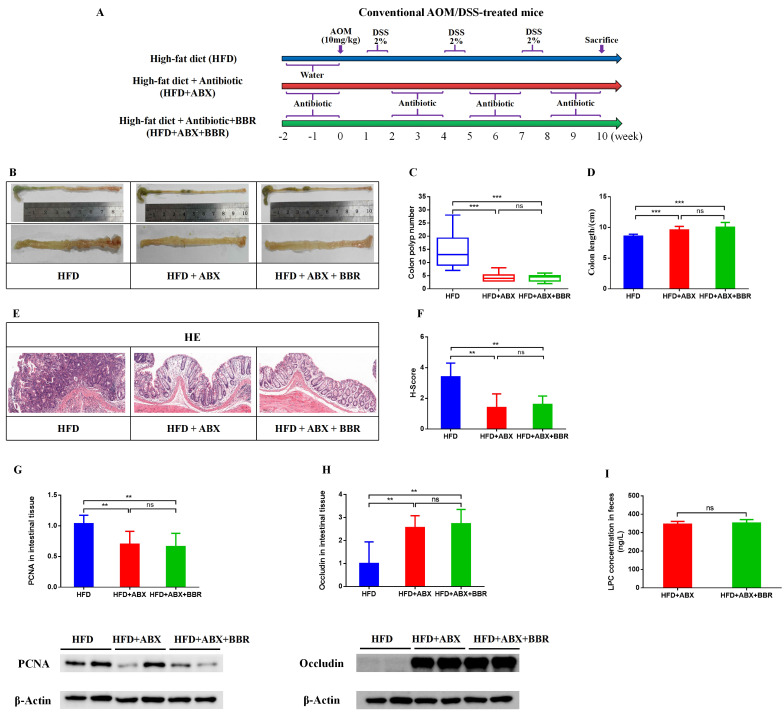
Dietary fat intake is positively associated with elevated risk of colorectal cancer (CRC). Currently, clinical treatments remian inadequate bacause of the complex pathogenesis of CRC induced by a high-fat diet (HFD). Mechanistically, imbalances in gut microbiota are associated with HFD-associated colorectal tumourigenesis. Therefore, we investigated the anti-tumor activity of berberine (BBR) in modulating the dysregulated gut microbiota and related metabolites by preforming 16S rDNA sequencing and liquid chromatography/mass spectrometry. As expected, BBR treatment significantly decreased the number of colonic polyps, ameliorated gut barrier disruption, and inhibited colon inflammation and related oncogenic pathways in AOM/DSS-induced CRC model mice fed with an HFD. Furthermore, BBR alleviated gut microbiota dysbiosis and increased the abundance of beneficial gut microorganisms, including and , in HFD-fed CRC mice. In addition, metabolomics analysis demonstrated significantly altered the glycerophospholipid metabolism during the progression of HFD-associated CRC in mice, whereas BBR treatment reverted these changes in glycerophospholipid metabolites, particularly lysophosphatidylcholine (LPC), which was confirmed to promote CRC cell proliferation and ameliorate cell junction impairment. Notably, BBR had no clear anti-tumor effects on HFD-fed CRC model mice with gut microbiota depletion, whereas transplantation of BBR-treated gut microbiota to gut microbiota-depleted CRC mice recapitulated the inhibitory effects of BBR on colorectal tumourigenesis and LPC levels. This study demonstrated that BBR inhibited HFD-associated CRC directly through modulating gut microbiota-regulated LPC levels, thereby providing a promising microbiota-modulating therapeutic strategy for the clinical prevention and treatment of Western diet-associated CRC.
膳食脂肪摄入与结直肠癌(CRC)风险升高呈正相关。目前,由于高脂肪饮食(HFD)诱导的 CRC 的复杂发病机制,临床治疗仍然不足。从机制上讲,肠道微生物群的失衡与 HFD 相关的结直肠肿瘤发生有关。因此,我们通过 16S rDNA 测序和液相色谱/质谱法研究了小檗碱(BBR)在调节失调的肠道微生物群及其相关代谢物方面的抗肿瘤活性。正如预期的那样,BBR 治疗显著减少了结肠息肉的数量,改善了肠道屏障的破坏,并抑制了 AOM/DSS 诱导的 HFD 喂养 CRC 模型小鼠的结肠炎症和相关致癌途径。此外,BBR 缓解了肠道微生物群失调,并增加了有益的肠道微生物的丰度,包括 和 ,在 HFD 喂养的 CRC 小鼠中。此外,代谢组学分析表明,在 HFD 相关 CRC 小鼠中,甘油磷脂代谢在进展过程中发生了明显改变,而 BBR 治疗使这些甘油磷脂代谢物发生了变化,特别是溶血磷脂胆碱(LPC),证实其促进了 CRC 细胞增殖并改善了细胞连接损伤。值得注意的是,BBR 对 HFD 喂养的肠道微生物群耗竭的 CRC 模型小鼠没有明显的抗肿瘤作用,而将 BBR 处理的肠道微生物群移植到肠道微生物群耗竭的 CRC 小鼠中,重现了 BBR 对结直肠肿瘤发生和 LPC 水平的抑制作用。这项研究表明,BBR 通过调节肠道微生物群调节的 LPC 水平直接抑制 HFD 相关的 CRC,从而为临床预防和治疗西方饮食相关的 CRC 提供了一种有前途的调节微生物群的治疗策略。