Department of Civil and Environmental Engineering, Massachusetts Institute of Technology, 02139 Cambridge, MA.
Department of Earth, Atmospheric, and Planetary Sciences, Massachusetts Institute of Technology, 02139 Cambridge, MA.
Proc Natl Acad Sci U S A. 2023 May 16;120(20):e2213271120. doi: 10.1073/pnas.2213271120. Epub 2023 May 9.
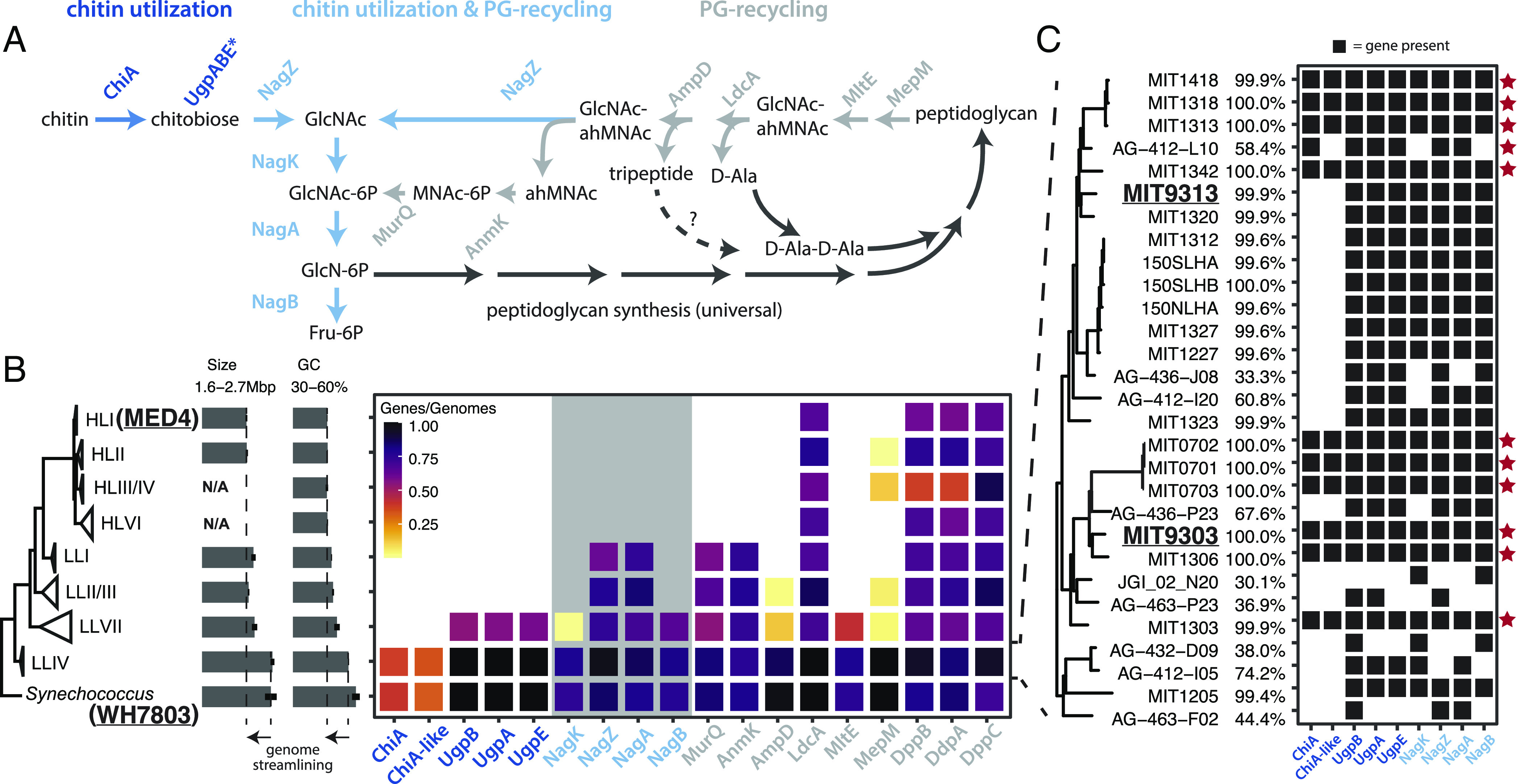
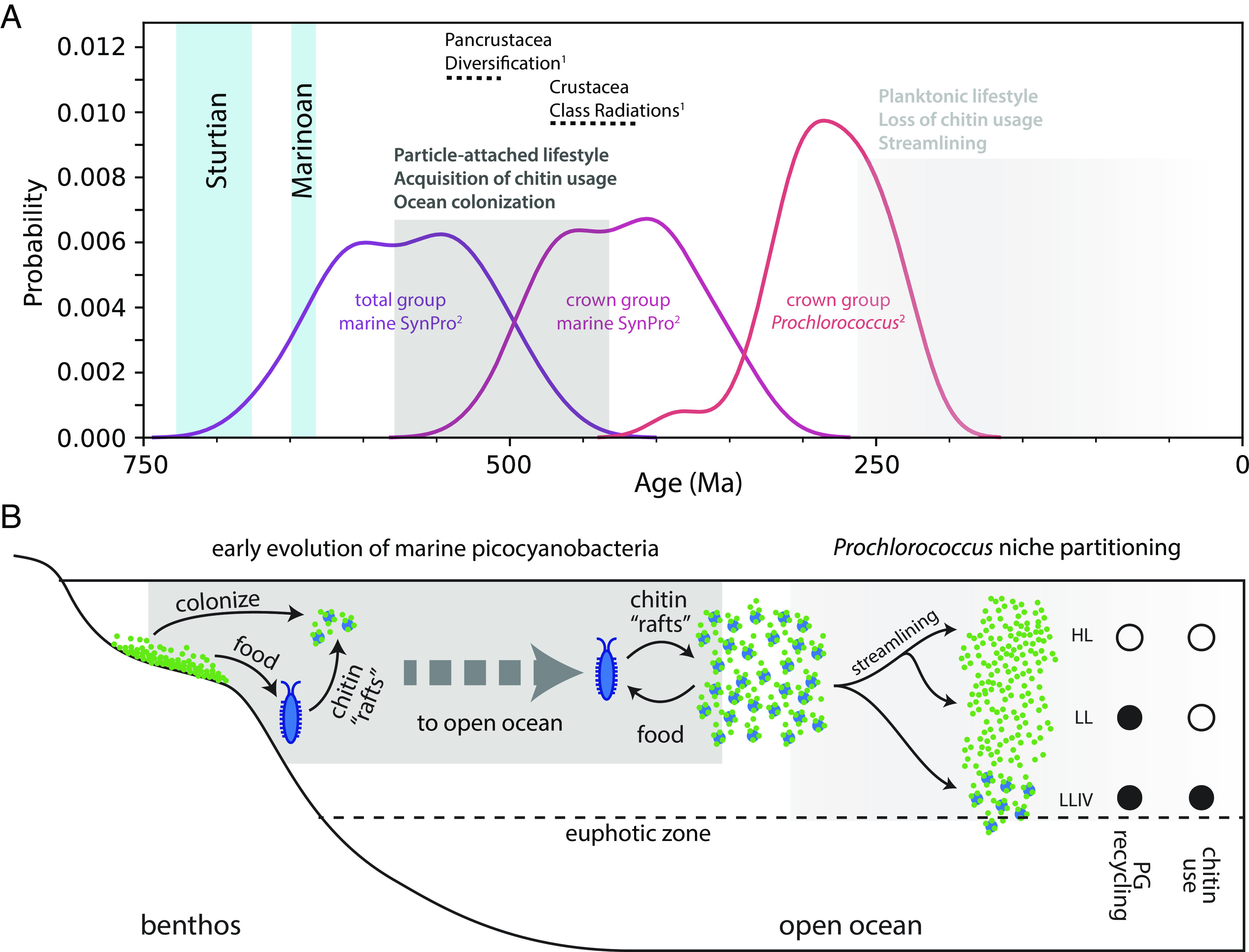
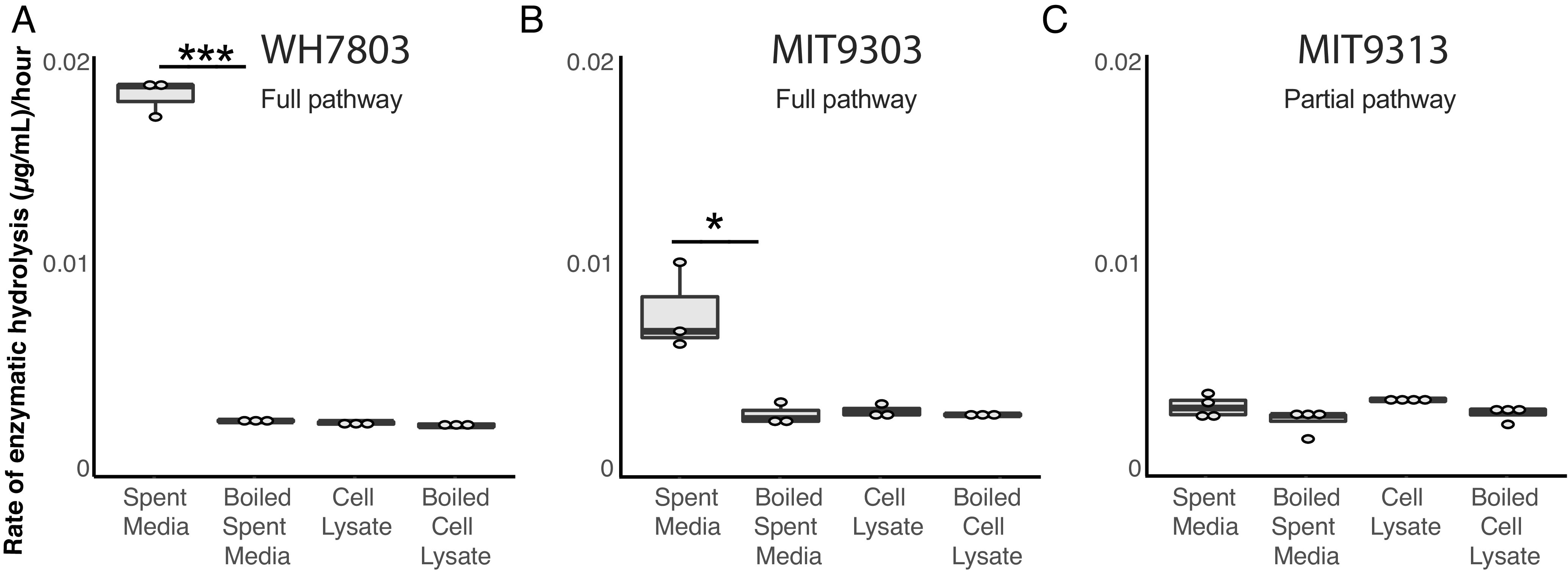
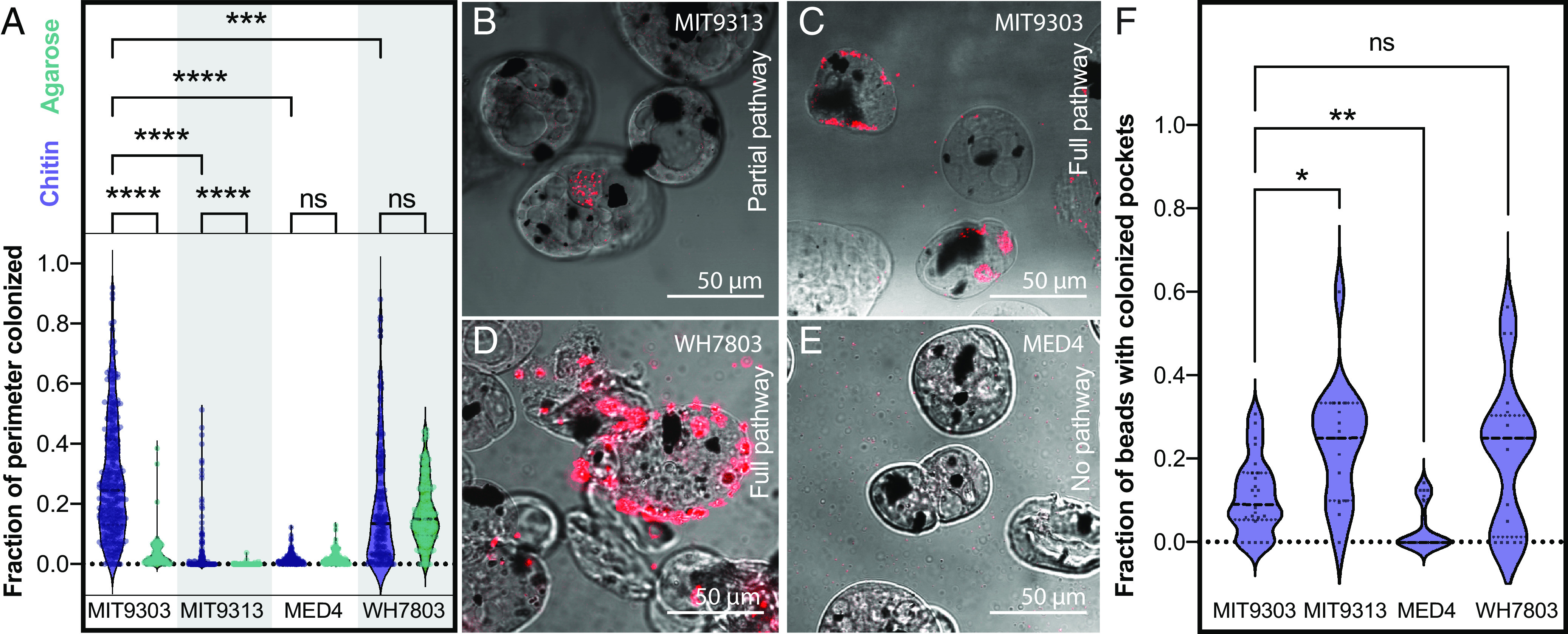
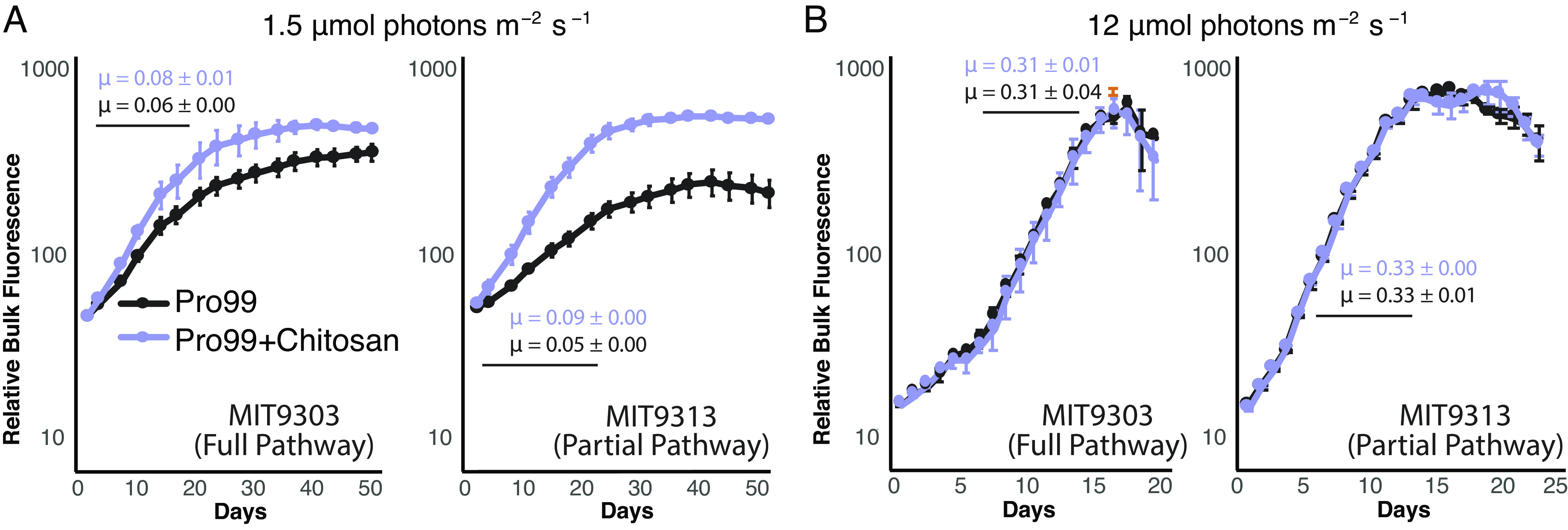
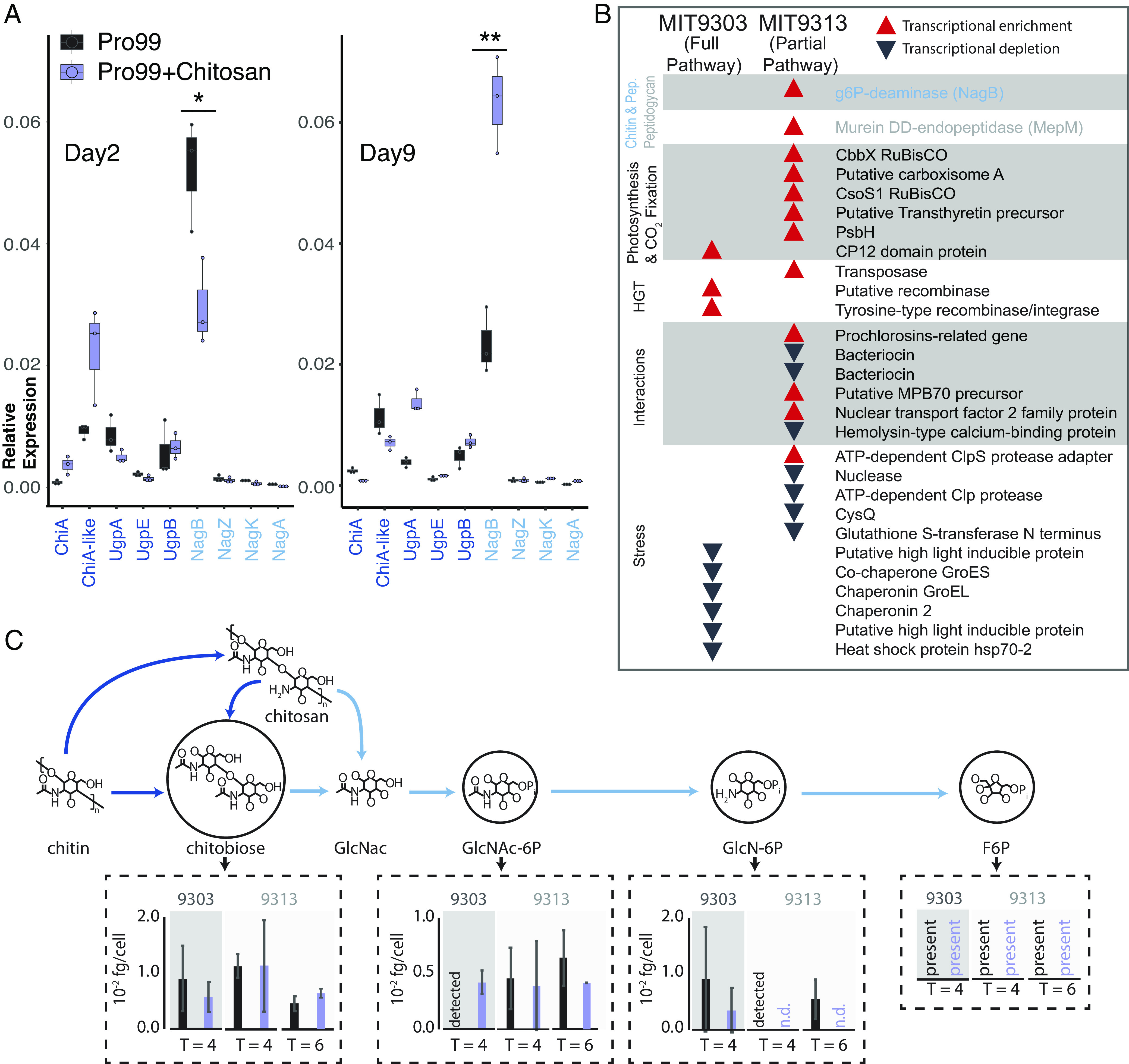
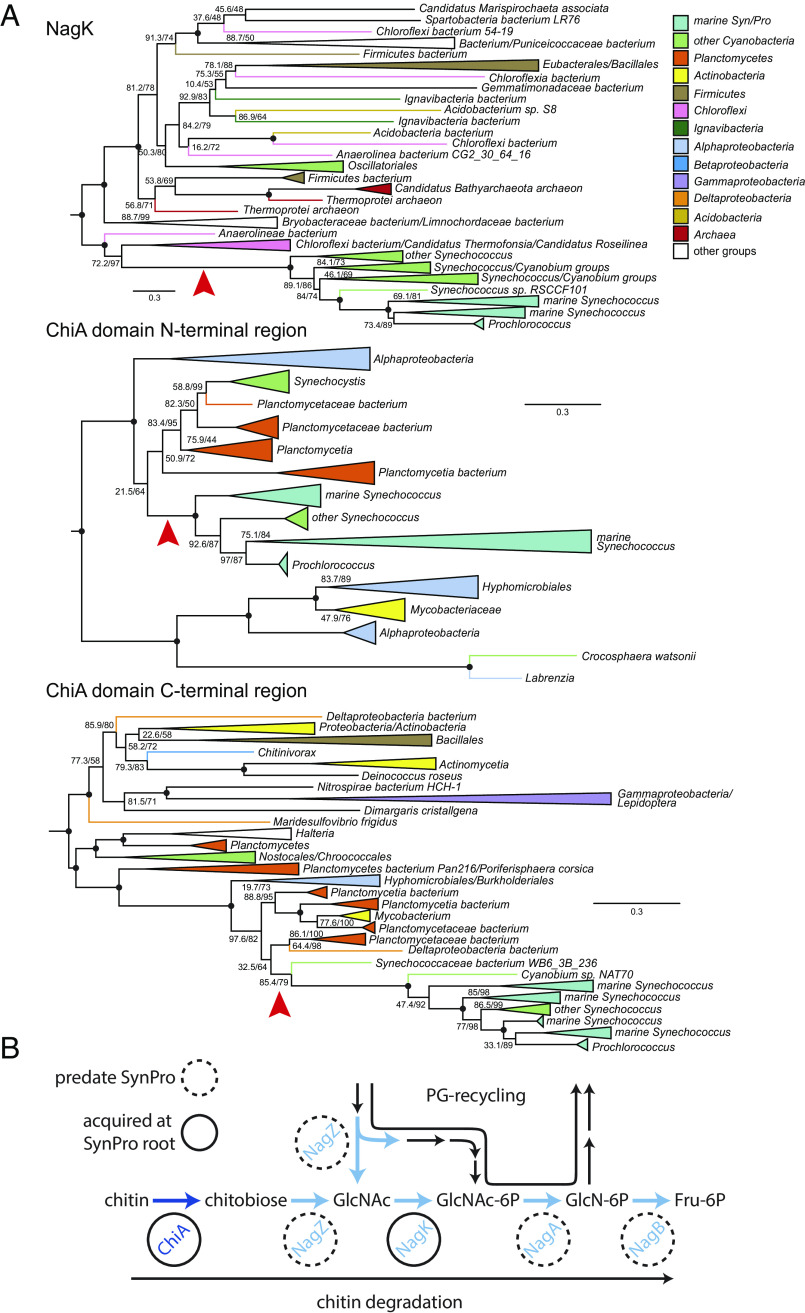
Marine picocyanobacteria and , the most abundant photosynthetic cells in the oceans, are generally thought to have a primarily single-celled and free-living lifestyle. However, while studying the ability of picocyanobacteria to supplement photosynthetic carbon fixation with the use of exogenous organic carbon, we found the widespread occurrence of genes for breaking down chitin, an abundant source of organic carbon that exists primarily as particles. We show that cells that encode a chitin degradation pathway display chitin degradation activity, attach to chitin particles, and show enhanced growth under low light conditions when exposed to chitosan, a partially deacetylated soluble form of chitin. Marine chitin is largely derived from arthropods, which underwent major diversifications 520 to 535 Mya, close to when marine picocyanobacteria are inferred to have appeared in the ocean. Phylogenetic analyses confirm that the chitin utilization trait was acquired at the root of marine picocyanobacteria. Together this leads us to postulate that attachment to chitin particles allowed benthic cyanobacteria to emulate their mat-based lifestyle in the water column, initiating their expansion into the open ocean, seeding the rise of modern marine ecosystems. Subsequently, transitioning to a constitutive planktonic life without chitin associations led to cellular and genomic streamlining along a major early branch within . Our work highlights how the emergence of associations between organisms from different trophic levels, and their coevolution, creates opportunities for colonizing new environments. In this view, the rise of ecological complexity and the expansion of the biosphere are deeply intertwined processes.
海洋微微型蓝藻和,是海洋中最丰富的光合细胞,通常被认为主要以单细胞和自由生活的方式存在。然而,在研究微微型蓝藻利用外源有机碳补充光合作用碳固定的能力时,我们发现了分解几丁质的基因广泛存在,几丁质是一种丰富的有机碳源,主要以颗粒形式存在。我们表明,编码几丁质降解途径的细胞显示出几丁质降解活性,附着在几丁质颗粒上,并在暴露于壳聚糖(几丁质的部分脱乙酰可溶性形式)时,在低光照条件下显示出增强的生长。海洋几丁质主要来源于节肢动物,它们在 5.2 亿到 5.35 亿年前发生了重大分化,接近海洋微微型蓝藻被推断出现在海洋中的时间。系统发育分析证实,几丁质利用特性是在海洋微微型蓝藻的根部获得的。综上所述,我们假设附着在几丁质颗粒上使底栖蓝藻能够在水柱中模拟它们基于基质的生活方式,从而开始向开阔海洋扩张,为现代海洋生态系统的兴起奠定了基础。随后,随着向没有几丁质相关的组成型浮游生物生活方式的转变,导致细胞和基因组沿着 中的一个主要早期分支进行精简。我们的工作强调了不同营养级别的生物之间的联系以及它们的共同进化如何为开拓新环境创造机会。从这个角度来看,生态复杂性的兴起和生物圈的扩张是相互交织的过程。