Beijing Institute of Basic Medical Sciences, 100850, Beijing, China.
Department of Oncology, Mayo Clinic, Rochester, MN, 55905, USA.
Signal Transduct Target Ther. 2023 May 10;8(1):183. doi: 10.1038/s41392-023-01401-y.
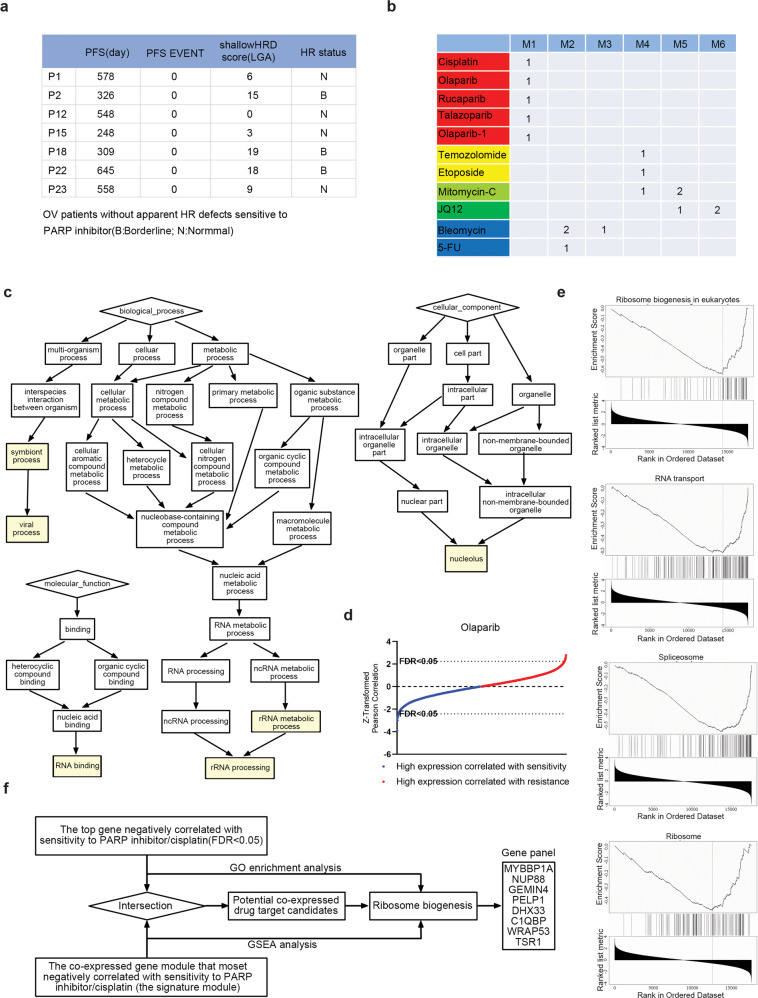
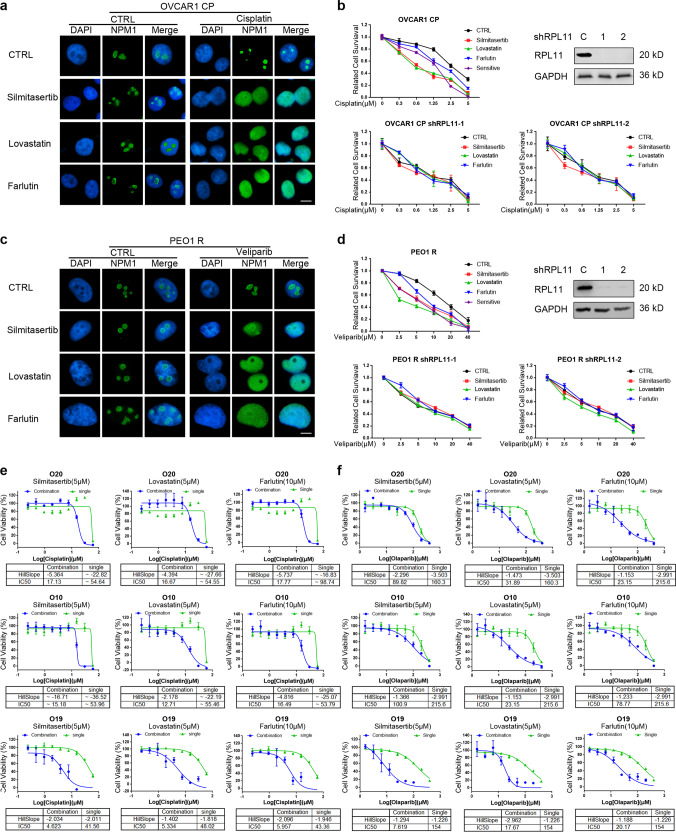
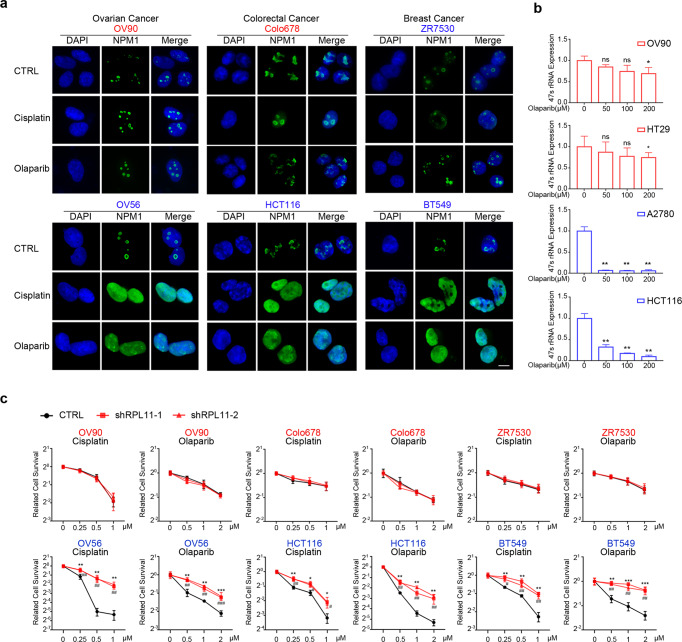
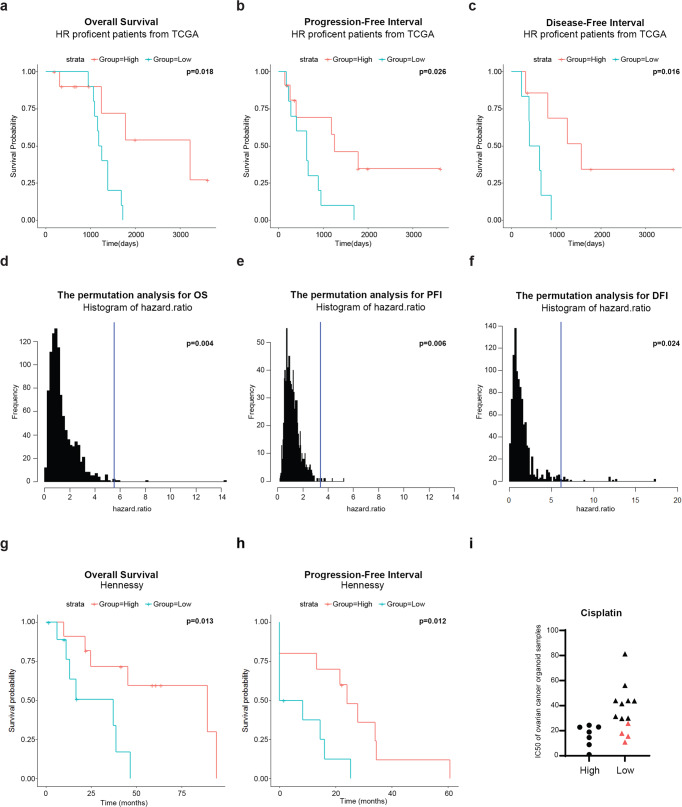
Poly (ADP-ribose) polymerase (PARP) inhibitors are one of the most exciting classes of targeted therapy agents for cancers with homologous recombination (HR) deficiency. However, many patients without apparent HR defects also respond well to PARP inhibitors/cisplatin. The biomarker responsible for this mechanism remains unclear. Here, we identified a set of ribosomal genes that predict response to PARP inhibitors/cisplatin in HR-proficient patients. PARP inhibitor/cisplatin selectively eliminates cells with high expression of the eight genes in the identified panel via DNA damage (ATM) signaling-induced pro-apoptotic ribosomal stress, which along with ATM signaling-induced pro-survival HR repair constitutes a new model to balance the cell fate in response to DNA damage. Therefore, the combined examination of the gene panel along with HR status would allow for more precise predictions of clinical response to PARP inhibitor/cisplatin. The gene panel as an independent biomarker was validated by multiple published clinical datasets, as well as by an ovarian cancer organoids library we established. More importantly, its predictive value was further verified in a cohort of PARP inhibitor-treated ovarian cancer patients with both RNA-seq and WGS data. Furthermore, we identified several marketed drugs capable of upregulating the expression of the genes in the panel without causing HR deficiency in PARP inhibitor/cisplatin-resistant cell lines. These drugs enhance PARP inhibitor/cisplatin sensitivity in both intrinsically resistant organoids and cell lines with acquired resistance. Together, our study identifies a marker gene panel for HR-proficient patients and reveals a broader application of PARP inhibitor/cisplatin in cancer therapy.
聚(ADP-核糖)聚合酶(PARP)抑制剂是同源重组(HR)缺陷癌症最令人兴奋的靶向治疗药物之一。然而,许多没有明显 HR 缺陷的患者也对 PARP 抑制剂/顺铂有很好的反应。负责这种机制的生物标志物仍不清楚。在这里,我们鉴定了一组核糖体基因,这些基因可预测 HR 功能正常的患者对 PARP 抑制剂/顺铂的反应。PARP 抑制剂/顺铂通过 DNA 损伤(ATM)信号诱导的促凋亡核糖体应激选择性消除鉴定面板中高表达这 8 个基因的细胞,与 ATM 信号诱导的促存活 HR 修复一起构成了一种新的模型,以平衡细胞命运对 DNA 损伤的反应。因此,联合检查基因面板和 HR 状态可以更准确地预测对 PARP 抑制剂/顺铂的临床反应。该基因面板作为一个独立的生物标志物,通过多个已发表的临床数据集以及我们建立的卵巢癌类器官文库进行了验证。更重要的是,它在接受 PARP 抑制剂治疗的卵巢癌患者队列中进行了 RNA-seq 和 WGS 数据的进一步验证。此外,我们还鉴定了几种能够上调该面板中基因表达而不导致 PARP 抑制剂/顺铂耐药细胞系中 HR 缺陷的上市药物。这些药物增强了 PARP 抑制剂/顺铂在固有耐药类器官和获得性耐药细胞系中的敏感性。总之,我们的研究确定了 HR 功能正常患者的标记基因面板,并揭示了 PARP 抑制剂/顺铂在癌症治疗中的更广泛应用。