Hadisurya Marco, Li Li, Kuwaranancharoen Kananart, Wu Xiaofeng, Lee Zheng-Chi, Alcalay Roy N, Padmanabhan Shalini, Tao W Andy, Iliuk Anton
Department of Biochemistry, Purdue University, West Lafayette, IN, 47907, USA.
Tymora Analytical Operations, West Lafayette, IN, 47906, USA.
Commun Med (Lond). 2023 May 10;3(1):64. doi: 10.1038/s43856-023-00294-w.
Mutations in the leucine-rich repeat kinase 2 (LRRK2) gene have been recognized as genetic risk factors for Parkinson's disease (PD). However, compared to cancer, fewer genetic mutations contribute to the cause of PD, propelling the search for protein biomarkers for early detection of the disease.
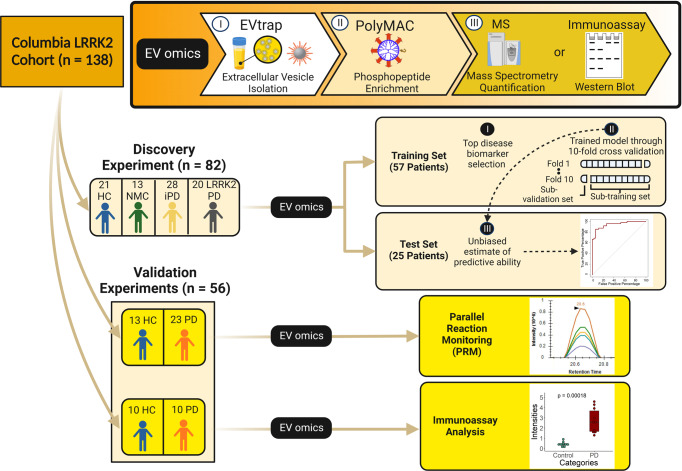
Utilizing 138 urine samples from four groups, healthy individuals (control), healthy individuals with G2019S mutation in the LRRK2 gene (non-manifesting carrier/NMC), PD individuals without G2019S mutation (idiopathic PD/iPD), and PD individuals with G2019S mutation (LRRK2 PD), we applied a proteomics strategy to determine potential diagnostic biomarkers for PD from urinary extracellular vesicles (EVs).
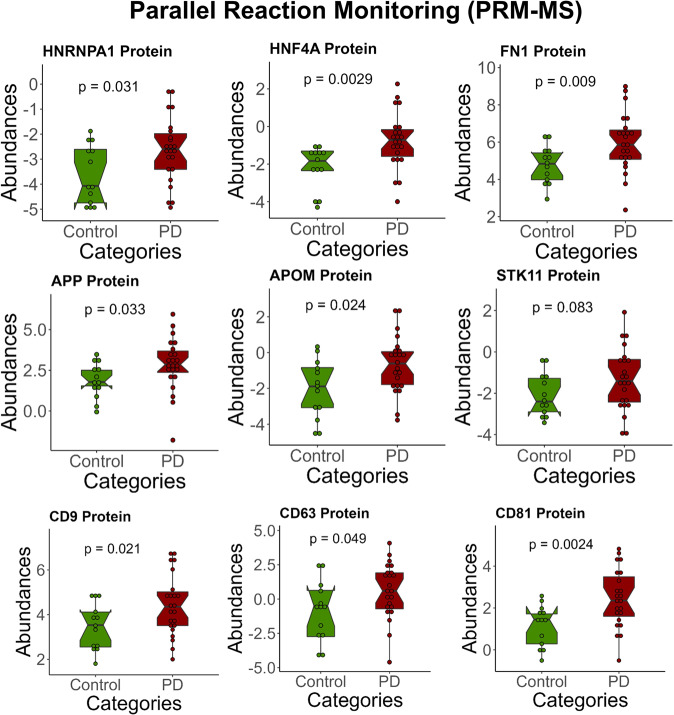
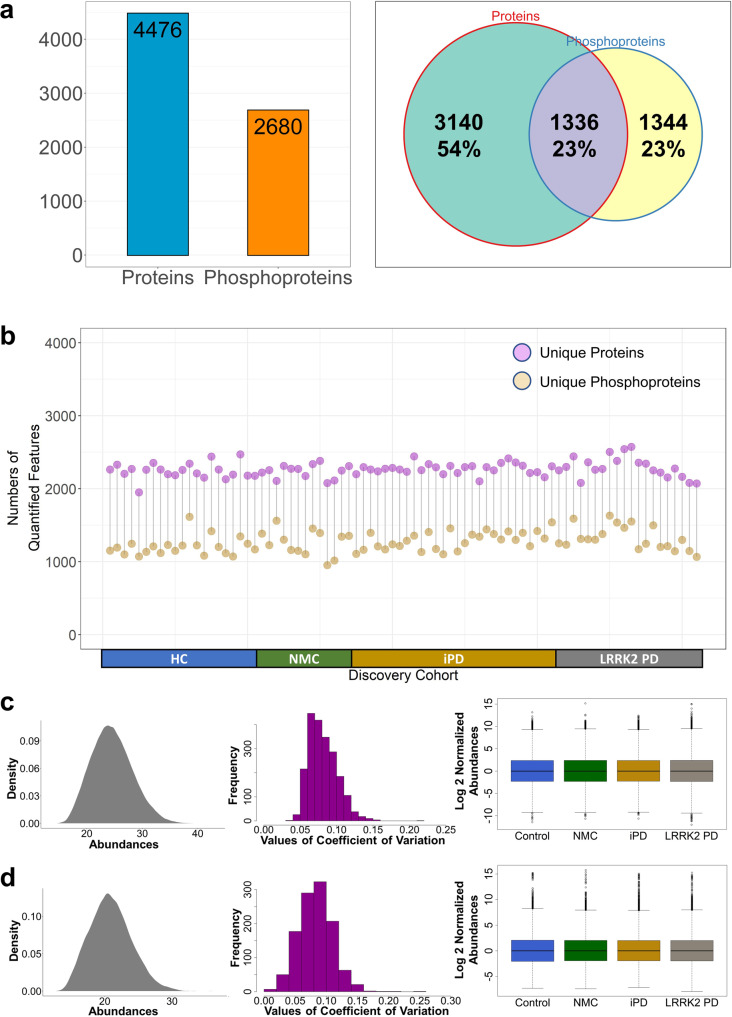
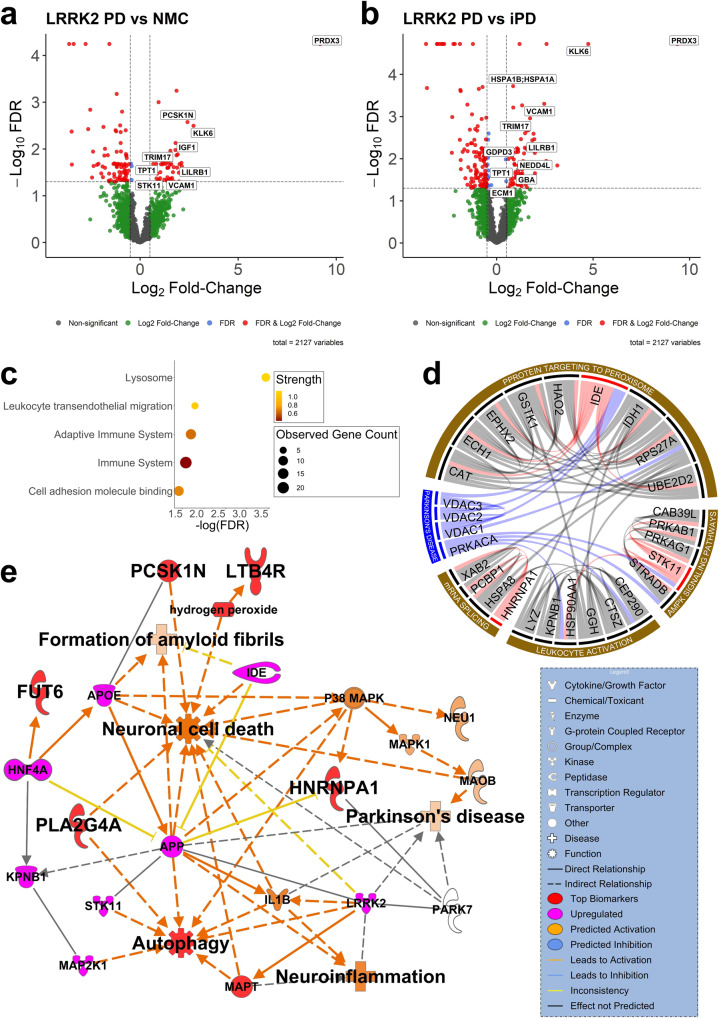
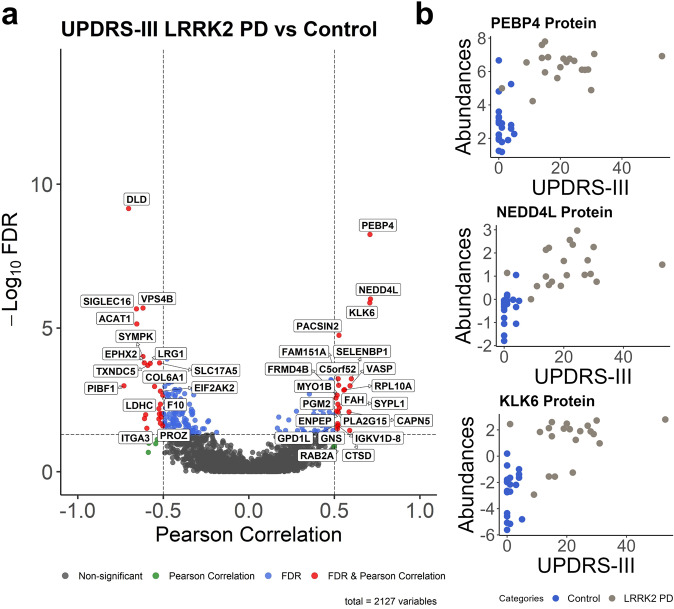
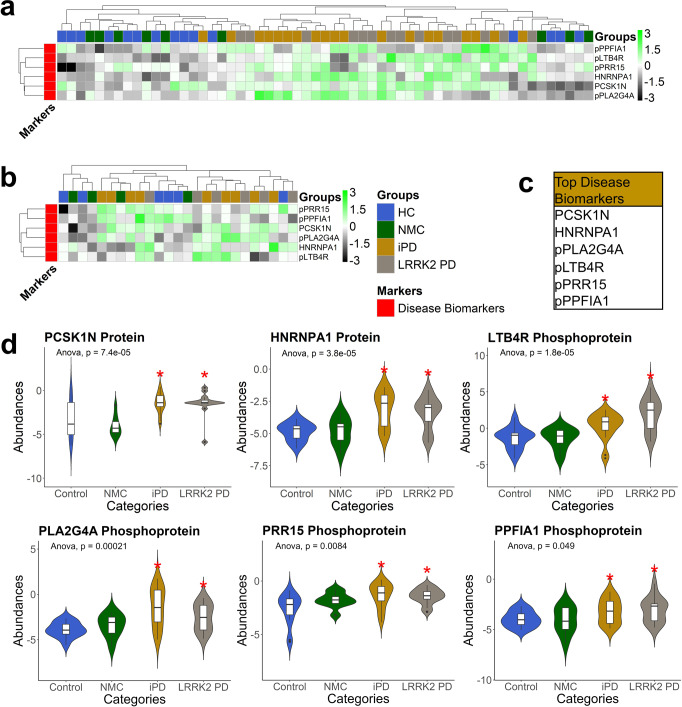
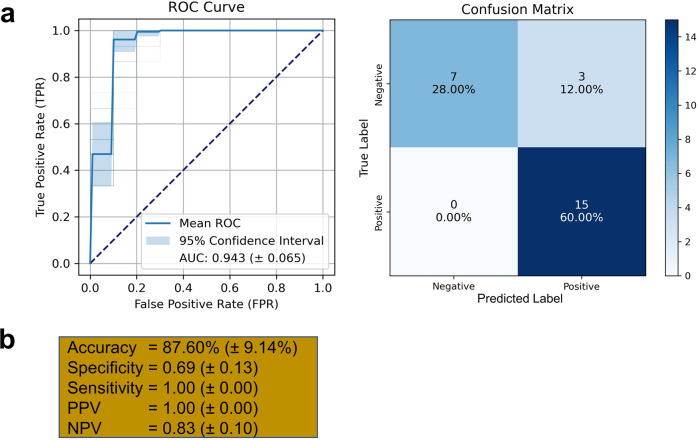
After efficient isolation of urinary EVs through chemical affinity followed by mass spectrometric analyses of EV peptides and enriched phosphopeptides, we identify and quantify 4476 unique proteins and 2680 unique phosphoproteins. We detect multiple proteins and phosphoproteins elevated in PD EVs that are known to be involved in important PD pathways, in particular the autophagy pathway, as well as neuronal cell death, neuroinflammation, and formation of amyloid fibrils. We establish a panel of proteins and phosphoproteins as novel candidates for disease biomarkers and substantiate the biomarkers using machine learning, ROC, clinical correlation, and in-depth network analysis. Several putative disease biomarkers are further partially validated in patients with PD using parallel reaction monitoring (PRM) and immunoassay for targeted quantitation.
These findings demonstrate a general strategy of utilizing biofluid EV proteome/phosphoproteome as an outstanding and non-invasive source for a wide range of disease exploration.
富含亮氨酸重复激酶2(LRRK2)基因的突变已被确认为帕金森病(PD)的遗传风险因素。然而,与癌症相比,导致PD病因的基因突变较少,这推动了对用于疾病早期检测的蛋白质生物标志物的探索。
我们使用来自四组的138份尿液样本,即健康个体(对照组)、LRRK2基因存在G2019S突变的健康个体(未表现出症状的携带者/NMC)、无G2019S突变的PD个体(特发性PD/iPD)以及有G2019S突变的PD个体(LRRK2 PD),应用蛋白质组学策略从尿液细胞外囊泡(EVs)中确定PD的潜在诊断生物标志物。
通过化学亲和作用有效分离尿液EVs后,对EV肽段和富集的磷酸肽段进行质谱分析,我们鉴定并定量了4476种独特蛋白质和2680种独特磷酸化蛋白质。我们检测到PD EVs中多种蛋白质和磷酸化蛋白质水平升高,这些蛋白质已知参与重要的PD通路,特别是自噬通路,以及神经元细胞死亡、神经炎症和淀粉样纤维的形成。我们建立了一组蛋白质和磷酸化蛋白质作为疾病生物标志物的新候选物,并使用机器学习、ROC、临床相关性和深入的网络分析对这些生物标志物进行了验证。使用平行反应监测(PRM)和免疫测定进行靶向定量,在PD患者中进一步部分验证了几种假定的疾病生物标志物。
这些发现证明了一种利用生物流体EV蛋白质组/磷酸蛋白质组作为广泛疾病探索的优秀且非侵入性来源的通用策略。