Graduate School of Biosciences, Nagahama Institute of Bio-Science and Technology, Nagahama, Shiga, 526-0829, Japan.
Division of Biophysics and Neurobiology, National Institute for Physiological Sciences, Okazaki, Aichi, 444-8585, Japan.
Nat Commun. 2023 May 11;14(1):2415. doi: 10.1038/s41467-023-38051-1.
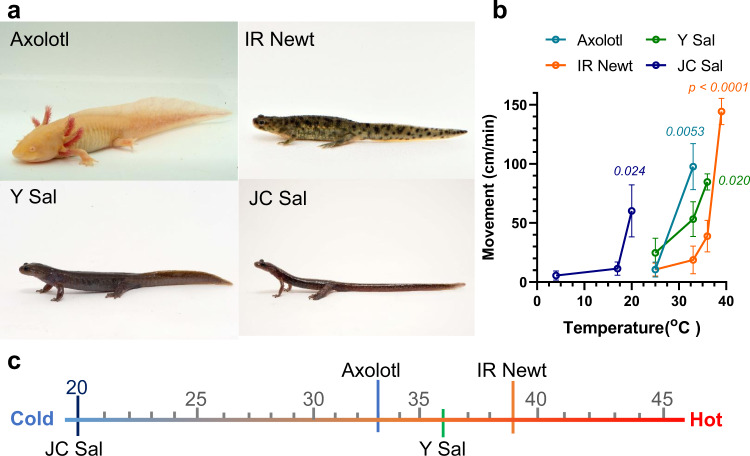
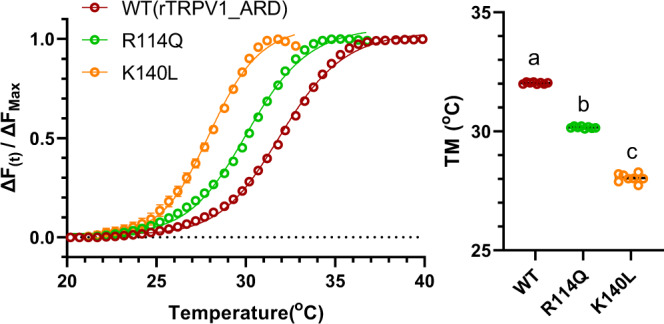
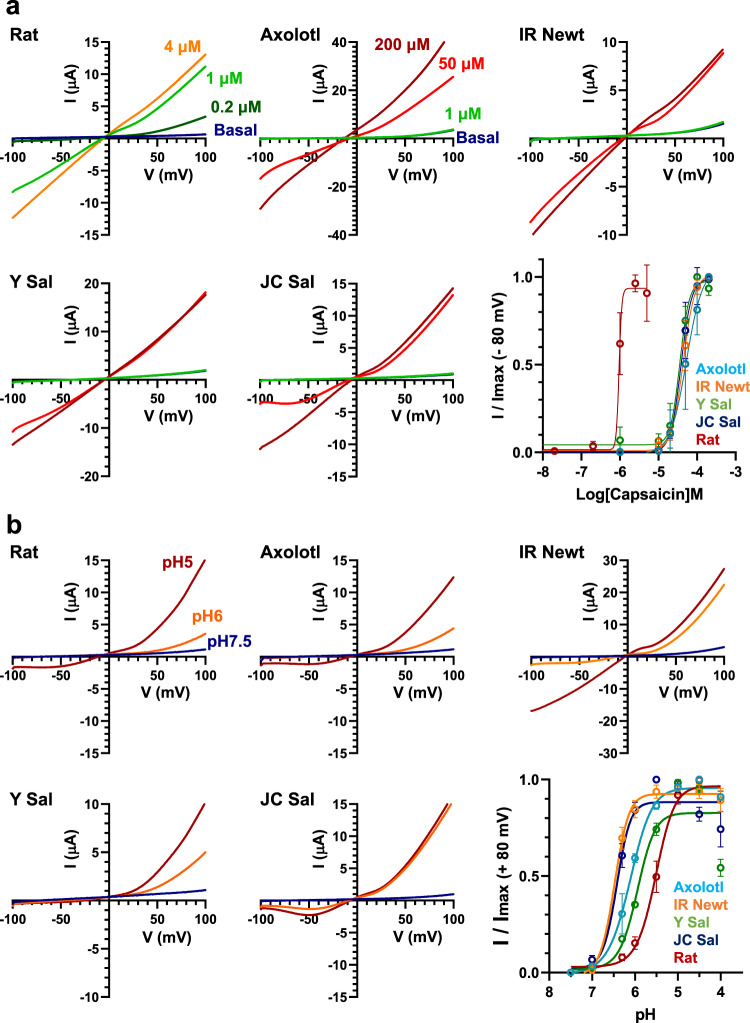
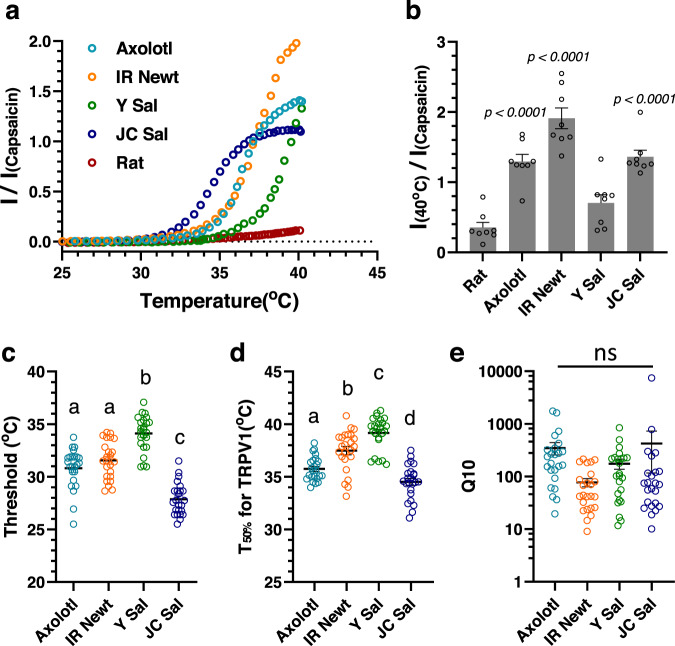
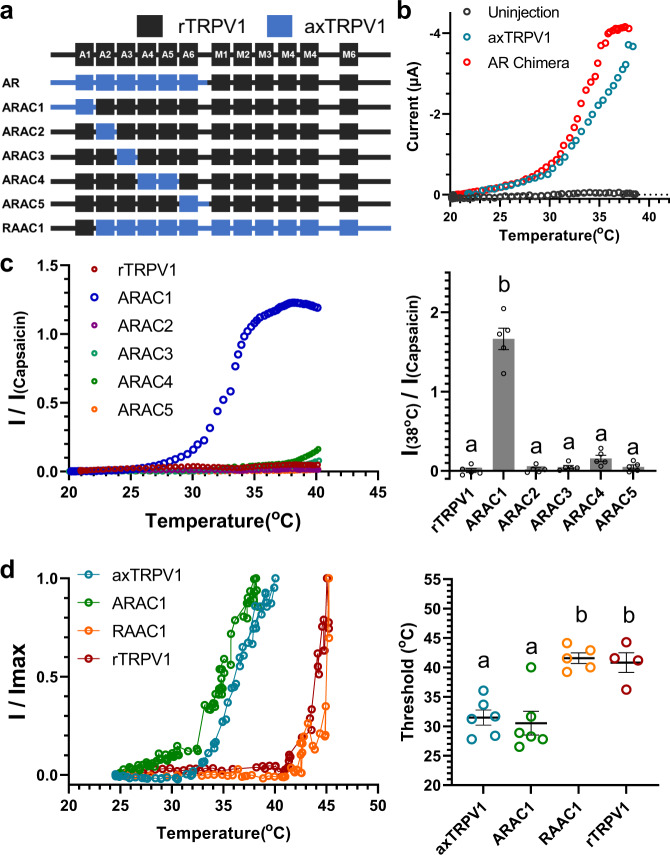
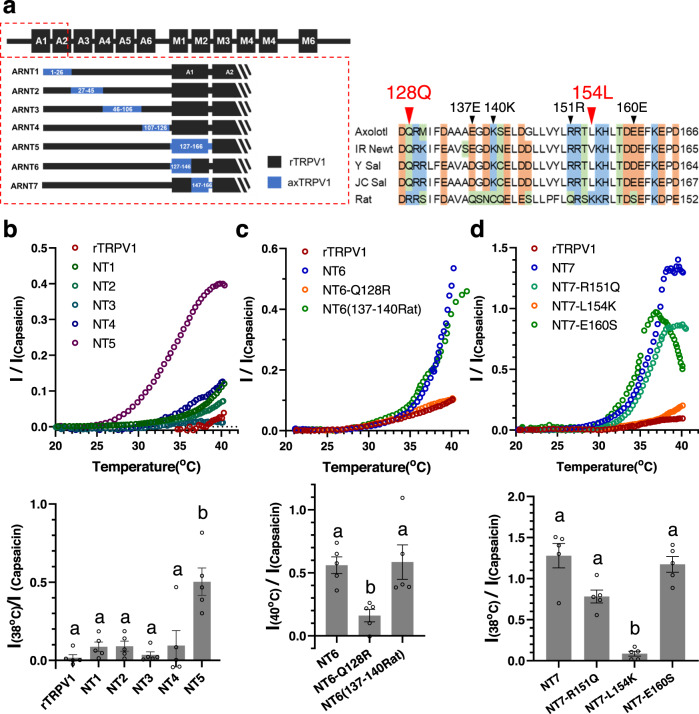
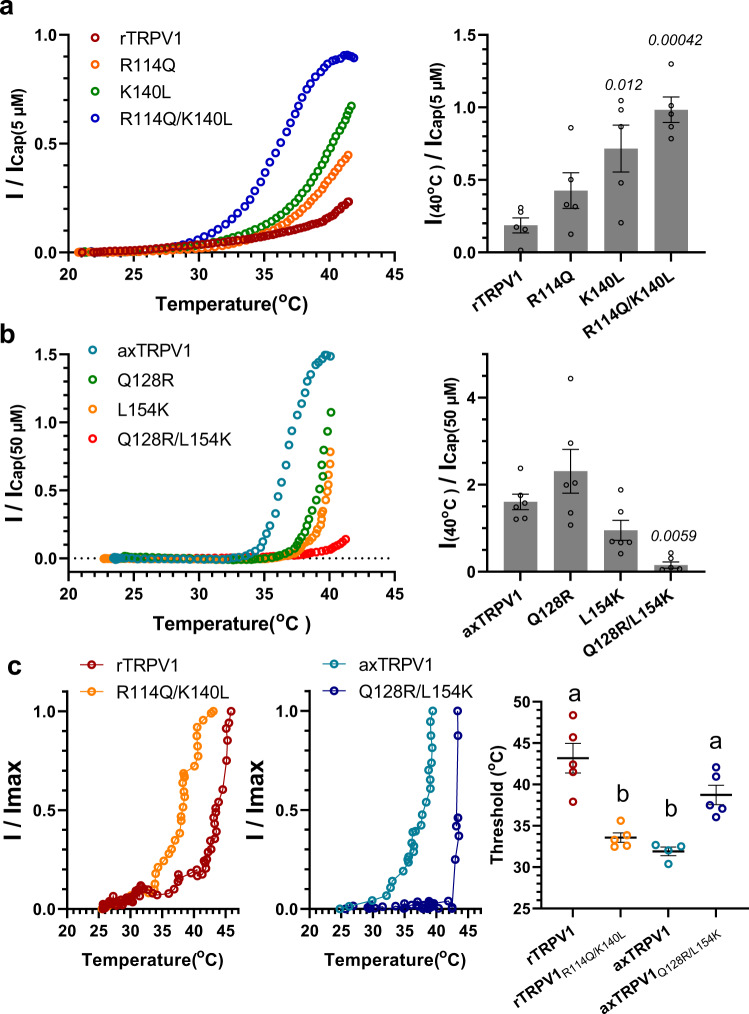
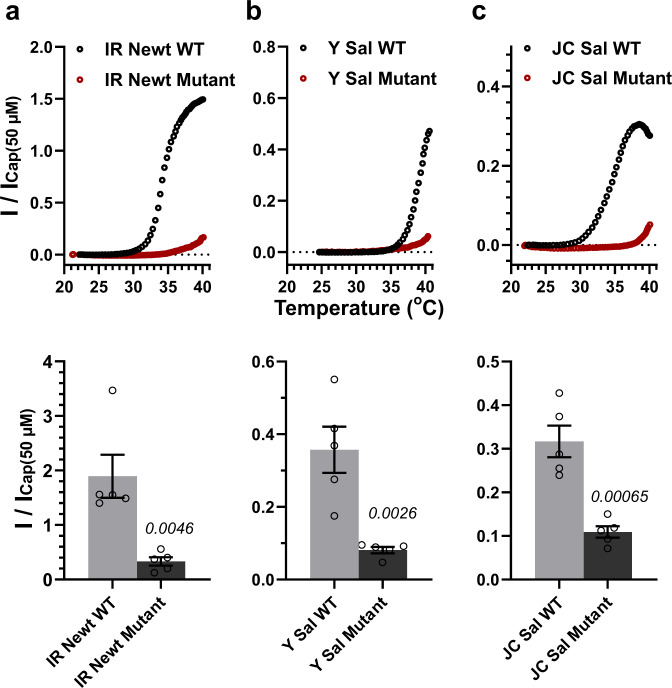
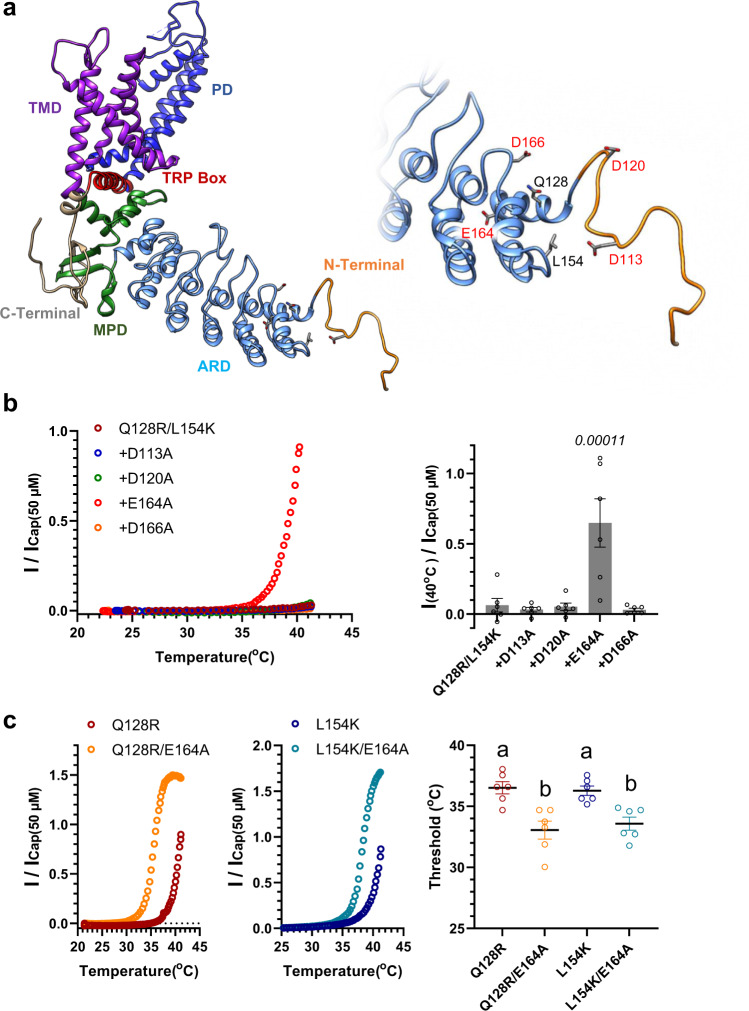
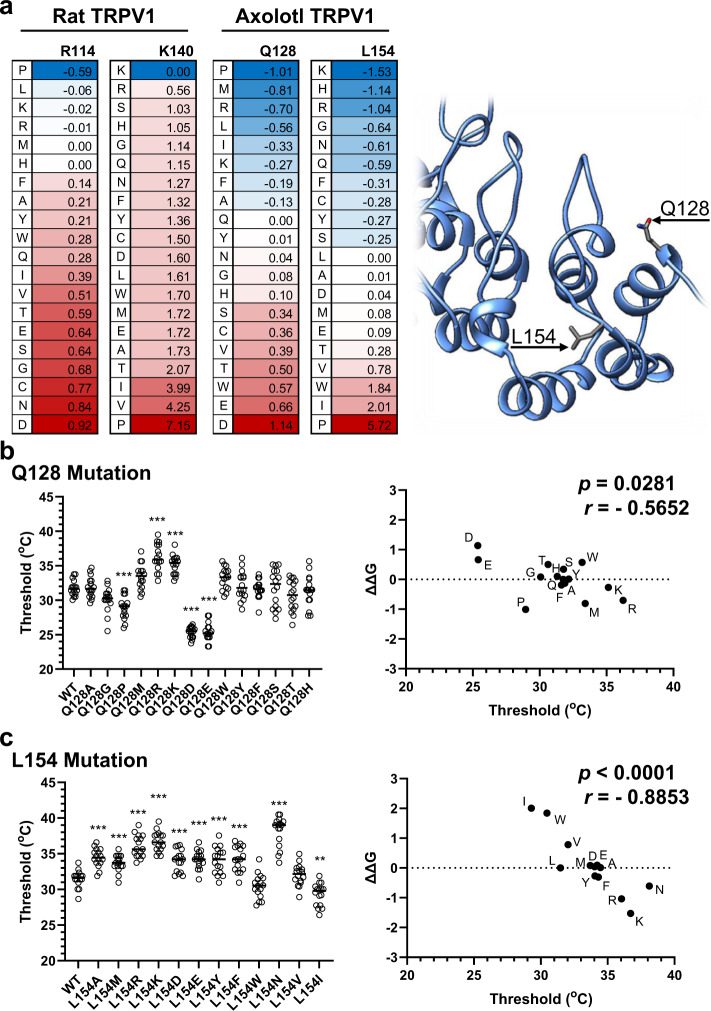
TRPV1 plays an important role in the thermosensory system; however, the mechanism controlling its heat activation property is not well understood. Here, we determine the heat activation properties of TRPV1 cloned from tailed amphibians, which prefer cooler environments, finding the threshold temperatures were approximately 10 °C lower compared with rat TRPV1 (rTRPV1). We find that two amino acid residues (Gln, Leu/Val) in the Ankyrin Repeat 1 (ANK1) region of the N-terminal domain are conserved among tailed amphibians and different from those (Arg, Lys) in rTRPV1. We observe the activation by heat in all urodelan TRPV1s is markedly elevated by substitution of these two amino acids. Conversely, reciprocal substitutions of rTRPV1 apparently lowers the high threshold temperature. Our studies demonstrate that tailed amphibians express TRPV1 with a reduced heat-activation threshold by substitution of two amino acid residues in the ANK1 region that likely contribute to cool-habitat selection.
瞬时受体电位香草酸亚型 1(TRPV1)在温度感受系统中发挥着重要作用;然而,其热激活特性的调控机制尚不清楚。在这里,我们确定了来自喜欢凉爽环境的有尾两栖类动物的 TRPV1 的热激活特性,发现其阈温比大鼠 TRPV1(rTRPV1)低约 10°C。我们发现,N 端结构域的锚蛋白重复 1(ANK1)区域中的两个氨基酸残基(Gln、Leu/Val)在有尾两栖类动物中是保守的,与 rTRPV1 中的(Arg、Lys)不同。我们观察到所有有尾两栖类动物的 TRPV1 的热激活均显著升高,这是由这两个氨基酸残基的取代引起的。相反,rTRPV1 的反向取代则明显降低了高阈温。我们的研究表明,有尾两栖类动物通过取代 ANK1 区域的两个氨基酸残基来表达 TRPV1,其热激活阈值降低,这可能有助于它们对凉爽生境的选择。