Department of Neuromedicine and Movement Science, Faculty of Medicine and Health Sciences, NTNU Norwegian University of Science and Technology, Edvard Griegs gate 8, Trondheim N-7491, Norway.
Unicare Helsefort Rehabilitation Centre, Rissa, Hysnesveien 11, 7112 Hasselvika, Norway.
Ann Work Expo Health. 2023 Jul 6;67(6):706-719. doi: 10.1093/annweh/wxad022.
High physical work demands can cause musculoskeletal disorders and sick leave in petroleum workers. However, our knowledge of their physical work demands is scarce and based on self-report. The objective of our study is to work towards closing this knowledge gap by assessing the physical work demands of onshore petroleum maintenance workers using body-worn sensors.
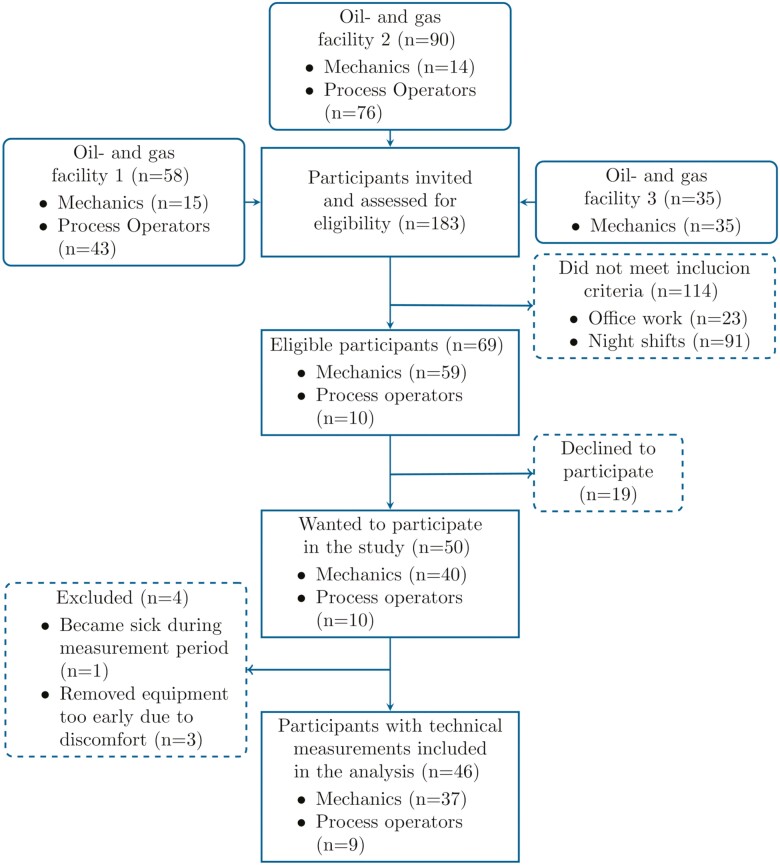
A total of 46 of 69 eligible maintenance workers (37 mechanics and 9 process technicians) from three onshore petroleum facilities in Norway filled in a questionnaire and diary and wore five accelerometers and a heart rate sensor for up to six consecutive workdays. Work-related physical activity and postures were classified using rule-based modelling in a modified version of the validated Acti4 software.
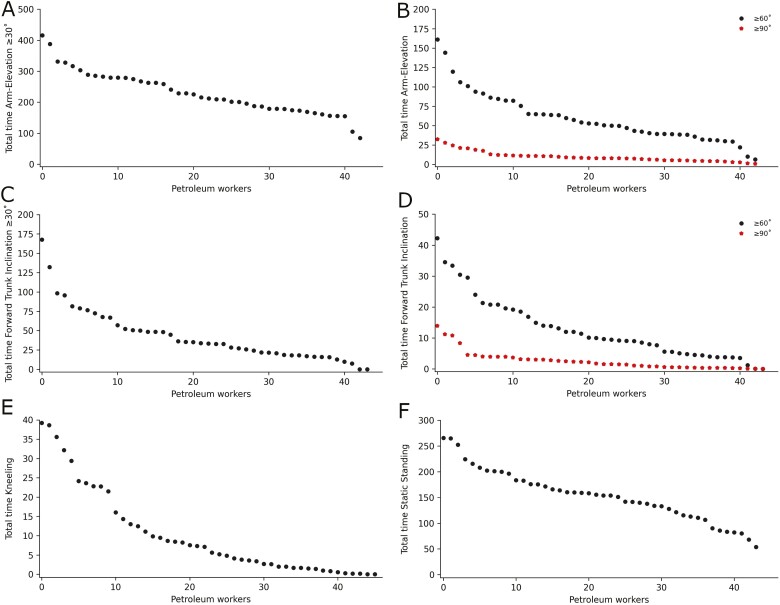
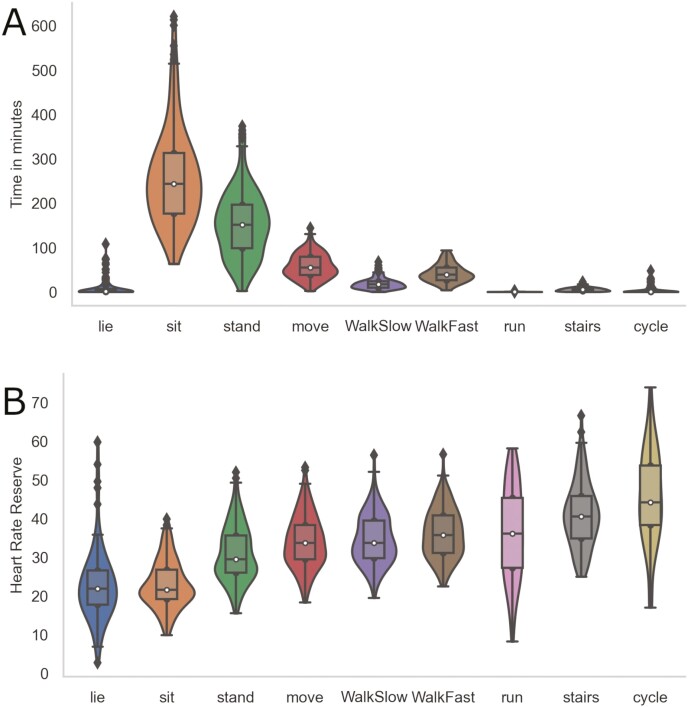
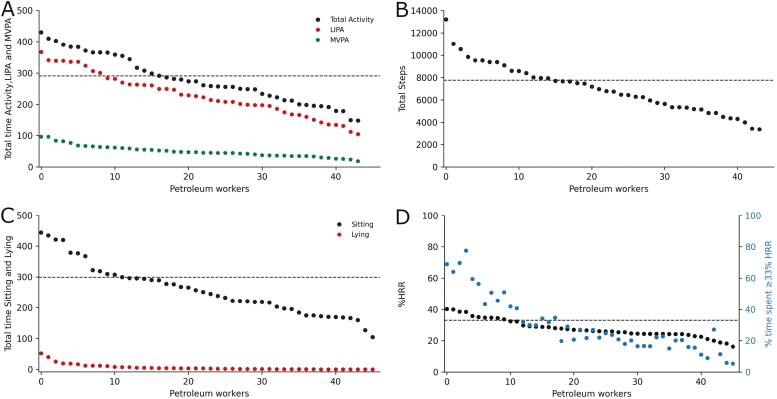
The onshore maintenance petroleum workers were working an average of 10 h a day and spent on average this time with 48% (SD = 16.5) sitting, 1% (SD = 2.8) lying down, 39% (SD = 16.2) in light physical activity, and 9% (SD = 3.8) in moderate to vigorous physical activity. During work hours while at feet, we found arm elevation ≥60° to be 11% (SD = 7.1) (68 min), and forward bending of the trunk ≥60° to be 2% (SD = 2.2) (14 min). The workers spent 2% (SD = 2.5) (12 minu) of the workhours kneeling. We observed a high inter-individual variation for all these work exposures. Moreover, 26% (12) of the workers conducted static standing for >30% of the workday, and 17% (8) spent more than half of the work hours >33% of their estimated maximal cardiovascular capacity.
While onshore maintenance petroleum workers on average spend about half of the workday sitting or lying down, the remaining worktime is spent with a rather high duration of arm elevation and forward bending. Quite high fraction of the workers spends much of the workhours in static standing and kneeling. We see a substantial variation in these work exposures between the workers. The findings indicate a need for preventive measures in how work is organized and performed.
高体力工作需求可导致石油工人出现肌肉骨骼疾病和请病假。然而,我们对其体力工作需求的了解甚少,且主要基于自我报告。本研究的目的是通过使用佩戴在身上的传感器来评估陆上石油维修工人的体力工作需求,从而填补这一知识空白。
挪威 3 个陆上石油设施的 69 名符合条件的维修工人(37 名机械师和 9 名工艺技术员)中,共有 46 人填写了一份问卷和日记,并在连续 6 个工作日内佩戴了 5 个加速度计和 1 个心率传感器。使用基于规则的建模,对经过修改的经过验证的 Acti4 软件,对与工作相关的体力活动和姿势进行分类。
陆上石油维修工人平均每天工作 10 小时,平均有 48%(SD=16.5)的时间坐着,1%(SD=2.8)的时间躺着,39%(SD=16.2)的时间进行轻度体力活动,9%(SD=3.8)的时间进行中等到剧烈体力活动。在工作时站着时,我们发现手臂抬高≥60°的时间为 11%(SD=7.1)(68 分钟),躯干前屈≥60°的时间为 2%(SD=2.2)(14 分钟)。工人在工作时间内有 2%(SD=2.5)(12 分钟)的时间跪着。我们观察到所有这些工作暴露的个体间差异很大。此外,26%(12 人)的工人静态站立超过 30%的工作日,17%(8 人)花费超过一半的工作时间超过其估计最大心血管能力的 33%。
虽然陆上石油维修工人平均每天约有一半的时间坐着或躺着,但其余工作时间手臂抬高和前屈的时间较长。相当一部分工人在静态站立和跪着时花费了大部分工作时间。我们看到工人之间的这些工作暴露存在很大差异。研究结果表明,需要采取预防措施来组织和执行工作。