Department of Materials Science and Engineering, National Taiwan University, Taipei 10617, Taiwan.
Department of Surgery, University of Colorado Anschutz Medical Campus, Aurora, CO 80045, USA.
Int J Mol Sci. 2023 Apr 27;24(9):7952. doi: 10.3390/ijms24097952.
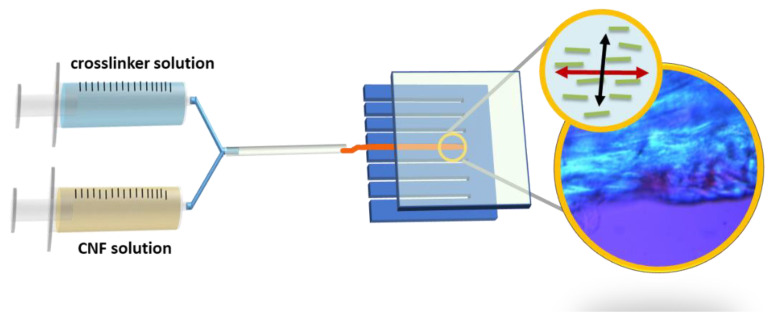
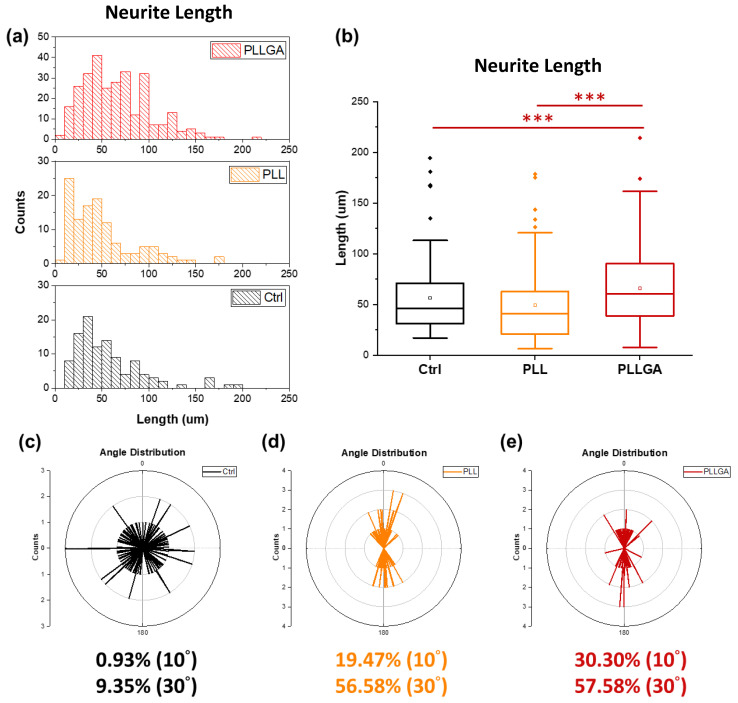
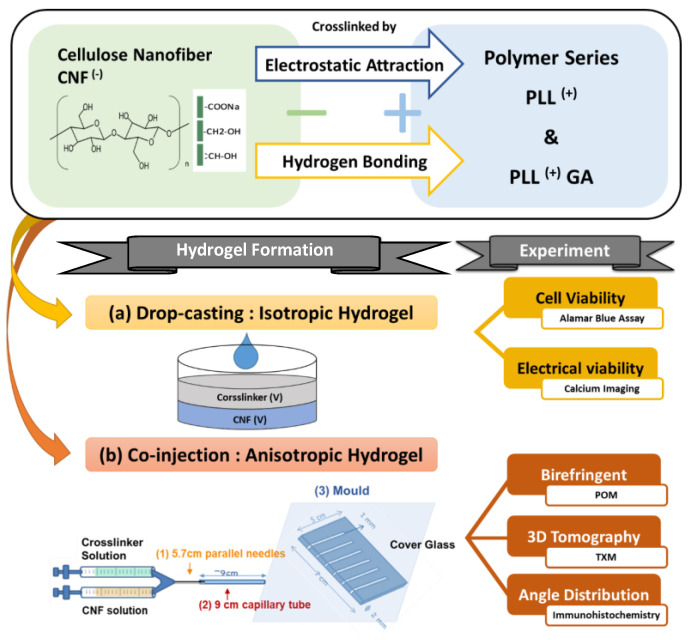
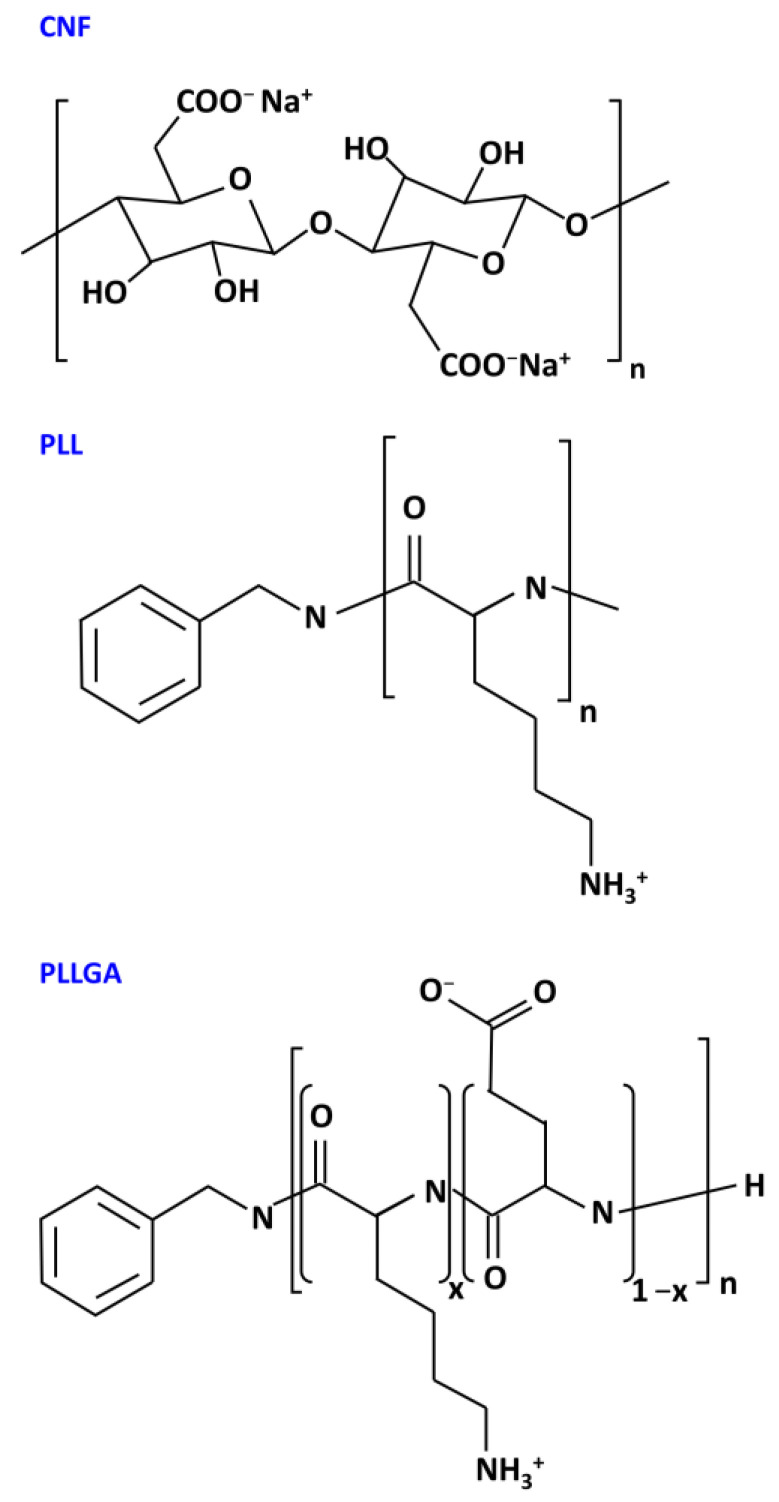
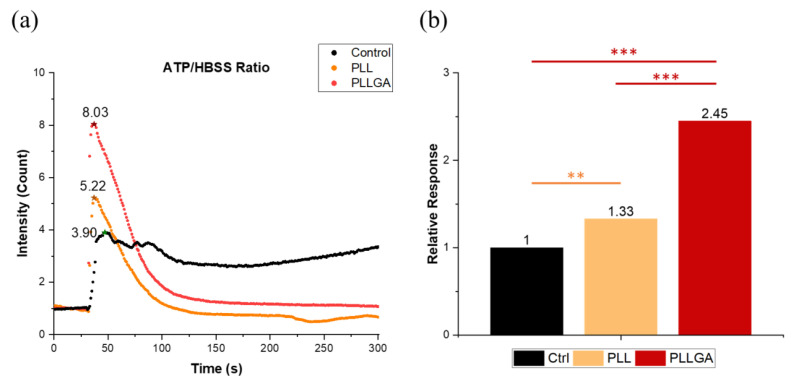
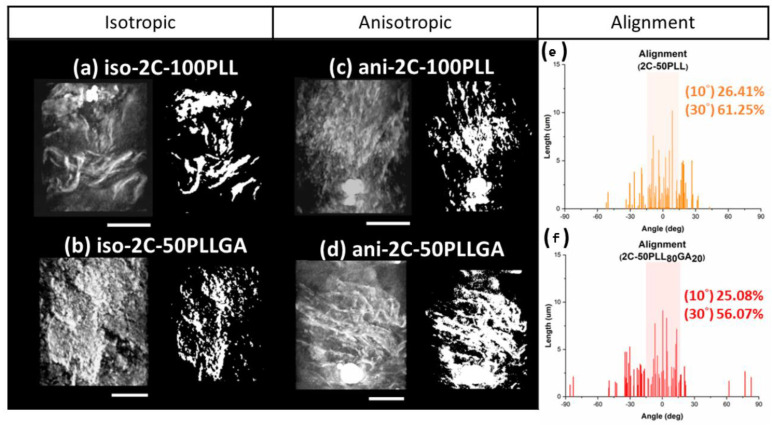
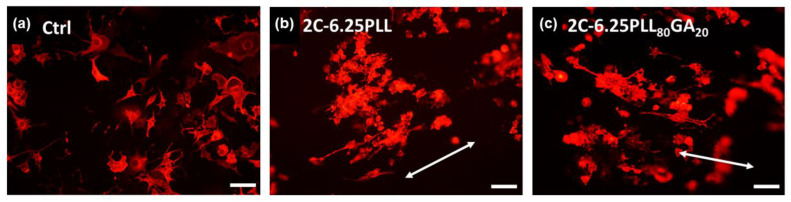
Visual disabilities affect more than 250 million people, with 43 million suffering from irreversible blindness. The eyes are an extension of the central nervous system which cannot regenerate. Neural tissue engineering is a potential method to cure the disease. Injectability is a desirable property for tissue engineering scaffolds which can eliminate some surgical procedures and reduce possible complications and health risks. We report the development of the anisotropic structured hydrogel scaffold created by a co-injection of cellulose nanofiber (CNF) solution and co-polypeptide solution. The positively charged poly (L-lysine)-r-poly(L-glutamic acid) with 20 mol% of glutamic acid (PLLGA) is crosslinked with negatively charged CNF while promoting cellular activity from the acid nerve stimulate. We found that CNF easily aligns under shear forces from injection and is able to form hydrogel with an ordered structure. Hydrogel is mechanically strong and able to support, guide, and stimulate neurite growth. The anisotropy of our hydrogel was quantitatively determined in situ by 2D optical microscopy and 3D X-ray tomography. The effects of PLLGA:CNF blend ratios on cell viability, neurite growth, and neuronal signaling are systematically investigated in this study. We determined the optimal blend composition for stimulating directional neurite growth yielded a 16% increase in length compared with control, reaching anisotropy of 30.30% at 10°/57.58% at 30°. Using measurements of calcium signaling in vitro, we found a 2.45-fold increase vs. control. Based on our results, we conclude this novel material and unique injection method has a high potential for application in neural tissue engineering.
视觉障碍影响着超过 2.5 亿人,其中 4300 万人患有不可逆转的失明。眼睛是中枢神经系统的延伸,中枢神经系统不能再生。神经组织工程是一种治疗疾病的潜在方法。可注射性是组织工程支架的理想特性,它可以消除一些手术程序,并减少可能的并发症和健康风险。我们报告了由纤维素纳米纤维(CNF)溶液和共多肽溶液共注射创建各向异性结构水凝胶支架的开发。带 20 mol%谷氨酸的带正电荷聚(L-赖氨酸)-r-聚(L-谷氨酸)(PLLGA)与带负电荷的 CNF 交联,同时从酸神经刺激促进细胞活性。我们发现 CNF 在注射产生的剪切力下很容易排列,并能够形成具有有序结构的水凝胶。水凝胶具有机械强度,能够支撑、引导和刺激神经突生长。通过二维光学显微镜和三维 X 射线断层扫描,我们在原位定量确定了水凝胶的各向异性。本研究系统研究了 PLLGA:CNF 混合比对细胞活力、神经突生长和神经元信号的影响。我们确定了最佳的混合组成,以刺激定向神经突生长,与对照相比,长度增加了 16%,达到 30°时的各向异性为 30.30%,60°时为 57.58%。通过体外钙信号测量,我们发现与对照相比增加了 2.45 倍。基于我们的结果,我们得出结论,这种新型材料和独特的注射方法在神经组织工程中有很高的应用潜力。