Yang Yining, Chen Yao, Li Zhe, Zhang Yuanyuan, Lu Lunhui
Key Laboratory of Hydraulic and Waterway Engineering of the Ministry of Education, Chongqing Jiaotong University, Chongqing, China.
CAS Key Laboratory of Reservoir Water Environment, Chongqing Institute of Green and Intelligent Technology, Chinese Academy of Sciences, Chongqing, China.
Front Microbiol. 2023 Apr 21;14:1108025. doi: 10.3389/fmicb.2023.1108025. eCollection 2023.
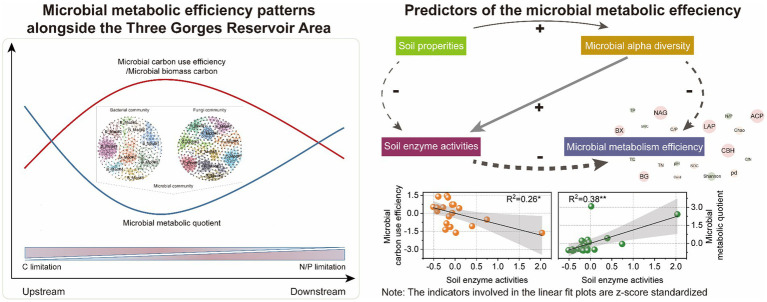
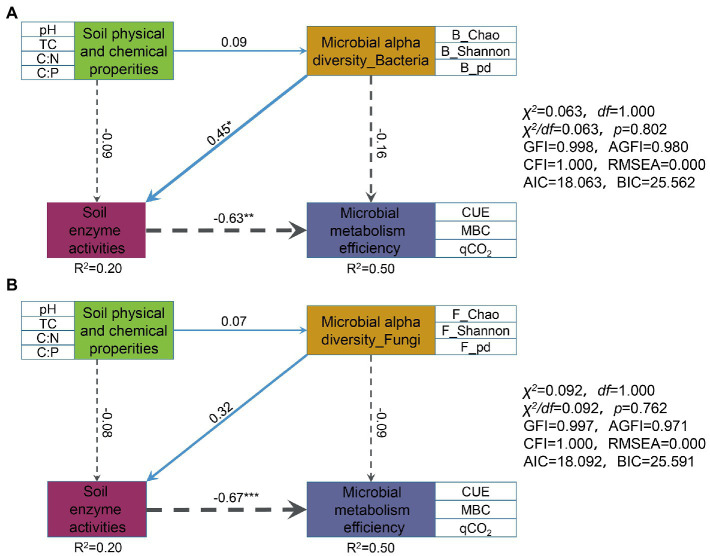
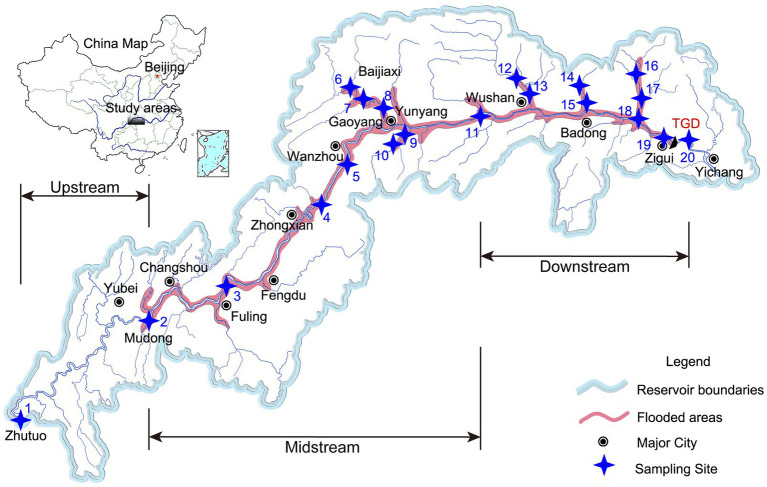
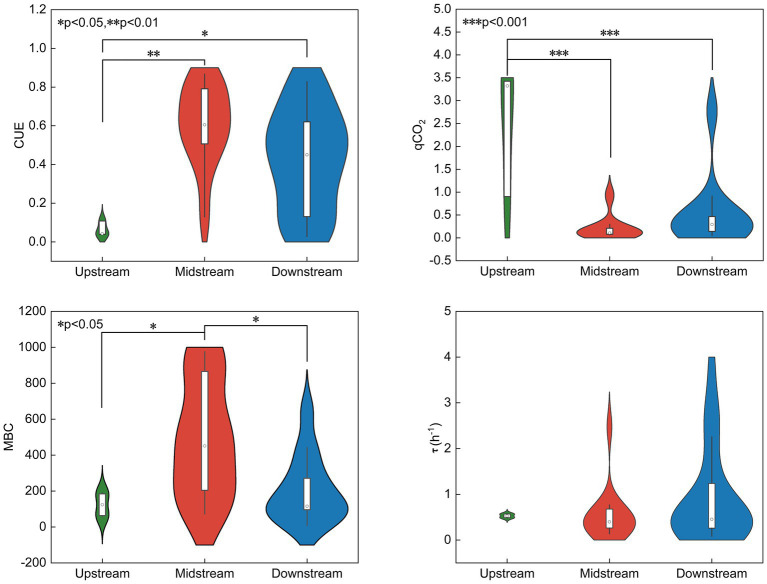
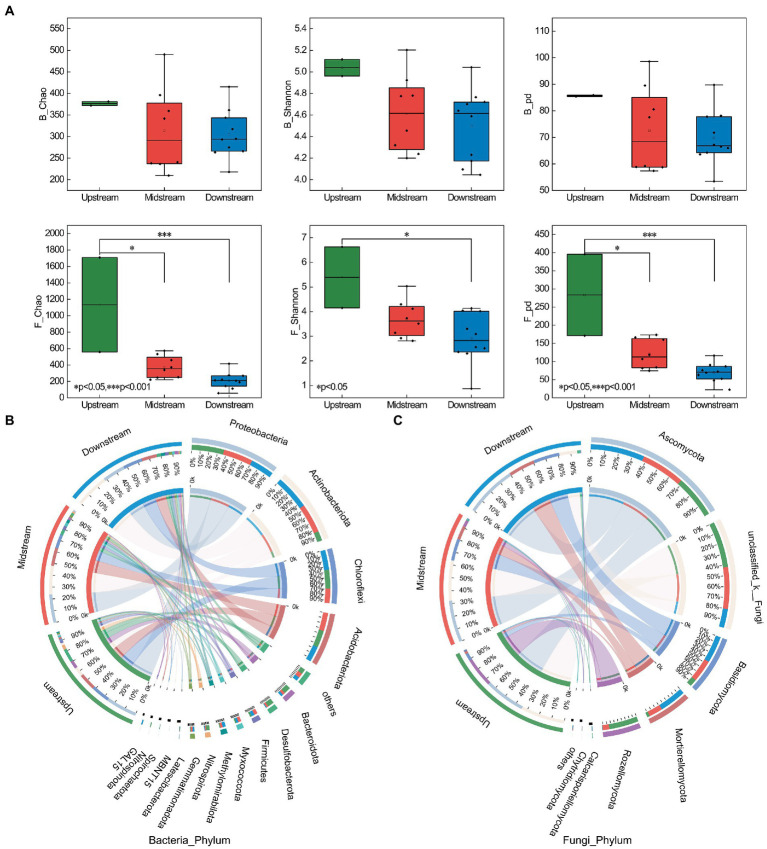
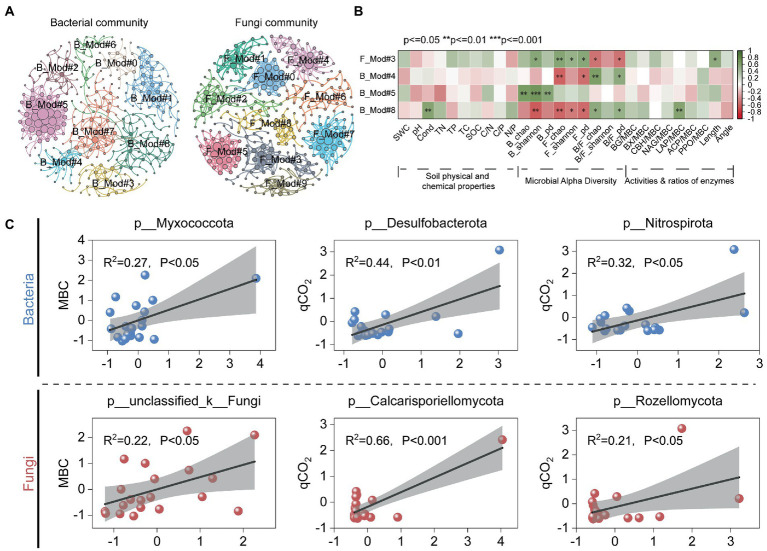
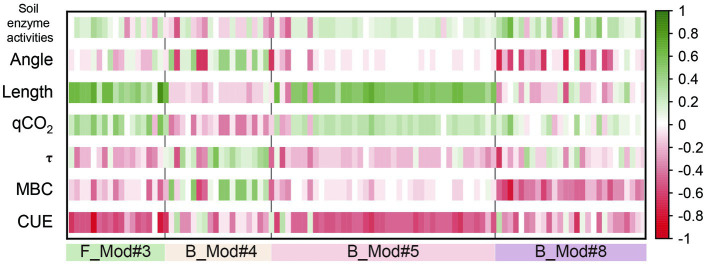
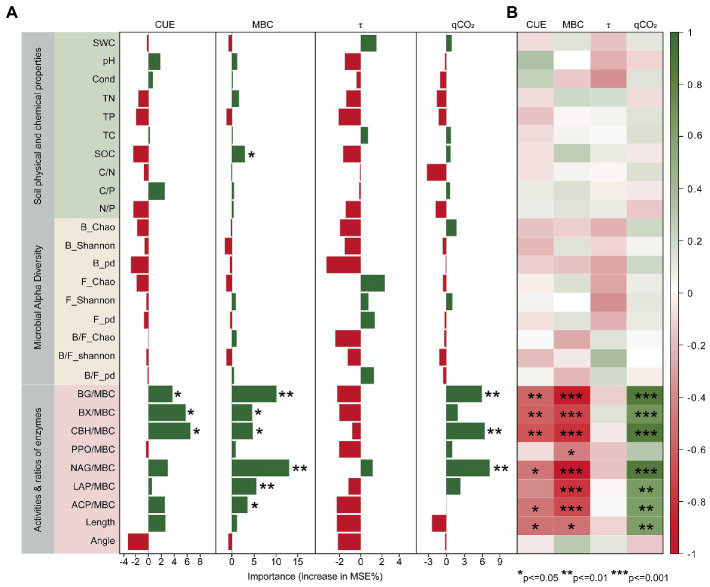
Riparian zones represent important transitional areas between aquatic and terrestrial ecosystems. Microbial metabolic efficiency and soil enzyme activities are important indicators of carbon cycling in the riparian zones. However, how soil properties and microbial communities regulate the microbial metabolic efficiency in these critical zones remains unclear. Thus, microbial taxa, enzyme activities, and metabolic efficiency were conducted in the riparian zones of the Three Gorges Reservoir (TGR). Microbial carbon use efficiency and microbial biomass carbon had a significant increasing trend along the TGR (from upstream to downstream); indicating higher carbon stock in the downstream, microbial metabolic quotient (qCO) showed the opposite trend. Microbial community and co-occurrence network analysis revealed that although bacterial and fungal communities showed significant differences in composition, this phenomenon was not found in the number of major modules. Soil enzyme activities were significant predictors of microbial metabolic efficiency along the different riparian zones of the TGR and were significantly influenced by microbial α-diversity. The bacterial taxa Desulfobacterota, Nitrospirota and the fungal taxa Calcarisporiellomycota, Rozellomycota showed a significant positive correlation with qCO. The shifts in key microbial taxa in the fungi module #3 are highlighted as essential factors regulating the microbial metabolic efficiency. Structural equation modeling results also revealed that soil enzyme activities had a highly significant negative effect on microbial metabolism efficiency (bacteria, path coefficient = -0.63; fungi, path coefficient = -0.67).This work has an important impact on the prediction of carbon cycling in aquatic-terrestrial ecotones. Graphical abstract.
河岸带是水生生态系统和陆地生态系统之间的重要过渡区域。微生物代谢效率和土壤酶活性是河岸带碳循环的重要指标。然而,土壤性质和微生物群落如何调节这些关键区域的微生物代谢效率仍不清楚。因此,对三峡水库(TGR)河岸带的微生物分类群、酶活性和代谢效率进行了研究。微生物碳利用效率和微生物生物量碳沿三峡水库(从上游到下游)呈显著增加趋势;表明下游碳储量更高,微生物代谢商(qCO)呈相反趋势。微生物群落和共现网络分析表明,虽然细菌和真菌群落在组成上存在显著差异,但在主要模块数量上未发现此现象。土壤酶活性是三峡水库不同河岸带微生物代谢效率的重要预测指标,并受微生物α多样性的显著影响。细菌分类群脱硫杆菌门、硝化螺旋菌门和真菌分类群钙孢子菌纲、罗兹菌纲与qCO呈显著正相关。真菌模块#3中关键微生物分类群的变化被强调为调节微生物代谢效率的重要因素。结构方程模型结果还表明,土壤酶活性对微生物代谢效率有极显著的负向影响(细菌,路径系数=-0.63;真菌,路径系数=-0.67)。这项工作对水陆交错带碳循环的预测具有重要意义。图形摘要。