Saviano Angela, Brigida Mattia, Petruzziello Carmine, Zanza Christian, Candelli Marcello, Morabito Loprete Maria Rita, Saleem Faiz, Ojetti Veronica
Emergency Department, Fondazione Policlinico Universitario A. Gemelli, 00168 Roma, Italy.
Department of Gastroenterology, Policlinico Tor Vergata, 00133 Roma, Italy.
Biomedicines. 2023 Mar 27;11(4):1014. doi: 10.3390/biomedicines11041014.
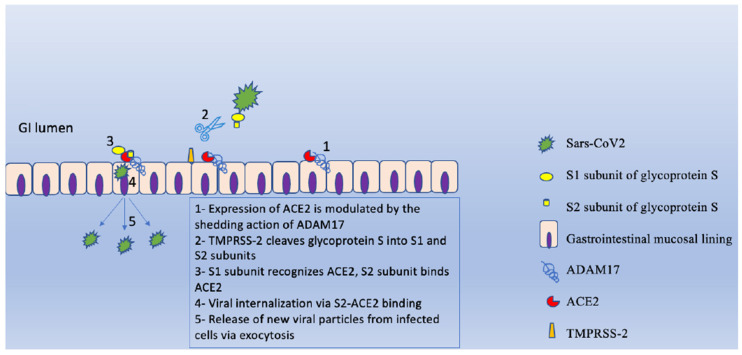
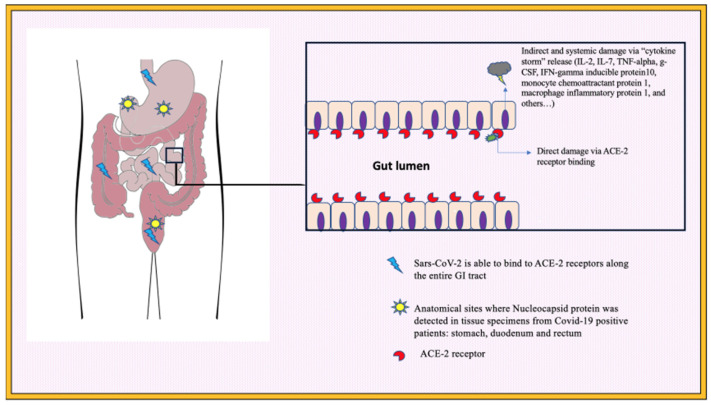
The virus SARS-CoV-2 is responsible for respiratory disorders due to the fact that it mainly infects the respiratory tract using the Angiotensin-converting enzyme 2 (ACE2) receptors. ACE2 receptors are also highly expressed on intestinal cells, representing an important site of entry for the virus in the gut. Literature studies underlined that the virus infects and replicates in the gut epithelial cells, causing gastrointestinal symptoms such as diarrhea, abdominal pain, nausea/vomiting and anorexia. Moreover, the SARS-CoV-2 virus settles into the bloodstream, hyperactivating the platelets and cytokine storms and causing gut-blood barrier damage with an alteration of the gut microbiota, intestinal cell injury, intestinal vessel thrombosis leading to malabsorption, malnutrition, an increasing disease severity and mortality with short and long-period sequelae.
This review summarizes the data on how SARS-CoV-2 effects on the gastrointestinal systems, including the mechanisms of inflammation, relationship with the gut microbiota, endoscopic patterns, and the role of fecal calprotectin, confirming the importance of the digestive system in clinical practice for the diagnosis and follow-up of SARS-CoV-2 infection.
严重急性呼吸综合征冠状病毒2(SARS-CoV-2)引发呼吸系统疾病,因为它主要利用血管紧张素转换酶2(ACE2)受体感染呼吸道。ACE2受体在肠道细胞中也高度表达,是病毒进入肠道的重要部位。文献研究强调,该病毒在肠道上皮细胞中感染并复制,导致腹泻、腹痛、恶心/呕吐和厌食等胃肠道症状。此外,SARS-CoV-2病毒进入血液,使血小板过度活化并引发细胞因子风暴,导致肠-血屏障受损,同时伴有肠道微生物群改变、肠道细胞损伤、肠道血管血栓形成,进而导致吸收不良、营养不良,疾病严重程度和死亡率增加,并伴有短期和长期后遗症。
本综述总结了SARS-CoV-2对胃肠道系统影响的数据,包括炎症机制、与肠道微生物群的关系、内镜检查模式以及粪便钙卫蛋白的作用,证实了消化系统在SARS-CoV-2感染的临床诊断和随访中的重要性。