Palamarchuk Anastasia I, Kovalenko Elena I, Streltsova Maria A
Shemyakin & Ovchinnikov Institute of Bioorganic Chemistry, Russian Academy of Sciences, Ul. Miklukho-Maklaya 16/10, 117997 Moscow, Russia.
Biomedicines. 2023 Apr 4;11(4):1091. doi: 10.3390/biomedicines11041091.
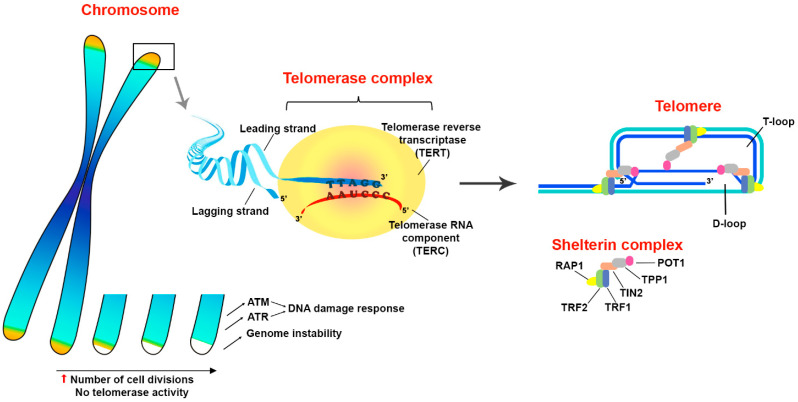
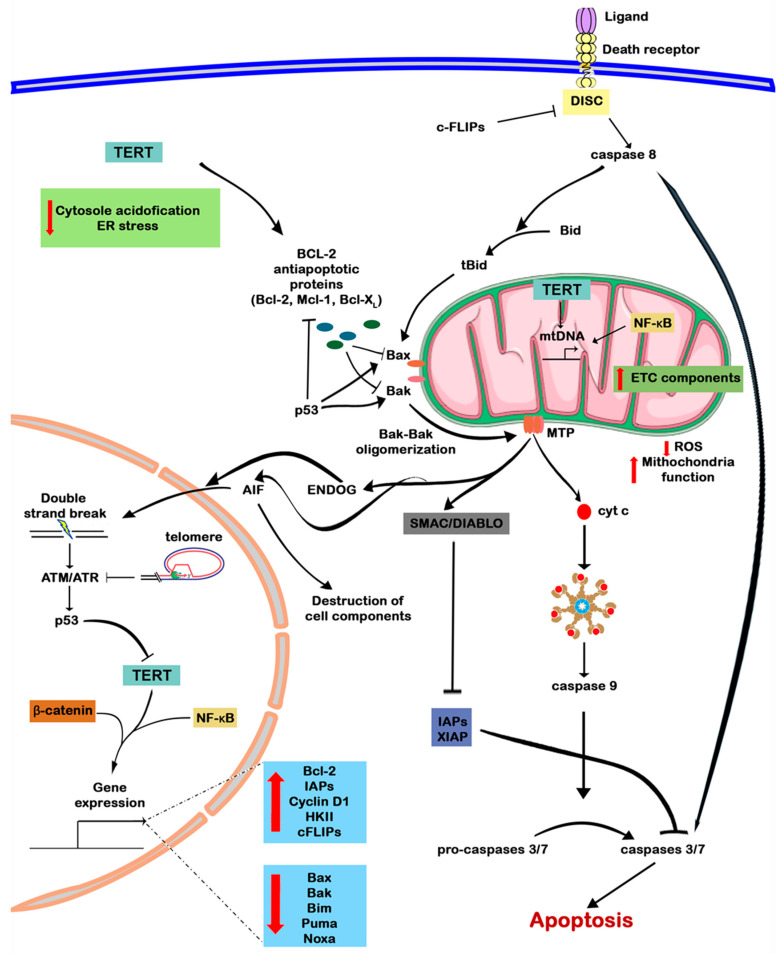
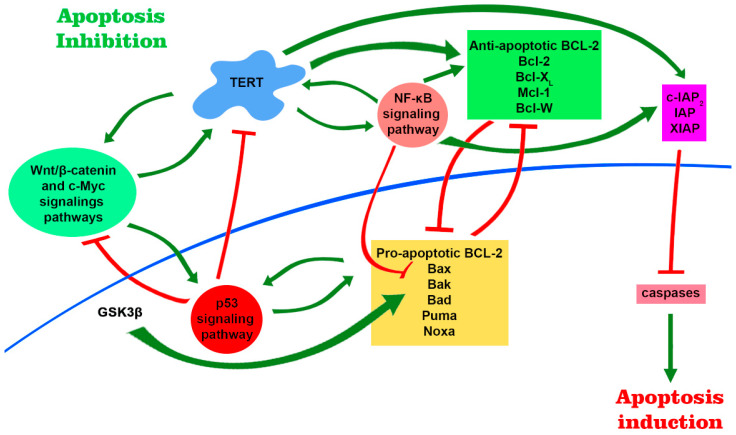
Telomerase reverse transcriptase (TERT), a core part of telomerase, has been known for a long time only for its telomere lengthening function by reverse transcription of RNA template. Currently, TERT is considered as an intriguing link between multiple signaling pathways. The diverse intracellular localization of TERT corresponds to a wide range of functional activities. In addition to the canonical function of protecting chromosome ends, TERT by itself or as a part of the telomerase complex participates in cell stress responses, gene regulation and mitochondria functioning. Upregulation of TERT expression and increased telomerase activity in cancer and somatic cells relate to improved survival and persistence of such cells. In this review, we summarize the data for a comprehensive understanding of the role of TERT in cell death regulation, with a focus on the interaction of TERT with signaling pathways involved in cell survival and stress response.
端粒酶逆转录酶(TERT)是端粒酶的核心组成部分,长期以来人们只知道它通过RNA模板的逆转录作用来延长端粒。目前,TERT被认为是多种信号通路之间的一个有趣联系。TERT在细胞内的不同定位对应着广泛的功能活动。除了保护染色体末端的经典功能外,TERT自身或作为端粒酶复合物的一部分还参与细胞应激反应、基因调控和线粒体功能。癌症细胞和体细胞中TERT表达上调及端粒酶活性增加与这些细胞的存活率提高和持续存在有关。在本综述中,我们总结相关数据,以便全面了解TERT在细胞死亡调控中的作用,重点关注TERT与参与细胞存活和应激反应的信号通路之间的相互作用。