Braun Sebastian, Brenneis Marco, Meurer Andrea, Holder Jana, Stief Felix
Department of Orthopedics (Friedrichsheim), University Hospital Frankfurt, Goethe University, 60528 Frankfurt am Main, Germany.
Medical Park St. Hubertus Klinik, 83707 Bad Wiessee, Germany.
Children (Basel). 2023 Apr 4;10(4):686. doi: 10.3390/children10040686.
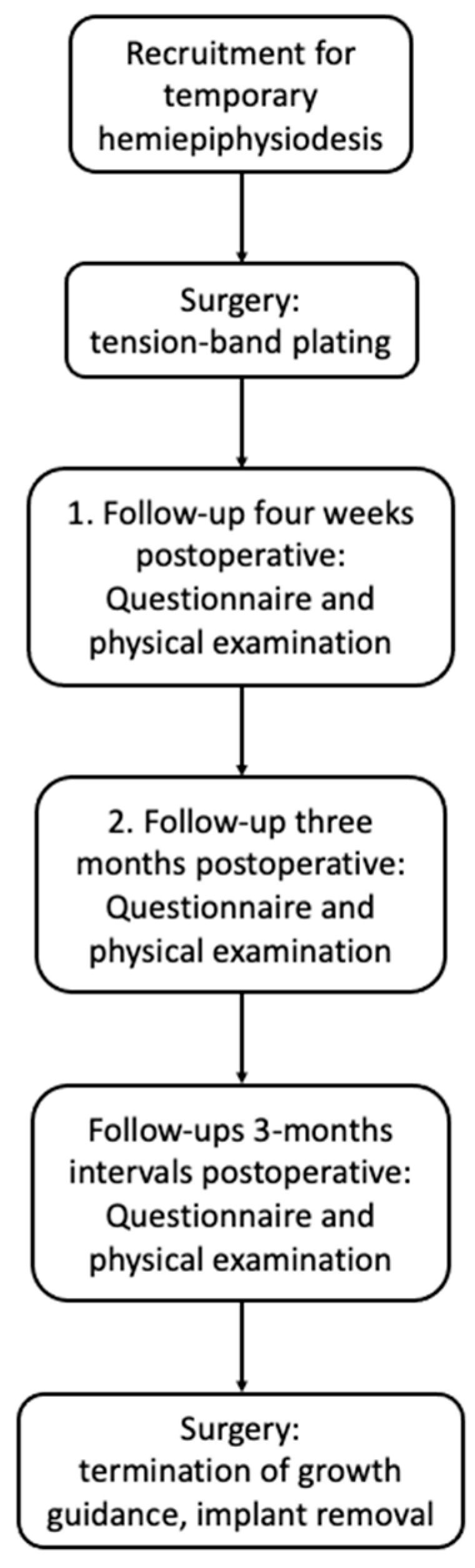
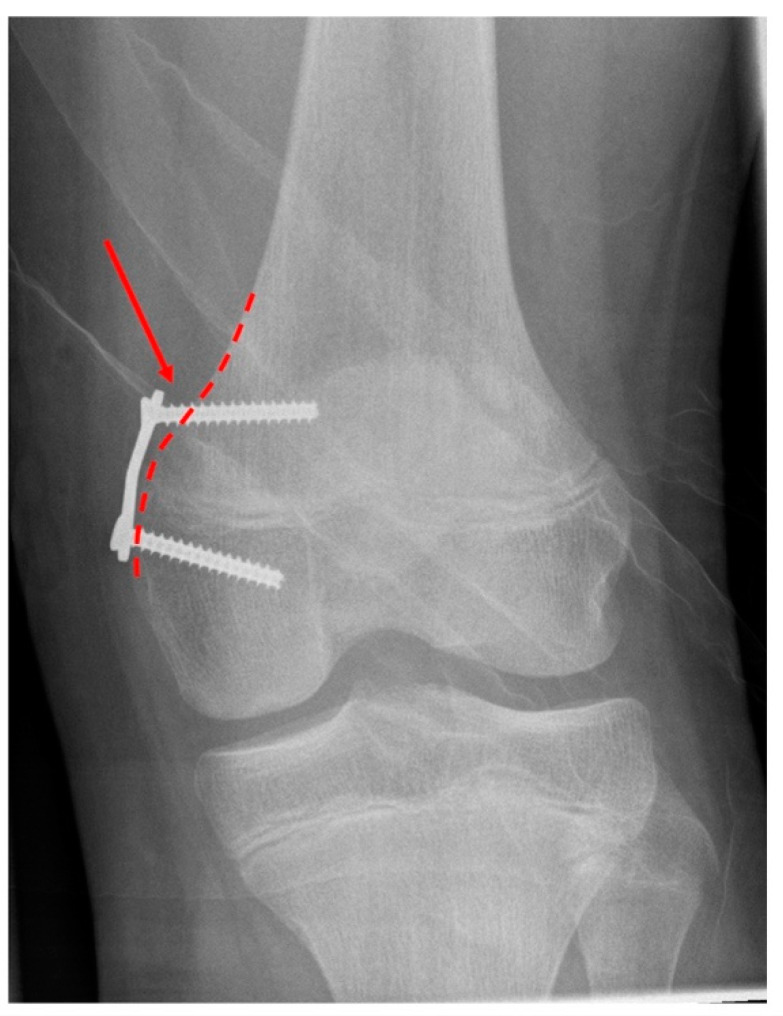
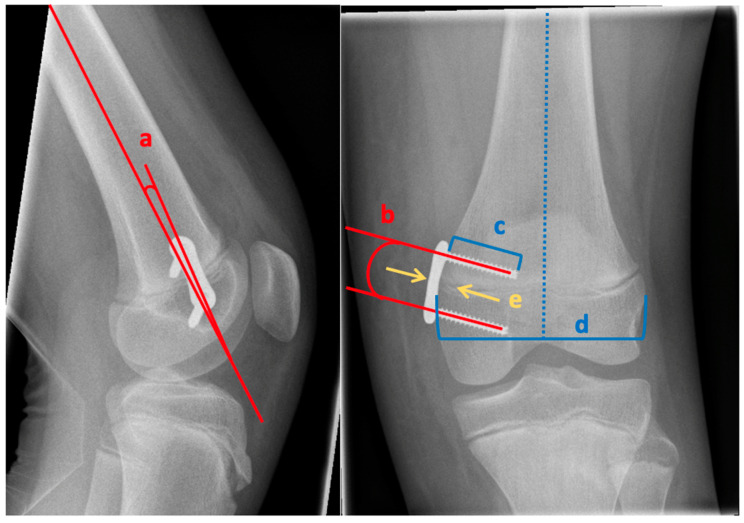
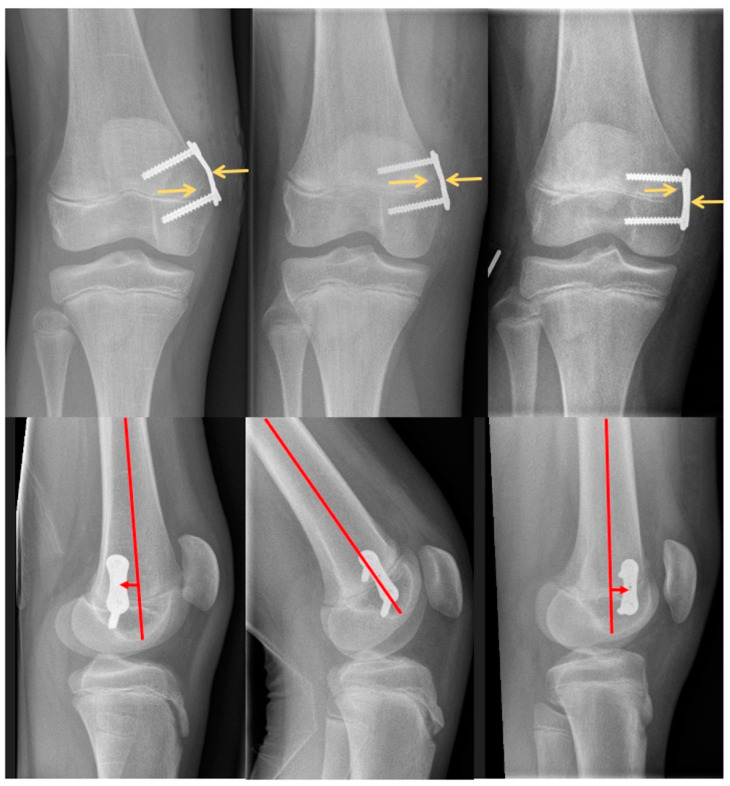
The correction of valgus leg malalignment in children using implant-mediated growth guidance is widely used and effective. Despite the minimal invasive character of the procedure, a relevant number of patients sustain prolonged pain and limited mobility after temporary hemiepiphysiodesis. Our aim was to investigate implant-associated risk factors (such as implant position and screw angulation), surgical- or anesthesia-related risk factors (such as type of anesthesia, use, and duration), and pressure of tourniquet or duration of surgery for these complications. Thirty-four skeletally immature patients with idiopathic valgus deformities undergoing hemiepiphysiodesis plating from October 2018-July 2022 were enrolled in this retrospective study. Participants were divided into groups with and without prolonged complications (persistent pain, limited mobility of the operated knee between five weeks and six months) after surgery. Twenty-two patients (65%) had no notable complications, while twelve patients (35%) had prolonged complications. Both groups differed significantly in plate position relative to physis ( = 0.049). In addition, both groups showed significant differences in the distribution of implant location ( = 0.016). Group 1 had a shorter duration of surgery than group 2 (32 min vs. 38 min, = 0.032) and a lower tourniquet pressure (250 mmHg vs. 270 mmHg, = 0.019). In conclusion, simultaneous plate implantation at the femur and tibia and metaphyseal plate positioning resulted in prolonged pain and a delay of function. In addition, the amplitude of tourniquet pressure or duration of surgery could play a factor.
使用植入物介导的生长引导来矫正儿童腿部外翻畸形已被广泛应用且效果显著。尽管该手术具有微创特点,但仍有相当数量的患者在临时半骨骺阻滞术后持续疼痛且活动受限。我们的目的是研究与植入物相关的危险因素(如植入物位置和螺钉角度)、手术或麻醉相关的危险因素(如麻醉类型、使用情况和持续时间),以及止血带压力或手术持续时间与这些并发症的关系。本回顾性研究纳入了2018年10月至2022年7月期间接受半骨骺阻滞钢板固定术的34例骨骼未成熟的特发性外翻畸形患者。参与者被分为术后有无长期并发症(持续疼痛、术后五周半至六个月手术膝关节活动受限)两组。22例患者(65%)无明显并发症,而12例患者(35%)有长期并发症。两组在钢板相对于骨骺的位置上有显著差异(P = 0.049)。此外,两组在植入物位置分布上也有显著差异(P = 0.016)。第一组的手术时间比第二组短(32分钟对38分钟,P = 0.032),止血带压力也更低(250 mmHg对270 mmHg,P = 0.019)。总之,在股骨和胫骨同时植入钢板以及干骺端钢板定位会导致疼痛持续时间延长和功能延迟。此外,止血带压力幅度或手术持续时间可能是一个影响因素。