Neuroimmunology and MS Research Section (NIMS), Neurology Clinic, University of Zurich, University Hospital Zurich, Zurich, Switzerland.
Cellerys AG, Schlieren, Switzerland.
Nature. 2023 May;617(7962):807-817. doi: 10.1038/s41586-023-06081-w. Epub 2023 May 17.
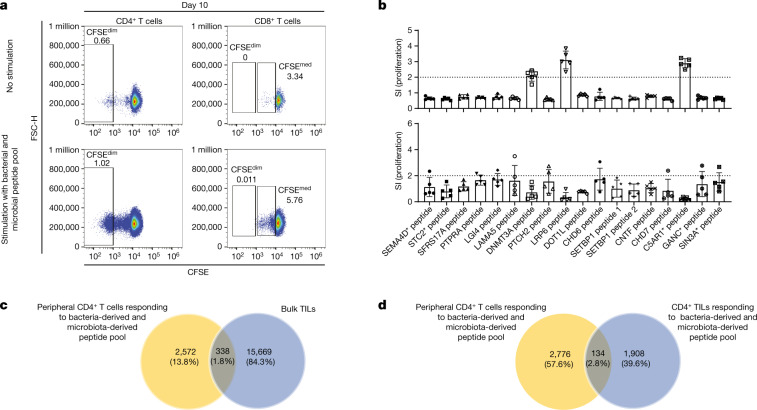
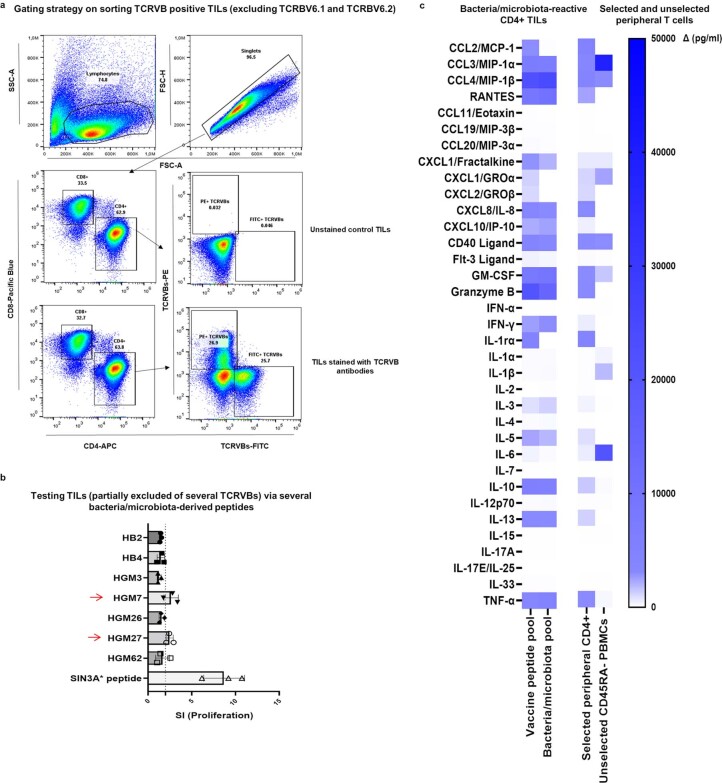
Microbial organisms have key roles in numerous physiological processes in the human body and have recently been shown to modify the response to immune checkpoint inhibitors. Here we aim to address the role of microbial organisms and their potential role in immune reactivity against glioblastoma. We demonstrate that HLA molecules of both glioblastoma tissues and tumour cell lines present bacteria-specific peptides. This finding prompted us to examine whether tumour-infiltrating lymphocytes (TILs) recognize tumour-derived bacterial peptides. Bacterial peptides eluted from HLA class II molecules are recognized by TILs, albeit very weakly. Using an unbiased antigen discovery approach to probe the specificity of a TIL CD4 T cell clone, we show that it recognizes a broad spectrum of peptides from pathogenic bacteria, commensal gut microbiota and also glioblastoma-related tumour antigens. These peptides were also strongly stimulatory for bulk TILs and peripheral blood memory cells, which then respond to tumour-derived target peptides. Our data hint at how bacterial pathogens and bacterial gut microbiota can be involved in specific immune recognition of tumour antigens. The unbiased identification of microbial target antigens for TILs holds promise for future personalized tumour vaccination approaches.
微生物在人体的许多生理过程中起着关键作用,最近的研究表明它们可以改变机体对免疫检查点抑制剂的反应。在这里,我们旨在探讨微生物及其在胶质母细胞瘤免疫反应中的潜在作用。我们发现胶质母细胞瘤组织和肿瘤细胞系的 HLA 分子呈递细菌特异性肽。这一发现促使我们研究肿瘤浸润淋巴细胞(TIL)是否识别肿瘤来源的细菌肽。从 HLA Ⅱ类分子洗脱的细菌肽可被 TIL 识别,尽管识别非常弱。我们使用一种无偏见的抗原发现方法来探测 TIL CD4 T 细胞克隆的特异性,结果表明它识别广泛存在于致病菌、肠道共生菌以及与胶质母细胞瘤相关的肿瘤抗原中的肽段。这些肽段也强烈刺激了 TIL 群体和外周血记忆细胞,使其对肿瘤来源的靶肽产生反应。我们的数据提示了细菌病原体和肠道共生菌如何参与肿瘤抗原的特异性免疫识别。为 TIL 鉴定无偏微生物靶抗原的方法为未来的个性化肿瘤疫苗接种方法提供了希望。